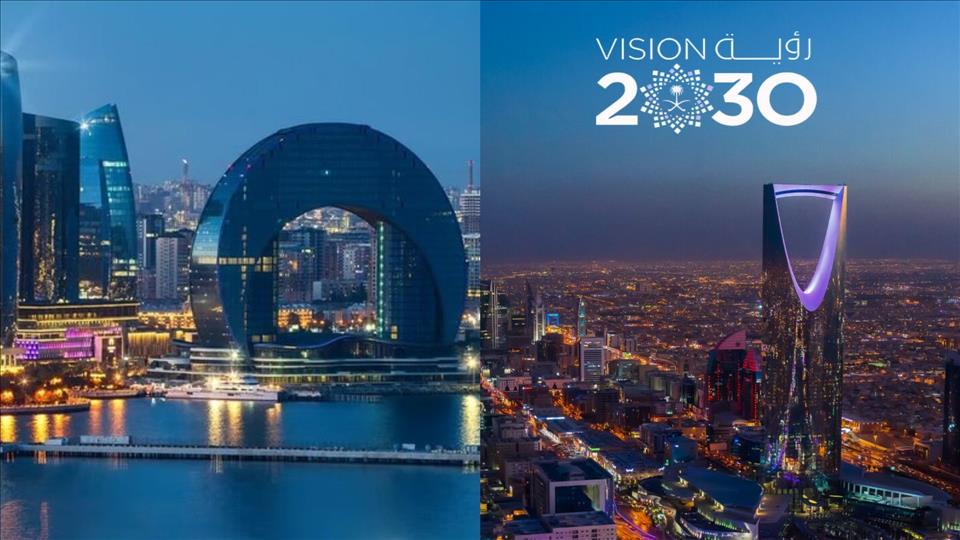

Saudi Arabia’s Vision 2030 represents a systemic transformation of the Gulf’s economic architecture, with profound implications for sovereign capital flows, venture capital dynamics, and regional infrastructure development across the Middle East and North Africa (MENA). By prioritizing economic diversification away from oil, the initiative has catalyzed unprecedented inflows of sovereign capital, particularly from state-backed entities such as the Public Investment Fund (PIF). Azerbaijan’s $15.789 million in direct investments to Saudi Arabia in 2025, though modest relative to its total outward FDI portfolio, exemplifies a strategic recalibration where sovereign wealth funds are increasingly redirected toward non-traditional markets. This trend underscores a broader MENA-wide shift: countries are leveraging geopolitical and logistical advantages to position themselves as nodes in global value chains, reducing reliance on hydrocarbon revenues. The convergence of Saudi Arabia’s capital-seeking ambitions and Azerbaijan’s emerging non-oil competitive advantages—particularly in infrastructure and technology—creates a high-impact framework for sovereign capital deployment, fostering long-term stability in an otherwise volatile regional economy.
The expansion of venture capital into the MENA region is inextricably linked to Vision 2030’s emphasis on innovation and entrepreneurship. Saudi Arabia’s push to privatize state-owned enterprises and streamline regulatory frameworks has created a catalytic environment for private-sector investment, while Azerbaijan’s focus on smart city development, industrial parks, and logistics hubs aligns with global VC trends toward asset-light, scalable technologies. The partnership further illustrates how regional VC ecosystems are evolving beyond traditional sectors like energy and banking to encompass fintech, AI-driven tourism, and green energy. With both nations signaling a transition to knowledge-based economies, the integration of Saudi financial resources with Azerbaijani technological ecosystems could set a precedent for cross-border VC collaboration in MENA. This shift is not merely transactional but strategic, as venture capital becomes a conduit for transferring advanced technologies and operational expertise to markets seeking to accelerate economic transformation.
The regional infrastructure implications of Vision 2030 are monumental, with Saudi Arabia and Azerbaijan positioning themselves at the heart of a new transcontinental trade and connectivity paradigm. The development of Azerbaijan’s western corridors, coupled with Saudi Arabia’s investment in infrastructure-as-a-service models, signals a regional push to reduce dependency on centralized oil transport networks. Smart cities, industrial real estate, and digital logistics hubs in Azerbaijan’s liberated territories are not standalone projects but components of a broader MENA infrastructure strategy aimed at bolstering cross-continental trade flows between Europe, Central Asia, and Africa. This infrastructure renaissance is attracting sovereign and VC capital alike, as participants seek to monetize MENA’s strategic geography while mitigating geopolitical risks. The synergy between Saudi Arabia’s global aspiration to be an economic hub and Azerbaijan’s regional connectivity advantages could redefine infrastructure priorities across the Gulf and beyond, with long-term benefits for supply chain resilience and economic diversification in the broader region.