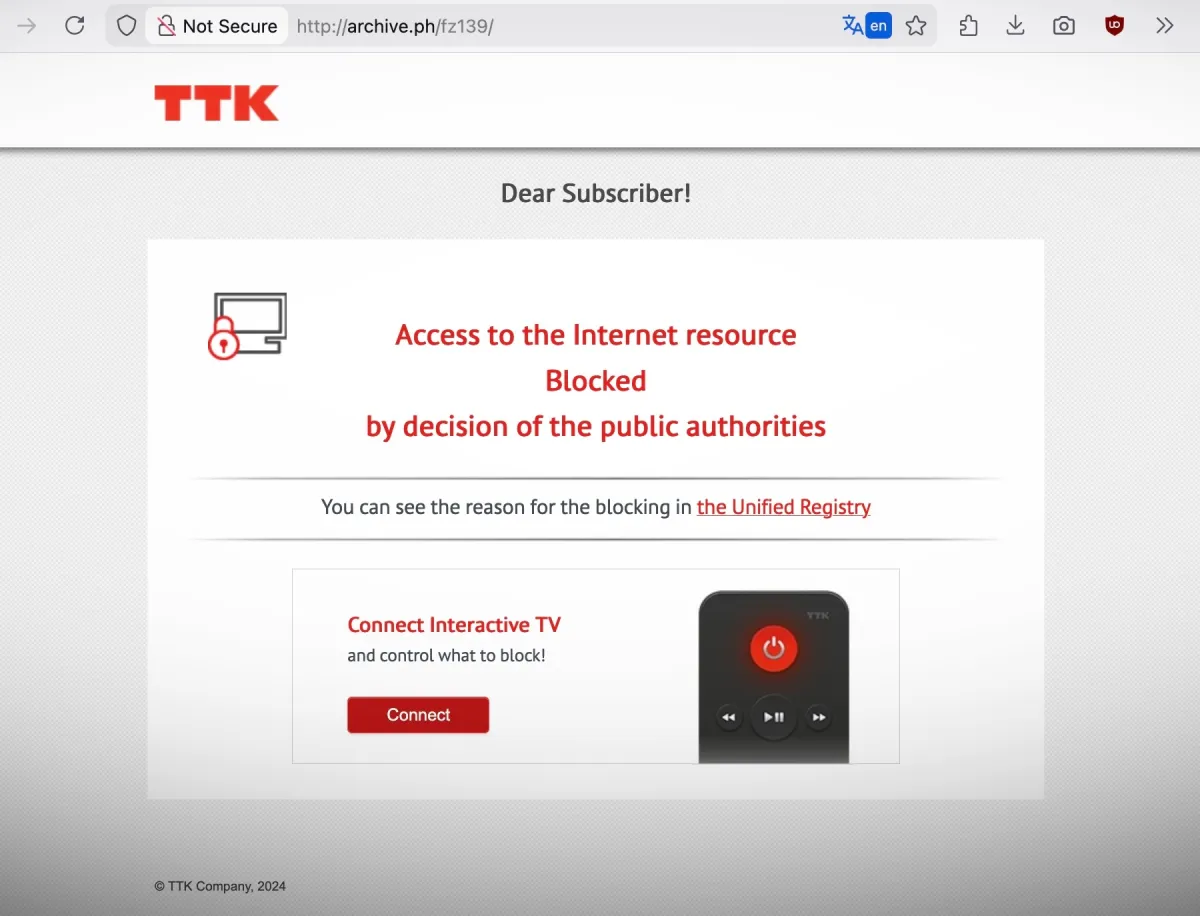

Recent actions by Russian authorities to block access to the Archive.today website and associated domains represent a notable development with potential ramifications for the burgeoning digital economy within the Middle East and North Africa (MENA) region. Archive.today, a widely utilized platform for preserving web content – particularly valuable for accessing paywalled information and historical data – has been targeted, signaling a continued trend of government control over information flows. While the precise motivations for this action remain unclear, it underscores the delicate balance between digital access and state oversight, a dynamic increasingly relevant as MENA nations invest heavily in digital transformation initiatives.
The implications for sovereign capital and venture capital in MENA are multifaceted. The availability of archived information is crucial for due diligence, market analysis, and strategic decision-making by both state-backed investment funds and private equity firms operating in the region. Restrictions on such resources can impede informed investment strategies and potentially slow the deployment of capital into key sectors like fintech, e-commerce, and renewable energy – sectors attracting significant regional and international VC interest. Furthermore, the incident highlights the vulnerability of digital infrastructure to geopolitical pressures, a risk that investors will increasingly factor into their regional exposure.
From a regional infrastructure perspective, the blocking of Archive.today also raises questions about internet freedom and the scalability of digital services in MENA. While the technical details of the block remain somewhat opaque, such actions can create friction for businesses relying on reliable and unrestricted access to information for operations, customer service, and market research. The incident also echoes recent concerns regarding cybersecurity and the potential for malicious activity targeting online platforms. This necessitates a stronger focus on robust digital infrastructure and cybersecurity protocols across the MENA region to ensure the resilience of online services and maintain investor confidence as the region continues to build its digital economy.
The underlying controversy surrounding Archive.today’s recent actions regarding Wikipedia usage – specifically the alleged misdirection of network traffic – further complicates the narrative. While not directly a government action, this incident underscores the importance of trust and transparency in digital archiving services, which are essential for long-term knowledge preservation and economic development. For MENA, where access to reliable and diverse information sources is vital for innovation and competitiveness, such disruptions, whether state-sponsored or arising from platform-specific issues, present a challenge that requires proactive consideration by policymakers and industry stakeholders.