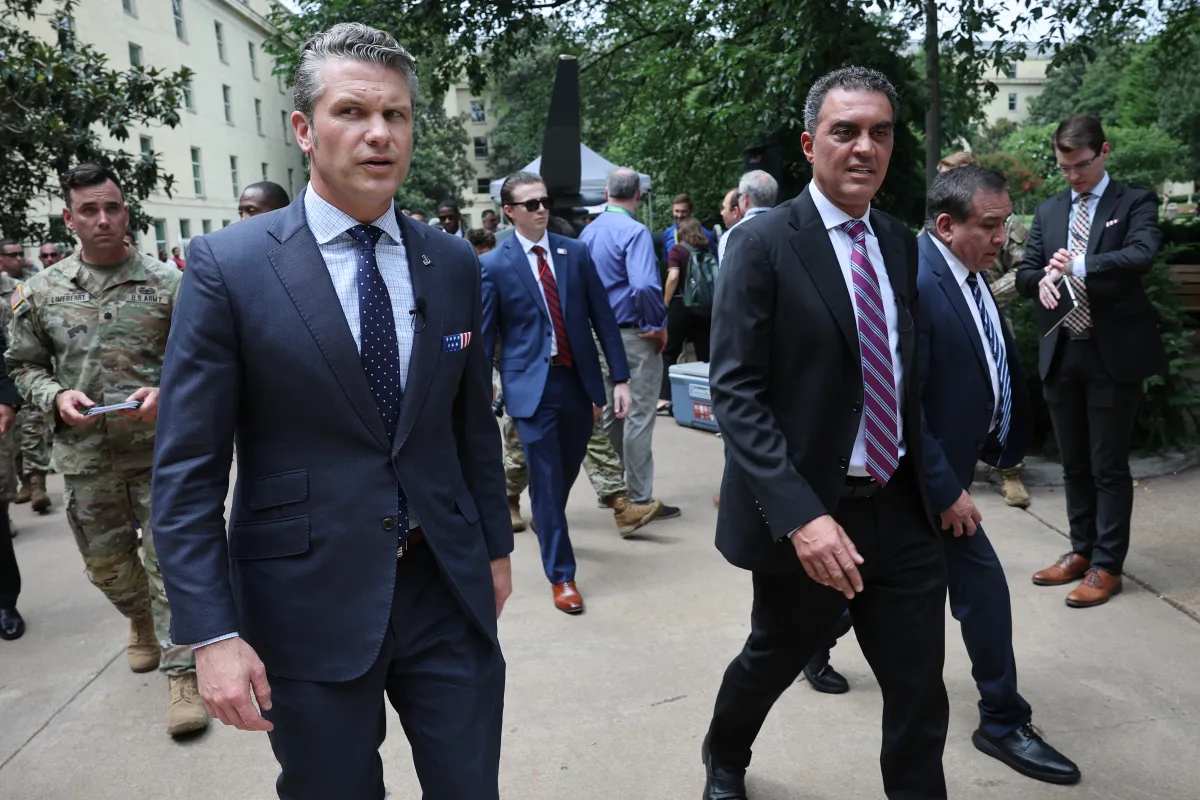

The senior Pentagon official, Emil Michael, has reiterated that granting a single commercial AI provider—Anthropic—the ability to impose its own use‑policy constraints on Department of Defense systems would jeopardize national security. By limiting the DoD’s choice to a vendor‑specific interface, the government risks creating a single‑point failure that adversaries, notably China, could exploit through model distillation techniques. Michael’s warning underscores a broader strategic imperative: sovereign control over critical AI capabilities must be preserved to maintain geopolitical leverage.
For the Middle East’s sovereign wealth funds, Michael’s stance validates a growing appetite for localized AI infrastructure that can be directly integrated into defense and economic planning. Investors in Saudi Arabia, the UAE, and Qatar are shifting capital toward domestic compute clusters, edge‑enabled data centers, and regulatory sandboxes that enable home‑grown AI solutions under government oversight. This pivot reflects a calculated move to mitigate exposure to foreign‑controlled AI supply chains.
Venture capital patterns across the MENA region mirror this urgency. Deal activity in autonomous systems, robotic process automation, and AI‑driven logistics has surged by double‑digit percentages year‑over‑year, attracting allocations from both regional funds and global limited partners seeking exposure to sovereign‑backed technology ecosystems. The emphasis now is on building end‑to‑end platforms that can serve both commercial markets and government contracts, thereby amplifying the ROI of large‑scale infrastructure investments.
Infrastructure ramifications are profound: the need for sovereign GPU farms, low‑latency fiber networks, and interoperable data standards will dominate capital allocation agendas over the next five years. Such developments are expected to catalyze new public‑private partnerships, spur the emergence of national AI policy frameworks, and ultimately reshape the competitive dynamics of regional tech markets, positioning the Gulf as a pivotal hub for autonomous and defense‑grade artificial intelligence.