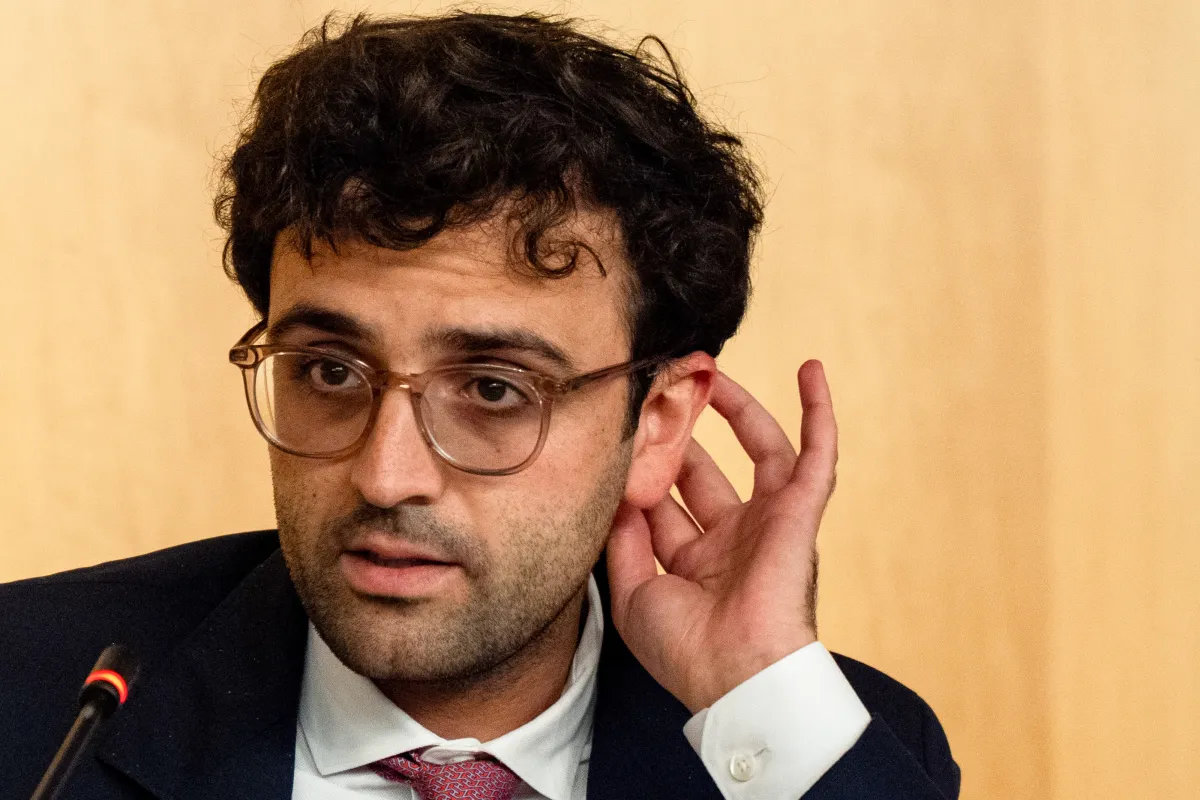

The intensifying rivalry between prediction market platforms Kalshi and Polymarket, underscored by their combined $42 billion valuations in recent funding rounds, transcends mere startup competition. This signals a strategic convergence within the global fintech landscape, with profound implications for Middle East and North Africa (MENA) sovereign wealth capital seeking exposure to next-generation financial infrastructure. The co-investment by both CEOs—Kalshi’s Tarek Mansour and Polymarket’s Shayne Coplan—in 5(c) Capital, a $35 million VC fund, represents a tacit acknowledgment of prediction markets’ systemic importance. For MENA investors, this validates a nascent asset class where early entry could yield significant portfolio diversification benefits, aligning with regional funds’ mandates to deploy capital into high-growth, technology-driven ventures globally.
The establishment of 5(c) Capital, led by former Kalshi executives targeting prediction market infrastructure providers, further catalyzes MENA’s venture capital ambitions. While the fund’s scale remains modest compared to MENA sovereign vehicle deployments, its focus on “second-, third-, and fourth-order effects” resonates with regional strategic interests in predictive analytics and data-driven decision frameworks. MENA sovereign entities, cognizant of prediction markets’ potential to enhance economic forecasting and risk management, may gain first-mover advantage by co-investing or establishing dedicated fintech incubators mirroring 5(c)’s infrastructure-centric thesis. The participation of institutional backers like Andreessen Horowitz and Ribbit Capital signals broader institutional validation, providing MENA capital with a credible benchmark for deal structures and due diligence in this emerging space.
Regionally, the prediction market surge presents both challenges and opportunities for MENA’s evolving financial infrastructure. The regulatory clarity sought for platforms like Kalshi and Polymarket directly informs MENA jurisdictions’ own digital asset and derivative frameworks, particularly in key hubs like Abu Dhabi, Dubai, and Bahrain. The focus on market makers and index designers by 5(c) Capital highlights a critical gap MENA could address, leveraging its burgeoning fintech hubs to build localized prediction market engines. This necessitates coordinated investment in regulatory sandboxes, distributed ledger technology infrastructure, and quantum-resistant computing capabilities. Failure to position MENA as a builder of prediction market infrastructure risks perpetuating reliance on Western platforms, while proactive sovereign-backed development could position the region as an early ecosystem architect, capturing value creation and talent development within this transformative financial paradigm.