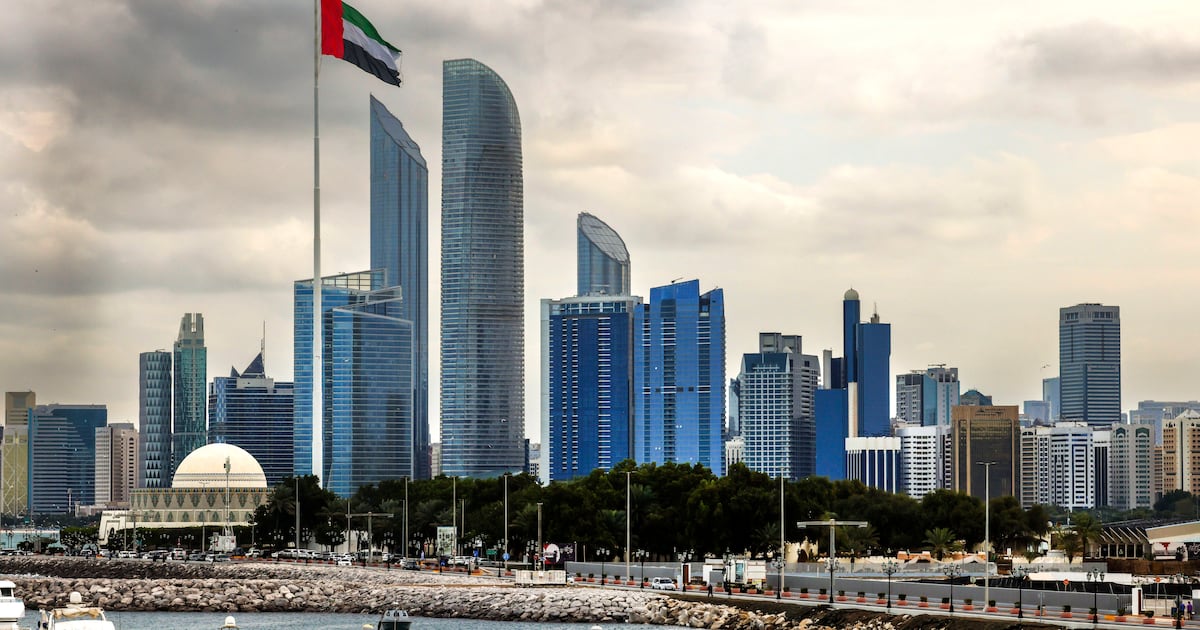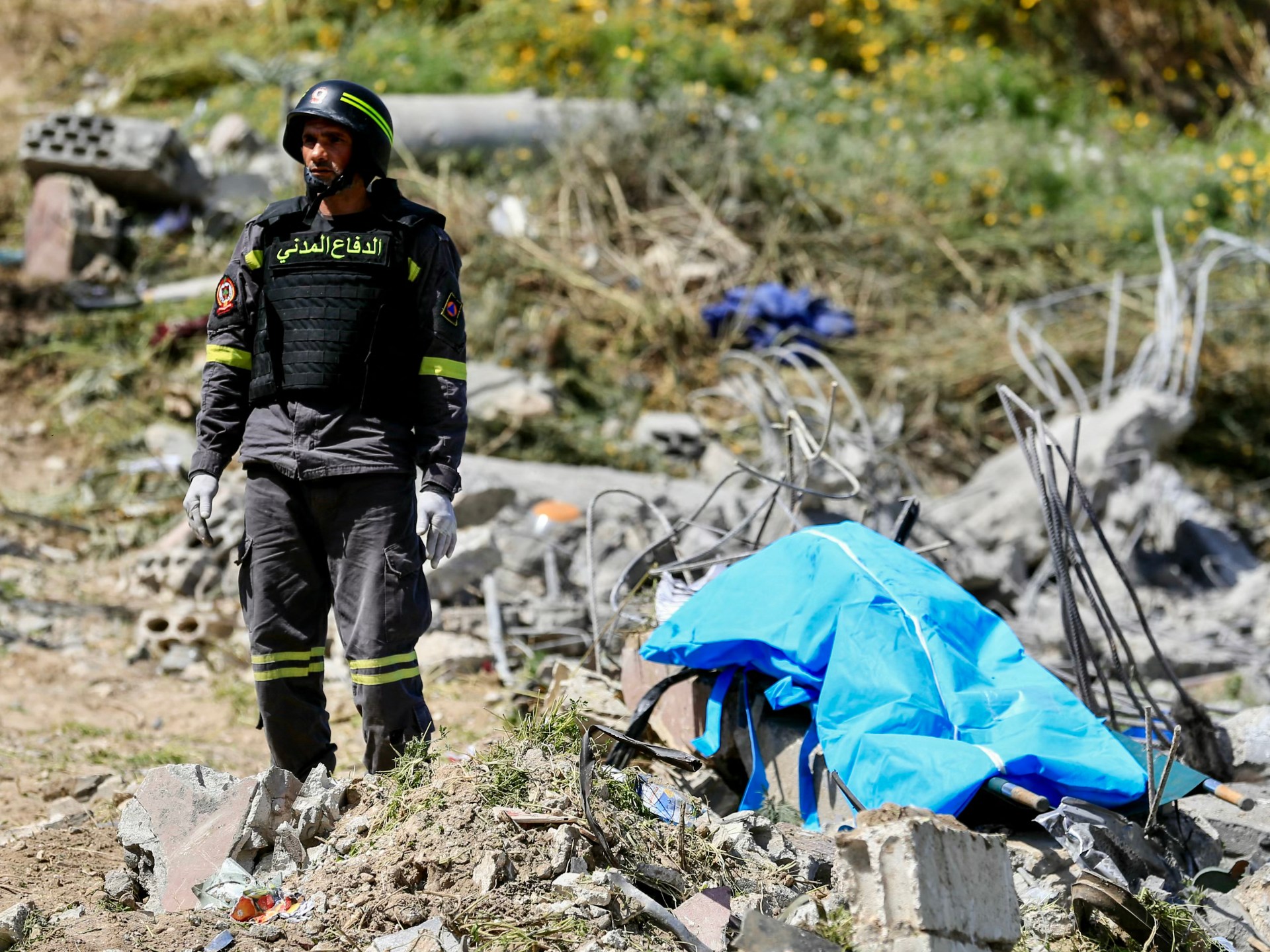

Rain fell across the UAE on Tuesday, with forecasters warning conditions could intensify over the next three days as a powerful low-pressure system moves across the region.
The peak of the unstable weather is expected on Thursday night into Friday morning with heavy rain, strong winds and thunder, the National Centre of Meteorology said. The UAE has been hit by downpours for several days now. Parts of Abu Dhabi and Ajman received almost a year’s worth of rain on Monday, prompting authorities to remain on alert.
The NCM reported that 93.3mm of rain fell at its gauge in Al Manama, Ajman. Ghayathi, in the west of Abu Dhabi emirate, recorded 91mm, while Al Wathba, near Abu Dhabi city, received 88.2mm. More wet weather is expected on Wednesday, with “intermittent rain in scattered areas across the country”, the NCM said.
By Thursday evening, however, heavy rain is forecast to build in Abu Dhabi emirate before spreading nationwide.
An NCM forecaster told The National rain is set to begin in the west before moving across the country overnight until the morning. “The patterns can change,” the forecaster said. “But there will be heavy rain at times and strong winds.”
The full impact of the system remains uncertain, but high winds, thunderstorms and localised flooding are possible, with some international forecasters not ruling out a rare tornado in the region.
Jason Nicholls, lead international forecaster for AccuWeather, told The National that rain and thunderstorms will continue from eastern Saudi Arabia, Bahrain, Qatar and UAE into eastern Oman until Friday.
“A strong area of low pressure aloft will enhance the coverage of the precipitation Thursday into Friday with a good chance for hail, damaging wind gusts, isolated tornadoes and areas of flash flooding,” he said. Mr Nicholls said there was a reported tornado along the coast of Saudi Arabia near Bahrain on Monday and that “the ingredients for a tornado will remain in place”.
How common are tornadoes?
Tornadoes form when warm, moist air rises into a thunderstorm with strong wind shear, causing a rotating column of air. They are unusual in the UAE but they have been spotted before, as have waterspouts.
Mr Nicholls said the most significant factor needed to generate the spin for a tornado is wind shear, which is a difference in wind speed and/or direction over a short distance. This is present in severe thunderstorms. “A waterspout is just a tornado that occurs over water, so all we need is to get the funnel cloud to develop over land instead of water,” he said.
The UAE’s National Emergency Crisis and Disaster Management Authority (Ncema), meanwhile, said it was monitoring the situation. Ncema added that guidance would be issued through its early warning system in the case of any threat to safety. The Ministry of Interior also urged the public to stay away from flooded areas and wadis.
Dubai Media Office said heavy fines would be imposed on those who break the rules. The office warned that people gathering near valleys, dams and other flood-prone areas could face fines of up to Dh1,000 ($272) and have six black points added to their driving licence.
The roads have been quieter due to schools moving to remote learning because of the war with Iran, while some companies have mandated working from home.
Howard Townsend, an unofficial weather forecaster in the UAE with a Facebook following of more than 14,000, said the system passing through the Gulf was “volatile”.
“The next few days – Wednesday until Saturday morning – are going to see extensive heavy showers with some coming in overnight in many areas,” he said. “The Gulf coastline, especially Dubai and the Northern Emirates, will see the worst of this”. He emphasised that his forecasts are his opinion and that everyone should follow official warnings and notifications.
The rains have also affected other Gulf countries. Reuters reported on Monday that at least five people died in Oman after vehicles were swept away by floodwaters.
This week’s unstable weather comes almost two years after the UAE experienced its heaviest recorded rainfall. On April 16, 2024, heavy rain disrupted flights, inundated homes and flooded roads, with Dubai and Sharjah particularly badly affected. The state news agency Wam called it “a historic weather event” that surpassed “anything documented since the start of data collection in 1949”.
Authorities have moved to improve drainage systems following the 2024 floods to limit the effects of major rainfall. Dubai, for example, is building a Dh30 billion drainage project called Tasreef, which is due to be completed in 2033.
Scientists believe global warming is making stormy days in the UAE more common and more powerful. Scientists at Abu Dhabi’s Khalifa University and the National Centre of Meteorology found that there are up to two more stormy days per year now compared to 2000.
“With global warming, we know that the air is capable of holding more moisture and [this is] therefore fuelling severe convection and extreme rainfall,” said Dr Diana Francis, head of Khalifa University’s Environmental and Geophysical Sciences (Engeos) Laboratory, who is also one of the study’s authors.