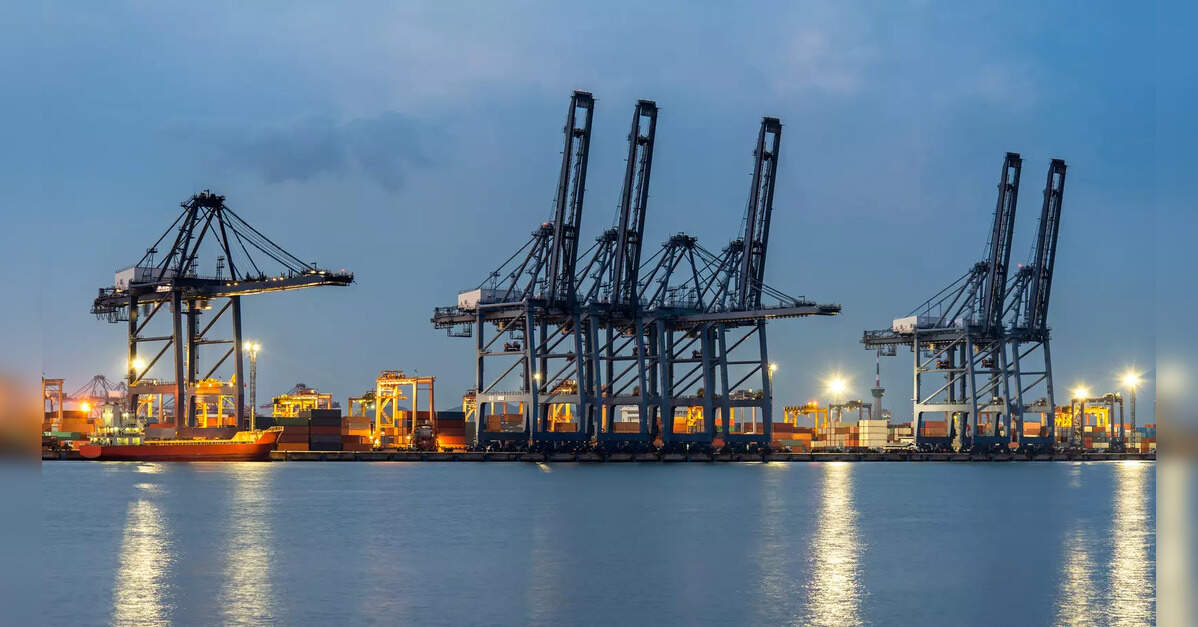

The Jawaharlal Nehru Port Authority (JNPA) is contemplating a four-year extension of the concession for Nhava Sheva International Container Terminal (NSICT), a move with significant implications for the Middle East and North Africa (MENA) region’s logistics and infrastructure landscape. While the proposed extension maintains existing royalty terms, including a 6% annual increase, the decision underscores the strategic importance of robust port infrastructure for regional trade growth. This move also highlights the interplay between sovereign capital allocation, private sector investment, and the evolving dynamics of global shipping.
From a business and investment perspective, the extension provides continuity for DP World’s operations at NSICT, a key gateway for cargo into and out of India, a rapidly growing economy within the broader MENA trade network. However, the lack of a competitive bidding process raises questions about optimal revenue generation for JNPA. Industry experts suggest that a pro rata upfront fee should be incorporated into the extension agreement to compensate for the guaranteed cargo volume, particularly given DP World’s recent successful bid for a greenfield terminal in Kandla at a significantly higher per-TEU royalty rate. This situation could incentivize JNPA to reassess future concession bids to ensure maximizing returns while maintaining investor confidence.
The long-term implications extend to regional infrastructure development. Experts advocate for a strategic approach that considers the combined potential of NSICT and the adjacent Nhava Sheva (India) Gateway Terminal (NSIGT). Auctioning these facilities as a single entity could attract larger players and generate more competitive royalty offers, ultimately benefiting JNPA and potentially accelerating the upgrade of terminal infrastructure. The current staggered concession end dates (2027 for NSICT and 2031 for NSIGT) necessitate proactive planning to ensure seamless operational synergy and avoid costly delays in berth and equipment modernization – a crucial factor for maintaining competitiveness within the region’s burgeoning container shipping market.
The decision regarding the NSICT concession extension, and the potential for future combined tenders, reflects a broader trend in the MENA region towards strategic port development as a cornerstone of economic diversification and trade facilitation. Sovereign wealth funds in the region continue to recognize the long-term value of such investments, while the appetite for private sector participation remains strong. The efficiency and capacity of ports like JNPA are vital for attracting foreign direct investment, supporting local manufacturing, and enhancing connectivity within the global supply chain. The outcome of these decisions will have a ripple effect across the MENA logistics ecosystem, influencing investment flows and the competitiveness of regional trade routes.