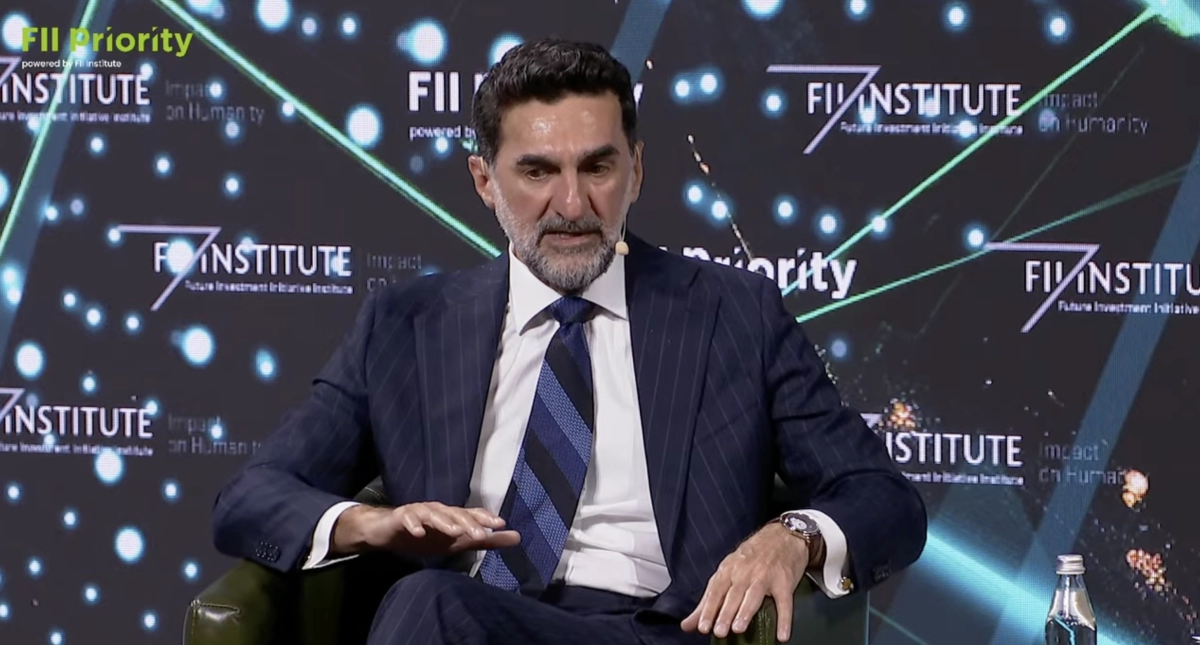

The Public Investment Fund’s (PIF) strategic realignment under Yasir Al-Rumayyan signals a paradigm shift in sovereign capital deployment across the Middle East and North Africa (MENA). By pivoting from self-funded asset accumulation to a partnership-driven model, PIF is redefining the region’s role in global sovereign wealth management. This transition, emphasizing third-party capital mobilization and de-risking mechanisms, positions Saudi Arabia not merely as an oil-rich economy but as a strategic nexus for sovereign capital investment. For the region, this implies a recalibration of sovereign funds to act as intermediaries for foreign capital, mitigating idiosyncratic risks in sectors like renewable energy and infrastructure. The business impact is profound: such a model could catalyze cross-border institutional partnerships, fostering a more integrated MENA financial architecture. However, challenges remain in aligning regulatory frameworks with global standards to attract long-term venture capital inflows, a challenge exacerbated by geopolitical fragmentation and varying sovereign risk perceptions.
The PIF’s focus on infrastructure and venture capital ecosystems underscores its ambition to decentralize economic power within MENA. Projects like Red Sea Global exemplify how large-scale infrastructure development can attract global investors through shared risk models and diversified revenue streams. This approach directly addresses regional infrastructure gaps while creating venture capital opportunities in adjacent sectors—such as smart logistics and sustainable tourism. For MENA, this signals a maturation of venture ecosystems, moving beyond early-stage tech investments to scalable infrastructure-led businesses. Yet, the region must navigate the tension between sovereign-backed projects and private-sector exit strategies. Without robust governance frameworks and transparent financial metrics, PIF’s infrastructure plays may struggle to attract the risk-tolerant capital required for venture-scale innovation. The success of such initiatives hinges on aligning regional priorities with global investor appetites for tangible, scalable returns.
Artificial intelligence emerges as a critical enabler in this transformation, though its implications extend beyond technology adoption. Al-Rumayyan’s emphasis on AI as a cost-reduction and efficiency tool reflects a strategic nod to MENA’s need to leapfrog legacy systems in sectors like energy, healthcare, and finance. The partnership with U.S. tech giants—Microsoft, Google, and Oracle—positions Saudi Arabia to tap into AI-driven solutions while mitigating data sovereignty concerns through localized infrastructure. From a venture capital perspective, AI integration offers high-growth opportunities in AI-as-a-service models tailored for MENA’s fragmented markets. However, the region’s slow digital infrastructure development remains a bottleneck. Regional infrastructure investments must prioritize connectivity and data centers to unlock AI’s full potential. Sovereign funds like PIF, therefore, face a dual mandate: accelerate digital infrastructure while ensuring private-sector agility in capturing AI-driven value creation across the region’s diverse economies.