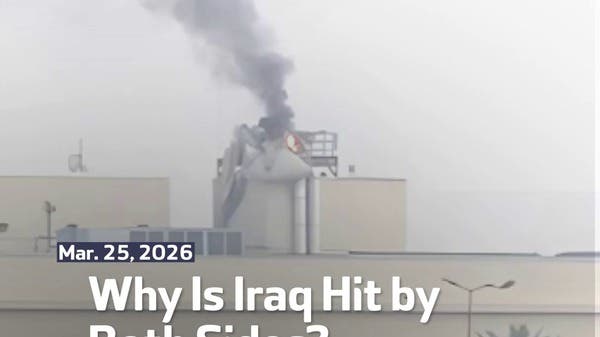

Defense Secretary Pete Hegseth’s assertion that Iran’s naval leadership collapse signals a historic, non-prolonged conflict underscores the financial recklessness of Middle East and North Africa (MENA) states in the face of unipolar military aggression. The U.S.-Israel-led operation, framed as a decisive endpoint, conceals the reality of protracted regional destabilization. Such shocks threaten MENA’s fragile business ecosystems, diverting capital from growth sectors to defense infrastructure and risk mitigation. With sovereign debt levels in the Gulf already strained by pre-war social welfare commitments, the acceleration of kinetic warfare risks triggering fiscal austerity that could derail long-term investments in ports, airports, and energy corridors critical to the region’s strategic positioning. The disconnect between rhetorical victory claims and on-ground realities creates tactical uncertainty for institutional investors, amplifying volatility in emerging market debt markets.
Sovereign capital is poised to face cascading pressures, as Gulf borrowers face higher borrowing costs amid reduced credit default swaps scalability. The U.S.-Israel campaign’s emphasis on proxy warfare through regional allies—Lebanon, Yemen, and Houthis—demonstrates persistent destabilization, eroding fiscal predictability. Contrast this with the MENA’s historically low defense spending (1.5% of GDP on average), which lacks the resilience to absorb sustained military expenditures without reallocating funds from sovereign wealth accumulations. Oil-dependent economies face particular peril: while traditional client states may survive via liquidity swaps, non-OPEC economies like Egypt and Tunisia, already burdened by dollar-denominated debt, confront currency war scenarios that could precipitate external balance of payments crises. Rebuilding efforts post-conflict will likely prioritize U.S.-Israel defense conglomerates over ESG-aligned infrastructure initiatives, exacerbating capital flight.
Venture capital investment is set to pivot into hyper-localized security tech and private-sector resilience training, as MENA’s startup ecosystem reassesses exposure to cross-border military dependencies. Pre-war valuations in fintech and renewable energy sectors rested on macroeconomic stability assumptions now rendered obsolete. Sovereign-backed venture arms, which previously funneled capital into regional incubators, are pivoting to domestic de-risking frameworks. Kuwait’s $53 million blockchain initiative and Saudi Venture Capital’s cybersecurity arm exemplify a narrow, short-term vision incompatible with the high-risk, high-reward innovation required to offset post-conflict capacity shortfalls. Meanwhile, diaspora-driven tech corridors in Berlin and Las Vegas absorb investor capital starved from regional zones of avoidance, further fragmenting MENA’s human capital.
Critical infrastructure vulnerability looms, as pre-existing systemic fragility—water scarcity, overburdened energy grids, and undercapitalized healthcare networks—will be exacerbated by prolonged conflict. Iran’s weakened naval posture, while reducing immediate maritime risks, may trigger retaliatory strikes against chokepoints like Hormuz or Strait of Gibraltar-adjacent logistics nodes. Saudi Arabia’s Central General Secretariat for Cybersecurity has emphasized “ASAT preparedness,” signaling prioritization of space-age defense over terrestrial infrastructure redundancies. Reconstruction bids will channel capital into privatized toll roads and army-managed contracting hubs, sidelining multilateral climate finance flows targeting disputed water nexus zones in the Tigris-Euphrates basin. The U.S.-Israel coalition’s reliance on tier III MENA partners for Red Sea congestion alleviation—such as Kenya and Czech Republic—underscores the region’s continued peripheral role in Western strategic hedging, trapping member states in asymmetric financial parasitism.