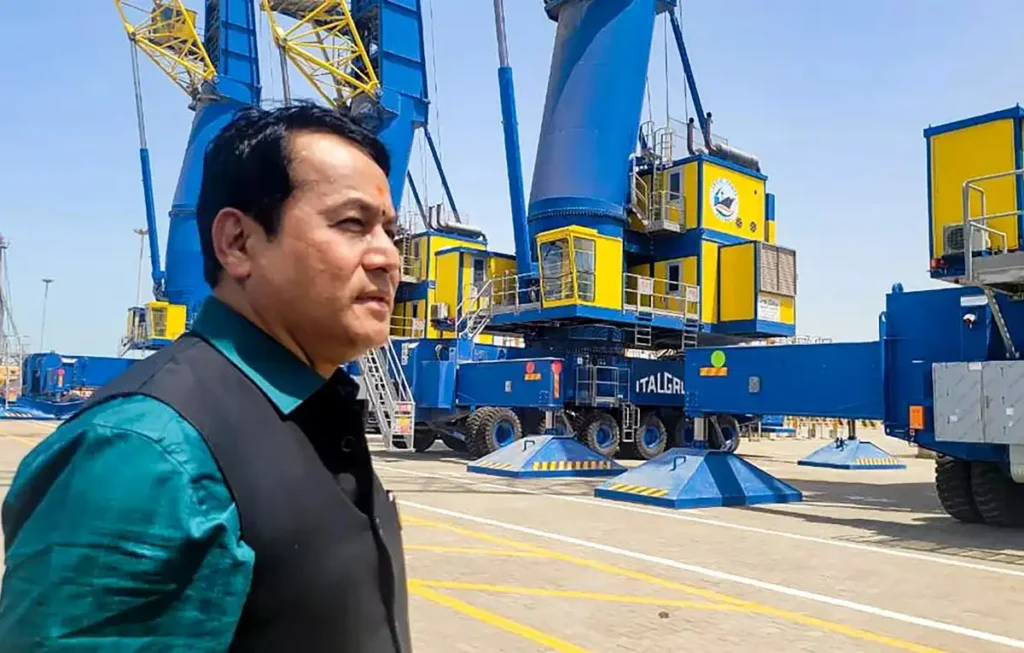

The recent endorsement ofa ₹472 crore road‑over‑bridge and associated road upgrades at Tuna‑Tekra by Minister Sarbananda Sonowal reflects a decisive sovereign capital allocation aimed at dismantling cargo‑evacuation bottlenecks. By integrating viaducts and a creek‑crossing bridge into a dedicated freight corridor, the project creates a high‑capacity conduit that directly links the Tuna‑Tekra Mega Container Terminal—projected to handle 2.19 million TEU annually—to the national logistics network. This infrastructure commitment underscores a broader maritime‑reform agenda that prioritizes seamless port‑to‑inland connectivity, a prerequisite for scaling export volumes and attracting foreign shipping alliances.
From a business‑impact perspective, the new ROB is expected to truncate vessel turnaround times by up to 25 percent and cut heavy‑vehicle dwell on arterial roads, thereby reducing demurrage costs and improving asset utilization for terminal operators. The 10‑year maintenance framework further guarantees operational resilience, enabling consistent throughput well beyond the terminal’s commissioning phase. For freight forwarders and shippers, the enhanced evacuation pathway translates into predictable transit schedules and lower landed‑cost differentials, positioning the region as a competitive hub for high‑value containerized trade.
Strategically, the project is attracting sovereign‑wealth fund interest and catalyzing venture‑capital inflows into ancillary logistics technologies, such as AI‑driven freight‑matching platforms and smart‑toll systems that complement physical upgrades. The infusion of private capital into digital freight ecosystems amplifies the ROI of sovereign‑backed infrastructure, creating a virtuous loop where efficient physical corridors unlock data‑rich service markets. This synergy is increasingly viewed by regional investors as a blueprint for replicable, scalable logistics ecosystems across the Middle East and North Africa.
Regionally, the approval sets a precedent for integrated port‑access projects that marry sovereign financing with private‑sector innovation, thereby accelerating the development of intermodal corridors linking Red Sea, Gulf, and Mediterranean gateways. By streamlining cargo flow and reducing transport friction, such initiatives bolster the attractiveness of MENA‑based logistics parks to multinational shippers and foster deeper integration into global supply chains. The ripple effect is a projected uplift in trade‑logistics efficiency that reinforces the strategic positioning of Gulf states and North African economies as pivotal nodes within emerging maritime corridors stretching from the Indian Ocean to the Atlantic.