
The GCC solar water heater market is emerging as a pivotal node in the region’s broader energy transition strategy, underpinned by surging sovereign capital commitments and shifting technology paradigms. IMARC Group data forecasts market expansion from USD 125.2 million in 2025 to USD 396.3 million by 2034, an accelerated 13.25% CAGR trajectory. This growth is being steered by government-led energy-efficiency mandates and capital-intensive giga-projects in Saudi Arabia, the UAE, and Qatar that are embedding solar water heating as a standard fixture.
Saudi Arabia’s Vision 2030 is the apex driver here, coupling the National Renewable Energy Programme’s 58.7 GW renewables target with Saudi Energy Efficiency Center efficiency standards that redirect developers toward solar alternatives over legacy electric units. Research indicates buildings account for more than 70% of the Kingdom’s power consumption, and mandatory solar hot-water provisions in new residential and commercial developments are crystallizing that policy intent. The Public Investment Fund recently committed USD 800 million to localize smart home appliance manufacturing, aiming for 65% domestic production by 2030, with solar water heaters already designated as a strategic vertical for jobs and component supply chain localization.
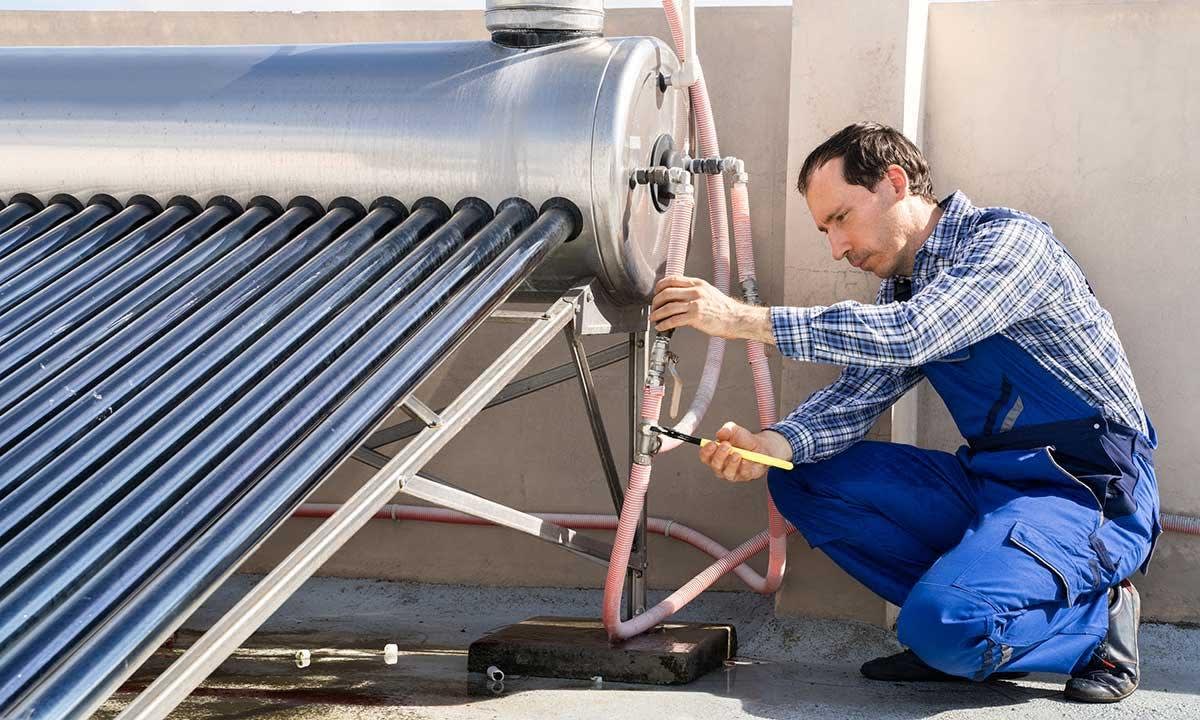
Gulf-wide, advanced technologies are compressing payback periods. Evacuated tube collectors are gaining traction in coastal markets such as Oman and the UAE, where superior performance in diffuse-light haze conditions outperforms traditional flat plate units. Hybrid systems, integrating solar kinetic heating with heat-pump backup, are now seeing traction in the hospitality and healthcare sectors for their resilience when demand fluctuates. AI-driven controllers are further sharpening economics, enabling predictive maintenance, load alignment against grid demand peaks in smart building contexts, and reducing thermal degradation in high-temperature settings like NEOM’s planned smart-city modules. The UAE Ministry’s “Efficient Water Heating Initiative,” offering 40% rebates and targeting half a million upgrades, underscores how policy levers are converting long-term energy-efficiency goals into proximate market momentum.