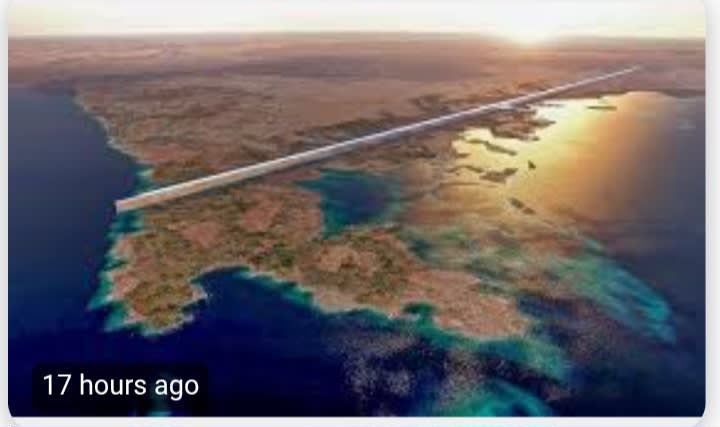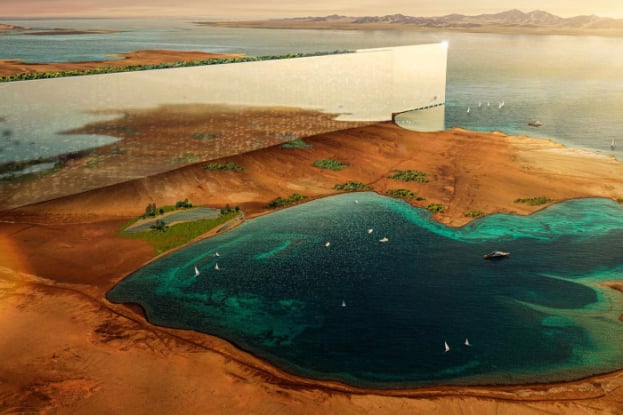

Saudi Arabia’s temporary suspension of major construction investments in NEOM, the $500 billion megaproject envisioned as a cornerstone of its Vision 2030 economic diversification strategy, underscores the growing granularity of capital allocation in the region. While the move reflects short-term constraints—soaring costs, geopolitical headwinds, and competing priorities like Expo 2030—the strategic recalibration signals a broader institutional shift toward prioritizing liquidity preservation and return-on-investment rigor. NEOM, initially heralded as a blueprint for Saudi Arabia’s transition to a non-oil future, now faces scrutiny over its viability as a standalone project, with its capital expenditure model straining even under Vision 2030’s ambitious fiscal architecture. This pause is less about abandonment than about reorienting public and private capital toward immediate revenue generators, such as logistics, digital infrastructure, and tourism enablement, while maintaining NEOM’s symbolic role in the kingdom’s long-term innovation narrative.
The suspension reverberates through the MENA region’s venture capital and institutional investor ecosystems, which have already demonstrated cautious engagement with high-risk, high-reward projects tied to regulatory and operational uncertainties. While NEOM’s ecosystem ambitions—ranging from AI-driven governance to autonomous mobility systems—have attracted fantastical valuations, the halting of contracts like tunnel construction for The Line threatens nascent startup traction and regional talent migration plans. Venture capitalists, however, are likely to view the correction as a necessary market reset, akin to the recalibrations across Silicon Valley’s overvalued startups in 2022–23. For private equity firms, the move highlights a pragmatic pivot within Saudi Arabia’s diversification playbook: reallocating sovereign capital toward scalable, near-term sectors while Neo-cities remain aspirational benchmarks, dependent on geopolitical stability and global economic predictability.
Regionally, NEOM’s pivot mirrors a recalibration of infrastructure priorities across Gulf states, where sovereign capital is increasingly directed toward asset-light, digitally integrated systems that yield immediate economic dividends. Gulf Cooperation Council (GCC) governments, facing muted global demand for crude and pervasive fiscal pressures, are prioritizing projects with quantifiable ROI—such as smart ports, digital payment networks, and last-mile mobility solutions—over speculative megaprojects. NEOM’s evolution into a digital-tourism-forward hub, with reduced emphasis on its hyper-ambitious physical scale, aligns with broader MENA infrastructure trends favoring multi-use zones with embedded economic activities. This shift amplifies opportunities for cross-border institutional investment in digital transformation, but risks diluting Saudi Arabia’s leadership narrative in regional innovation, a role critical to attracting talent and capital.
Ultimately, the NEOM case study encapsulates the dual challenges and imperatives of Middle East economic modernization: balancing grandeur with pragmatism, and legacy with disruption. While the kingdom’s Vision 2030 remains intact, its misapplication of concentrated capital to singular, speculative bets could undermine institutional credibility among foreign investors. The halting-of-contracts episode serves as a cautionary nexus of fiscal discipline, geopolitical agility, and strategic foresight—lessons likely to shape sovereign capital deployment and private investment paradigms across nonlinear economic transitions in the region. NEOM’s future, and perhaps the region’s digital economic model, hinges on the kingdom’s ability to align its ambition with operational realities.