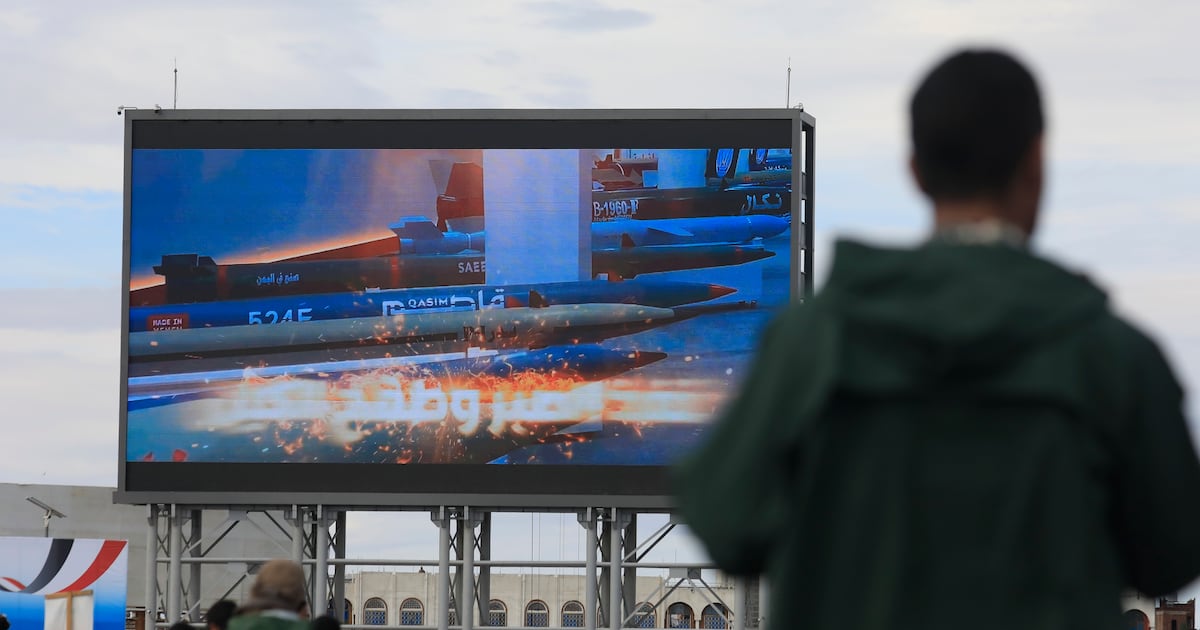

The Yemen-Houthi escalation, marked by the recent ballistic missile strike targeting Israel, introduces profound systemic risks to regional and global economic stability, with direct ramifications for sovereign capital flows, venture capital allocation, and infrastructure resilience in the Middle East and North Africa (MENA). The Houthis’ explicit linkage of their military actions to broader regional conflicts—particularly their demand for cessation of U.S.-Israeli operations against Iran—positions the Red Sea and Bab Al Mandeb strait as a catalyzing node for further geopolitical fragmentation. This dynamic threatens to erode investor confidence in MENA sovereign capital, as energy-dependent economies in the region face heightened uncertainty over shipping routes critical to global trade. The near-term diversion of sovereign resources toward military preparedness or crisis mitigation could crowd out strategic investments in diversification, exacerbating vulnerabilities in a region already grappling with fiscal constraints. For venture capital, the conflict signals a bifurcated landscape: opportunistic funding may flow into logistics tech, maritime security solutions, or alternative energy corridors, while the specter of protracted instability could deter capital from non-essential sectors. The interplay of sovereign fiscal priorities and venture risk appetites will dictate whether MENA can leverage the crisis to pivot toward resilience-focused innovation or remain trapped in a cycle of reactive spending.
The strategic importance of Bab Al Mandeb as a linchpin for global supply chains amplifies the business implications of Houthi actions, creating a cross-cutting threat to regional infrastructure investment. Any sustained disruption to this chokepoint—already stressed by prior Houthis-backed attacks on commercial shipping and recent Houthi assertions of direct military intervention—would fracture the continuity of the Gulf-Aden-Red Sea corridor, a pathway through which 12% of global trade and a significant portion of MENA’s hydrocarbon exports transit. This fragility incentivizes regional governments to recalibrate infrastructure spending toward redundancy, such as bilateral port partnerships or regional pooling of maritime defenses. However, the prioritization of security over development risks undermining long-term growth objectives, particularly in sovereign capitals like Djibouti or Oman, which rely on stable maritime revenue streams. Venture capital, meanwhile, may face a dual challenge: while the crisis could spur investments in AI-driven vessel tracking or cyber-physical security systems, the destabilization of key nodes may also induce capital flight or regulatory overreach, stifling fintech or digital infrastructure ventures that depend on predictable operational environments. The dilemma for MENA’s private sector lies in balancing immediate threat mitigation with bets on infrastructure that could yield outsized returns in a post-conflict scenario.
The confluence of Houthi aggression and Iran’s regional calculus necessitates a reassessment of sovereign and venture capital risk frameworks in MENA, with infrastructure resilience emerging as a critical strategic asset. The Houthis’ threat to involve other regional actors—explicitly referencing the “Entry of any additional alliances” as a red line—underscores the potential for spillover effects across the region, transforming localized conflicts into basin-wide instability. For sovereign entities, this demands stress-testing capital allocations against cascading shocks, particularly in sectors like energy, where output disruptions could trigger price volatility. Regionally proximate capitals, such as Saudi Arabia or the UAE, may increasingly serve as capital recipients for foreign investments seeking refuge from conflict zones, further centralizing sovereign fiscal flows. Venture capital, attuned to these tectonics, should prioritize ventures tied to decentralized energy storage, blockchain-enabled trade finance for energy commodities, or secure communication infrastructure—away from vulnerability patterns. The infrastructure imperative is equally pressing: investments in autonomous naval deterrence, drone countermeasures, or modular port systems capable of rapid reconfiguration could mitigate Houthi threats while aligning with broader decarbonization goals. Failure to integrate these priorities risks entrenching MENA’s dependency on narrow, conflict-vulnerable assets, with long-term consequences for capital adequacy and competitive positioning in the global economy.