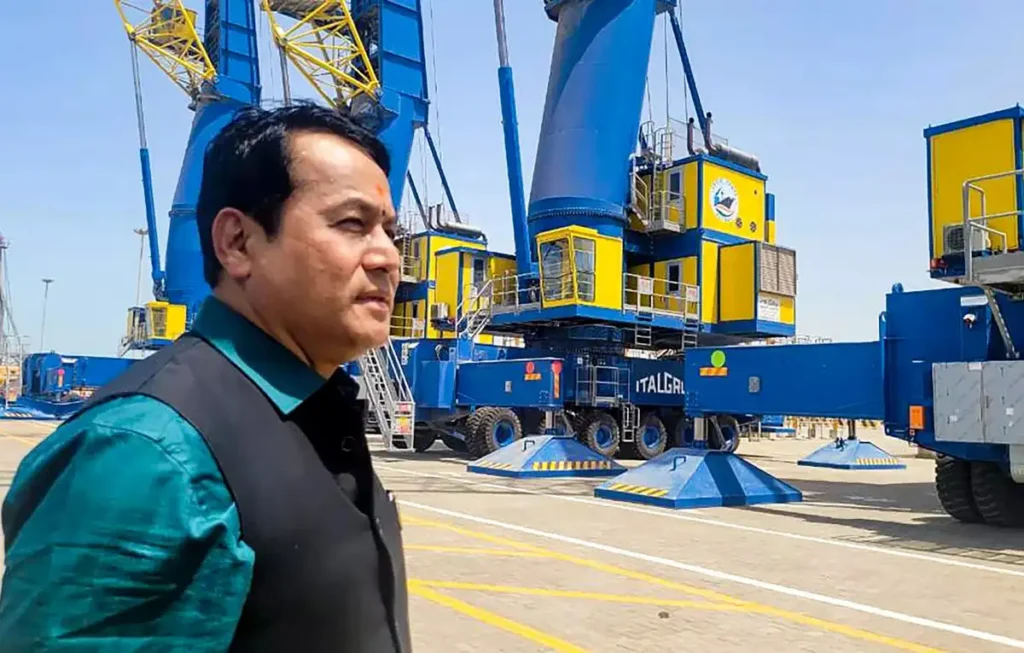

The recent approval by Union MinisterSarbananda Sonowal of a ₹472 crore road‑over‑bridge and associated civil works at Tuna‑Tekra represents a decisive sovereign‑capital deployment aimed at unlocking multimodal bottleneck constraints within India’s western port ecosystem. By earmarking funds for viaducts, a creek crossing and a ten‑year maintenance reserve, the initiative leverages the state’s fiscal might to accelerate the operational readiness of the forthcoming Tuna‑Tekra Mega Container Terminal (2.19 M TEU) and its 18.33 MMTPA multipurpose berth. The alignment with Maritime India Vision 2030 and the Maritime Amrit Kaal Vision 2047 underscores a strategic pivot toward sovereign‑backed infrastructure that can absorb early‑stage risk and catalyze downstream private investment.
From a business standpoint, the project promises measurable reductions in vessel turnaround time and heavy‑cargo bottlenecks, translating into lower demurrage costs and enhanced throughput for terminal operators, shipping lines and exporters alike. This efficiency gain will ripple through the supply chain, compressing landed costs for Indian and regional trade partners and reinforcing the terminal’s appeal as a hub for containerised freight bound for the Gulf Cooperation Council (GCC) states and North‑African corridors. The timing—coordinated with the terminal’s 45 % physical completion—ensures that the infrastructure will already be in service when the terminal reaches commercial capacity, thereby maximizing return on sovereign outlay.
Venture capital and infrastructure‑focused funds are expected to view the Tuna‑Tekra corridor as a prototype for public‑private partnership (PPP) models that blend sovereign guarantee with private risk‑capital participation. The inclusion of a dedicated maintenance fund reduces long‑term operational risk, making the asset more attractive to equity investors seeking stable cash‑flows tied to trade volumes. Moreover, the project’s scalability suggests a replicable template for sovereign‑capital‑driven logistics upgrades across the MENA region, where similar bottlenecks impede the integration of emerging mega‑ports into global value chains.
Regionally, New Delhi’s deployment of sovereign funds to hardened logistics assets sends a clear market signal to Gulf and Maghreb governments: the integration of sovereign wealth into multimodal infrastructure can unlock private capital, enhance trade competitiveness, and diversify economic dependencies. The Indian precedent therefore serves as a strategic reference point for North‑African policymakers contemplating large‑scale port‑linked upgrades, potentially accelerating the emergence of comparable sovereign‑backed corridors in Morocco, Egypt and Saudi Arabia’s Red Sea initiatives.