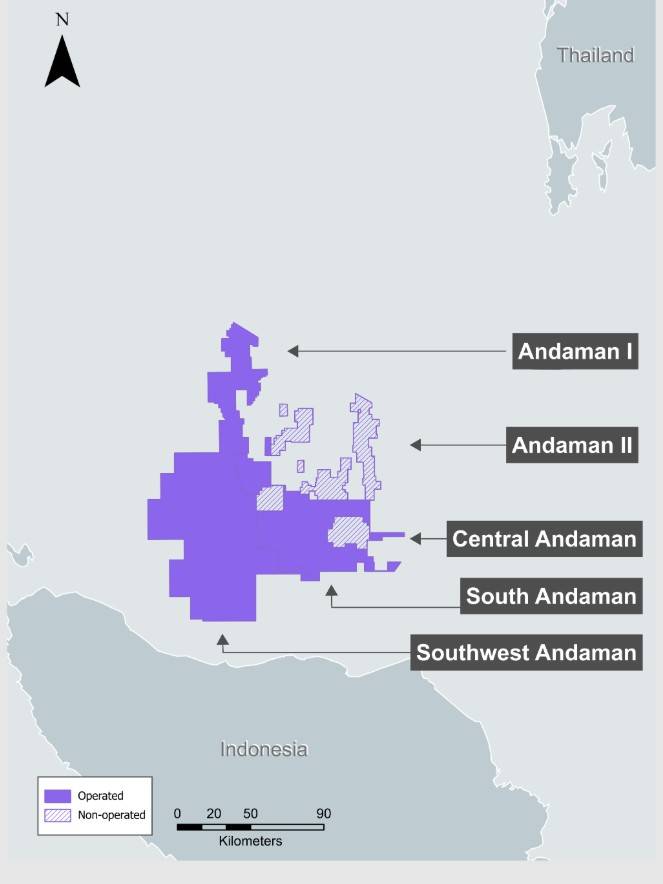

The award of the Southwest Andaman exploration block to Mubadala Energy, a subsidiary of Abu Dhabi’s sovereign wealth fund Mubadala Investment Company, crystallizes a strategic offensive by MENA sovereign capital into high-potential frontier basins. This 100% operated acquisition under Indonesia’s Gross Split scheme is not merely a portfolio addition but a calibrated expansion that leverages Mubadala’s technical expertise in deep-water exploration to secure multi-TCF gas resources. For the UAE and broader MENA region, such deployments of sovereign wealth into international upstream assets reflect a deliberate shift from domestic reserve depletion toward securing long-term energy footholds in geopolitically stable, gas-rich regions, thereby diversifying national revenue streams beyond oil.
Business impact is immediate and multifaceted: the block’s adjacency to Mubadala’s existing Andaman portfolio—spanning South Andaman, Central Andaman, and Andaman II—creates operational synergies and de-risking economies of scale, enhancing the commercial viability of the Bampo DHI play. This consolidation positions Mubadala as a dominant explorer in the basin, with direct implications for MENA’s role in global LNG markets. The planned 3D seismic campaign and subsequent drilling underscore a commitment to monetization that aligns with Indonesia’s energy security agenda, while establishing MENA operators as preferred partners for Asian gas demand corridors, thereby重塑ing trade flows that historically favored traditional suppliers.
Venture capital dynamics within MENA are indirectly but significantly influenced by such sovereign-led ventures. Mubadala’s disciplined, phased approach—from joint studies to bid submission—sets a benchmark for risk-managed exploration that could attract private equity and VC funds to back analogous plays in North Africa or the Eastern Mediterranean. Furthermore, the infrastructure prerequisites, including seismic technology deployment and subsea development, necessitate collaborations with international service providers, accelerating technology transfer and capacity-building that MENA nations can leverage to bolster their own energy infrastructure projects, from Red Sea desalination-gas complexes to Mediterranean pipeline networks.
Regionally, this transaction amplifies the MENA corridor’s geopolitical and economic weight in global energy infrastructure. By anchoring assets in the Andaman Sea, sovereign funds like Mubadala are constructing a transcontinental network that links Gulf capital with Asian growth markets, fostering infrastructural interdependencies from port facilities to regasification terminals. This strategic pivot not only mitigates MENA’s exposure to regional volatility but also embeds the Gulf in the global gas transition narrative, where low-carbon LNG plays are pivotal. Consequently, such investments by MENA sovereigns are redefining the region’s identity from a mere resource exporter to a sophisticated, infrastructure-integrated energy architect.