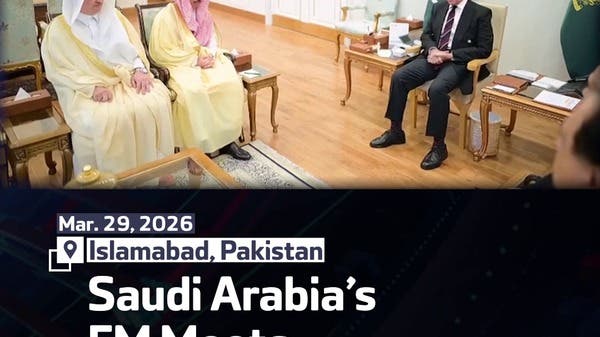

Saudi Arabia’s deepening financial ties with Pakistan represent a critical infrastructural nexus that could reshape sovereign capital flows across South Asia and the Middle East. The recent high-level meeting between Saudi Foreign Minister Prince Faisal bin Farhan and Pakistani Prime Minister Shehbaz Sharif signals Riyadh’s strategic push to consolidate its financial leverage in a geopolitically vital corridor, dovetailing with Vision 2030’s ambitions to diversify beyond hydrocarbons. With Pakistan’s $348 billion GDP and its expanding role in China’s Belt and Road Initiative, these discussions may unlock pathways for Saudi sovereign wealth deployment, particularly in energy, logistics, and emerging tech infrastructure—fields that align tightly with Gulf long-term capital planning.
The encounter comes at a time of acute fiscal fragility in Pakistan, making the kingdom’s financial patronage not just an economic lever but a geopolitical one. For Riyadh, investment in Pakistani infrastructure—ranging from refineries and renewables to digital backbone projects—serves dual purposes: securing a dependable regional ally and gaining stakeholdership in a major South Asian emerging market that also provides critical labor and strategic military positioning. This positioning is especially relevant given the volatile security dynamics on Pakistan’s northern border and Islamabad’s reliance on Gulf remittances, which total nearly $30 billionannually. Any Saudi commitment could eclipse recent short-term oil credits by embedding capital in long-lasting sovereign assets.
For the Venture capital and technology ecosystems, this Saudi-Pakistan nexus could act as a gateway for scaled deployment in Lahore and Karachi’s startup hubs, catalyzing regional tech corridors under public-private finance. Such investment could trigger competitive dynamics across MENA sovereign funds, pushing them into deeper tech-driven infrastructure plays across emerging Asia. Ultimately, the meeting is about more than bilateral goodwill—it is a strategic deployment point for capital shaping the next phase of Middle East-Africa-Asia connectivity, with consequences for digital sovereignty, logistics supremacy, and energy market resilience that ripple well beyond Riyadh and Islamabad. The coming months will test whether these signals translate into binding frameworks with tangible infrastructure milestones or relaps into piecemeal credit lines of the past.