
Starcloud’s recent $1.1 billion valuation, following a Series A led by Benchmark and EQT Ventures just seventeen months after its Y Combinator demo, signifies a pivotal moment in the nascent orbital data center sector. This funding surge reflects heightened investor confidence, despite the profound technical and economic challenges inherent in the venture. The core proposition—outsourcing data centers to space to circumvent escalating terrestrial resource constraints and political hurdles—remains commercially unproven, demanding massive capital expenditure and technological maturation. For sovereign wealth funds and institutional capital across the MENA region, such frontier investments represent a high-risk, high-reward diversification strategy, seeking exposure to transformative infrastructure with long-term strategic implications.
The company’s operational roadmap—deploying a satellite with an Nvidia H100 GPU, advancing to Starcloud 2 featuring a Blackwell chip and AWS blade servers, and designing the Starship-launched Starcloud 3—exhibits a calculated progression toward cost-competitive orbital computing. However, the critical dependence on SpaceX’s Starship operational cadence by 2028-2029 underscores a significant vulnerability. This delay compounds the sector’s existential challenge: the prohibitive cost of power in space until launch economics improve dramatically. The MENA region, with its ambitions for digital transformation and data sovereignty, could leverage such technologies to reduce latency for regional cloud services and AI applications, provided launch costs and reliability become viable. Current terrestrial data center construction in the U.S. (e.g., 25+ GW projects) highlights the scale of existing demand that orbital solutions might eventually serve, albeit remotely.
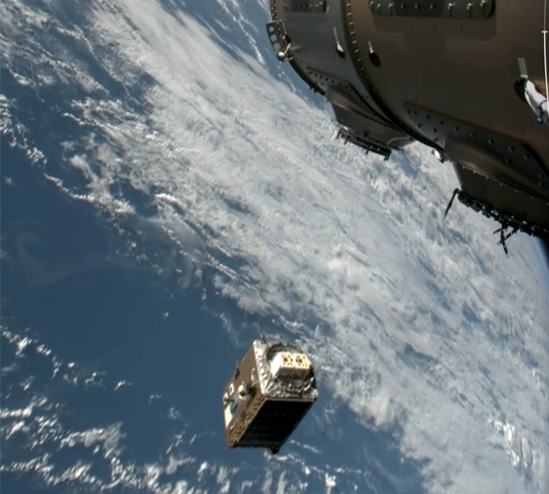
Starcloud’s technical achievements—first in-orbit training of an AI model and Gemini inference—underscore its lead, though Nvidia’s deployment of hundreds of GPUs on Earth starkly contrasts the handful in orbit. The integration of diverse hardware (Nvidia GPUs, AWS servers, Bitcoin miners) into modular spacecraft reveals the complex infrastructure build-out required. Competing against SpaceX’s ambitious million-satellite vision presents a formidable challenge, yet Johnston’s assertion of differentiated use cases—emphasizing Starcloud’s role as a core energy and infrastructure player versus SpaceX’s potential focus on workloads like Grok—suggests potential coexistence. This dynamic holds relevance for MENA sovereign entities evaluating partnerships; success in overcoming technical hurdles and achieving Starship scalability could position regional financial institutions as pivotal stakeholders in a future where space-based infrastructure becomes integral to global and regional data ecosystems.