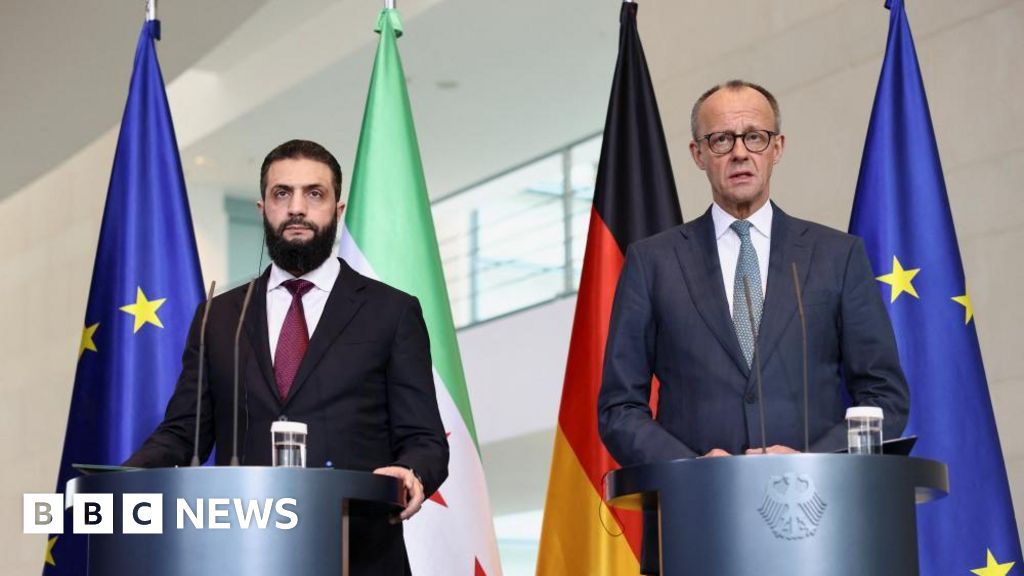

The political climate in Germany, specifically the increasingly restrictive approach to refugees and migrants adopted by the Merz government, presents a complex scenario with significant implications for the broader Middle East and North Africa (MENA) region. This shift, fueled by growing support for anti-immigration parties like the AfD, is impacting labor market dynamics, potentially altering remittance flows – a critical component of many MENA economies. The potential for reduced labor availability in Germany, a major destination for skilled and unskilled workers from the region, could create inflationary pressures and necessitate a recalibration of workforce strategies across several MENA nations. Furthermore, the heightened political rhetoric risks fostering negative narratives around migration, impacting investor sentiment within the region and potentially hindering cross-border business initiatives.
Beyond the immediate economic effects, the Merz government’s policies carry broader implications for sovereign capital allocation and venture capital flows. Increased economic uncertainty stemming from social and political instability – directly or indirectly exacerbated by restrictive immigration policies – may redirect investment away from MENA markets. This is particularly pertinent for countries reliant on foreign direct investment for diversification and sustainable growth. The availability of capital for venture capital firms, a crucial engine for innovation and job creation, could be constrained as investors prioritize perceived lower-risk jurisdictions. Furthermore, the geopolitical implications of these policies necessitate a reassessment of risk profiles by international financial institutions dealing with MENA sovereign entities.
The repercussions extend to regional infrastructure development. MENA countries frequently rely on remittances to finance infrastructure projects and bolster domestic consumption. A slowdown in these flows could put a strain on national budgets, delaying or scaling back critical investments in sectors like energy, transportation, and telecommunications. Furthermore, the potential for reduced foreign labor supply could complicate the execution of large-scale infrastructure initiatives, particularly those requiring specialized skills not readily available within the region. This necessitates a proactive approach from MENA governments to diversify their economic foundations and reduce reliance on external labor sources, potentially accelerating the adoption of automation and technology-driven solutions.
Ultimately, the Merz government’s policy shift serves as a microcosm of evolving global geopolitical trends with far-reaching consequences for MENA. Regional policymakers must prioritize resilience and diversification, strengthening domestic industries, fostering human capital development, and exploring alternative investment avenues to mitigate potential negative economic and social impacts. Close monitoring of political developments in Europe, coupled with proactive strategic planning, will be crucial for maintaining stability and promoting sustainable growth across the MENA region in an increasingly uncertain global landscape. Financial institutions and investors must also adapt to this evolving environment, incorporating heightened risk assessments and incorporating geopolitical considerations into their MENA investment strategies.