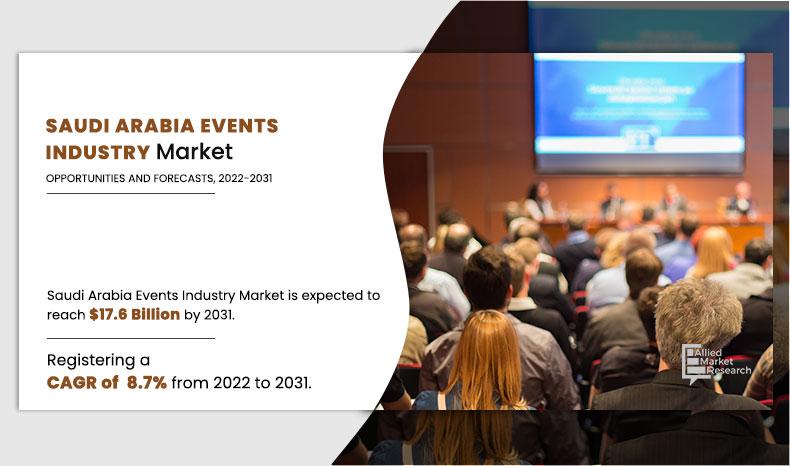

The Kingdom of Saudi Arabia’s events and entertainment sector is undergoing a structural transformation, evolving from a USD 6.1 billion market in 2021 into a projected USD 17.6 billion enterprise by 2031, propelled by aggressive sovereign capital deployment and the strategic architecture of Vision 2030. This expansion is no longer ancillary to the hydrocarbon economy; it is a central pillar of the Kingdom’s economic diversification, directly underwritten by state-backed infrastructure initiatives such as NEOM, the Red Sea Project, and Soudah Development. Sovereign wealth allocations are systematically de-risking high-yield commercial infrastructure, creating a predictable environment for institutional capital while shifting the macroeconomic model toward experience-driven GDP growth. By capitalizing on a youthful demographic dividend and liberalizing regulatory frameworks, Riyadh has established a sovereign-backed catalyst that is rapidly repositioning the Gulf as a global nexus for high-value commercial and cultural exchange.
Venture capital dynamics are simultaneously reshaping the value chain as agile technology startups and regional fintech platforms integrate into the live-event ecosystem to capture market share across verticals that are witnessing double-digit growth, most notably the music and concert segment, which is advancing at a 10.1 percent CAGR. The dominance of sponsorship revenue, which commanded 50.8 percent of the market in 2021, underscores a critical shift in brand monetization that necessitates sophisticated data aggregation and precision targeting. Consequently, venture-backed SaaS providers and experiential tech firms are experiencing accelerated funding cycles, scaling rapidly to serve corporate enterprises, MICE operators, and festival organizers that demand end-to-end digital integration. This technological layer is lowering barriers to entry for domestic SMEs while attracting late-stage VC and private equity interest from both regional sovereign funds and global institutional investors seeking exposure to the Kingdom’s high-growth digital economy.
The strategic scaling of Saudi Arabia’s event architecture is generating profound regional infrastructure implications, compelling neighboring MENA jurisdictions to recalibrate their own commercial real estate, transportation, and hospitality portfolios to maintain competitive parity. The convergence of mega-venue construction with seamless logistical networks is establishing a new baseline for regional supply chain standards, driving demand for specialized technical equipment, construction materials, and operational tech across the GCC and broader North African markets. For institutional allocators, the trajectory is unequivocal: the Kingdom’s aggressive deployment of capital into sports, entertainment, and MICE infrastructure is not merely cyclical but structural, cementing a long-duration asset class that will dictate cross-border trade flows, labor mobility, and sovereign investment benchmarks throughout the 2030 horizon.