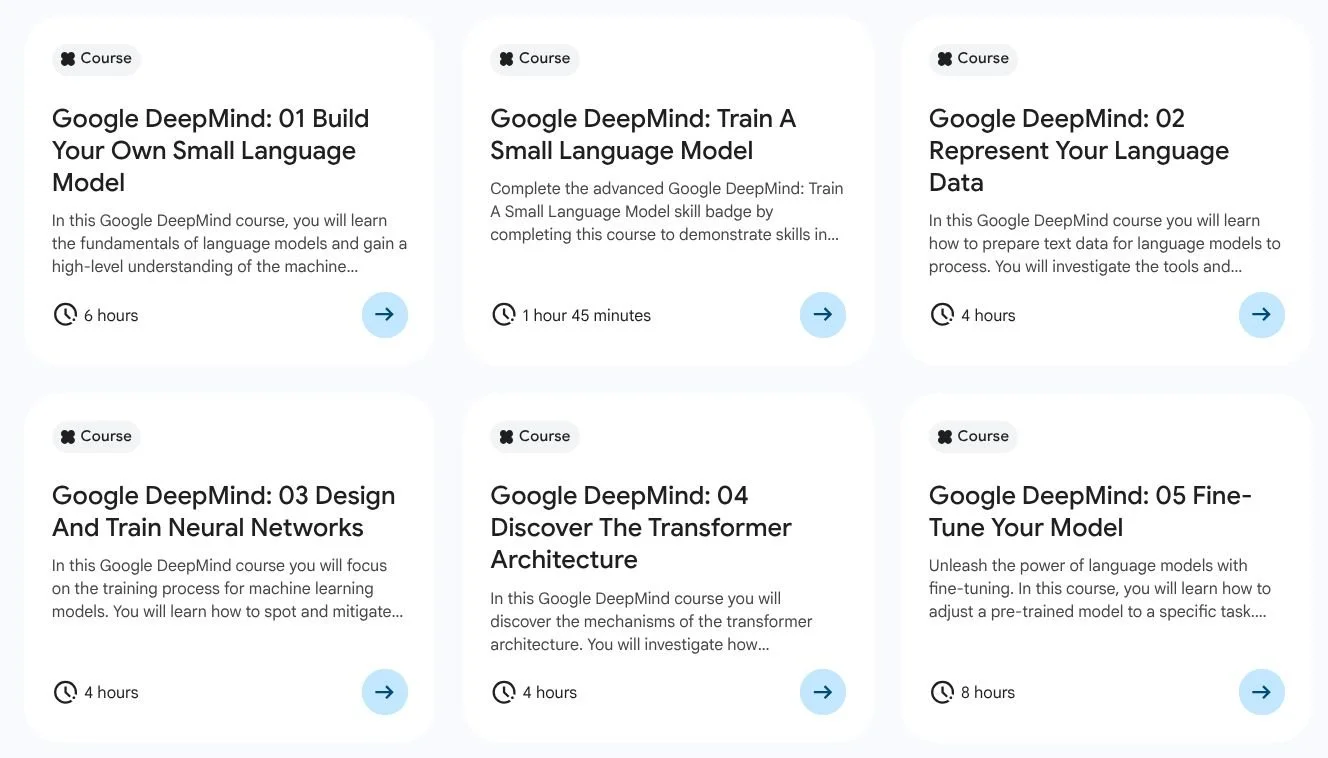

The introduction of Google DeepMind’s AI Research Foundations curriculum represents a strategic inflection point for technology human capital development in the Middle East and North Africa. At a time when regional sovereign wealth funds, from Abu Dhabi’s Mubadala to Saudi Arabia’s Public Investment Fund, have explicitly earmarked artificial intelligence as a cornerstone of their economic diversification mandates, a standardized, practitioner-focused curriculum from a globally dominant AI laboratory provides a scalable blueprint for talent pipeline construction. This move effectively de-risks a critical component of the region’s digital transformation bets: the cultivation of homegrown engineers capable of moving beyond AI application to foundational model development and adaptation, a prerequisite for long-term technological sovereignty and value capture in the generative AI economy.
The business implications are profound for the region’s venture capital ecosystem and sovereign investment strategies. As MENA-based VCs increasingly fund AI-native startups, a shortage of talent proficient in large language model architectures and fine-tuning has emerged as a binding constraint on growth. DeepMind’s curriculum, by democratizing advanced concepts like transformer mechanics and parameter-efficient fine-tuning (e.g., LoRA), directly addresses this gap. This creates a more robust deal flow for investors and enhances the valuation case for regional startups, moving them from implementation service providers to potential core technology developers. Furthermore, sovereign capital, which is channeling billions into AI infrastructure and national AI strategies, now has a credible, off-the-shelf framework to accelerate the return on its human capital investments, aligning university outputs with the precise technical demands of national projects like Saudi Arabia’s NEOM and the UAE’s AI University.
This development is intrinsically linked to the region’s urgent build-out of physical and digital AI infrastructure. The curriculum’s emphasis on practical GPU resource management, computational scaling, and model training pipelines mirrors the operational realities of the massive data center and cloud region investments being pursued by Google Cloud, Oracle, and local entities like UAE’s Khazna. A workforce trained on these exact constraints will be essential to operationalize this hardware. Consequently, the program serves as a powerful talent magnet for global tech firms seeking to cement their foothold in the region, offering a structured partnership pathway with top-tier universities. For regional policymakers, it provides an actionable lever to ensure that massive infrastructure spend translates into high-value intellectual property and domestic expertise, rather than merely creating facilities managed by expatriate teams.
In the longer term, the curriculum’s integration of responsible AI development—addressing bias, environmental impact, and ethical dataset design—will be critical for MENA entities aiming to compete in global markets and attract前沿 investment. As sovereign funds deploy capital into AI ventures worldwide, the provenance and ethical rigor of their domestic talent pool will become a significant factor in international partnerships. This initiative thus transcends basic education; it is a soft-power instrument for setting regional technical standards and a strategic hedge against the geopolitical risks of AI dependency. The ultimate measure of its success will be the extent to which it enables MENA to produce not just competent practitioners, but the architects of region-specific models and applications that serve local languages, markets, and sovereign priorities, thereby reshaping the global AI landscape.