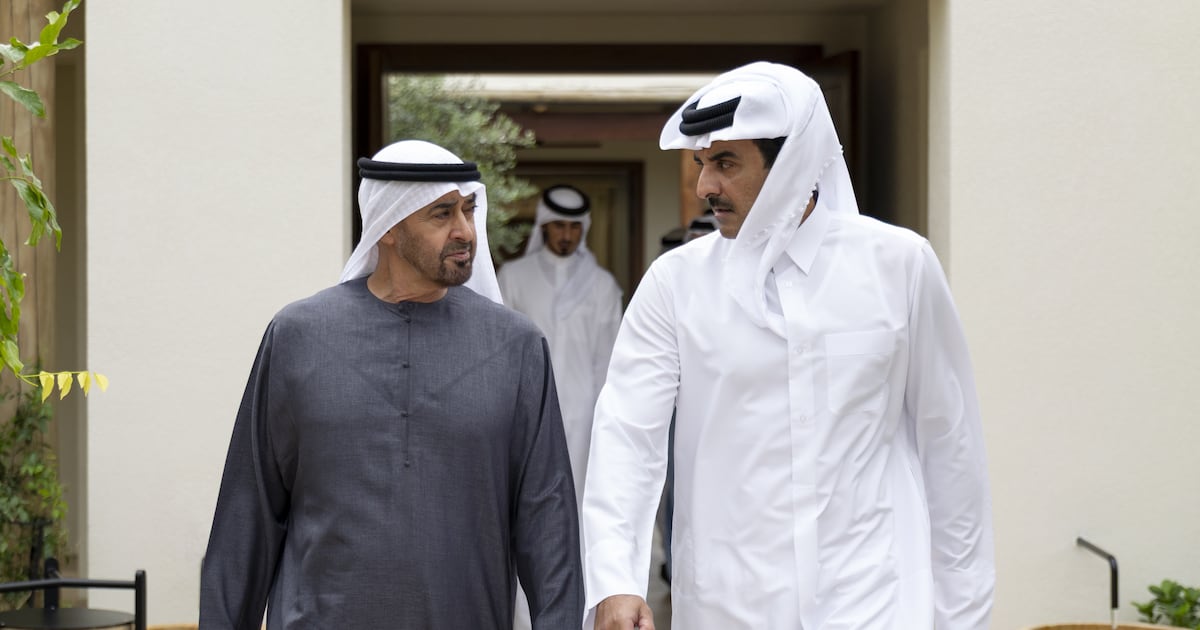

The recent high-level engagement between Abu Dhabi and Doha signals a decisive recalibration of Gulf sovereign capital deployment, transitioning from diplomatic normalization to institutionalized economic integration. With state-backed investment vehicles collectively managing deployable capital in excess of $1.2 trillion, the meeting establishes a formal conduit for coordinated cross-border mandates targeting digital infrastructure, energy transition, and advanced industrial ecosystems. This strategic alignment directly addresses historical capital fragmentation across the GCC, enabling sovereign allocators to pool risk and deploy scale in a manner that competes with Western institutional mandates while systematically compressing the regional geopolitical discount on asset valuations.
At the venture capital and growth equity level, this bilateral convergence will fundamentally reconfigure the liquidity architecture for MENA’s technology ecosystem. Sovereign wealth funds are already functioning as anchor limited partners for regional and global deep-tech funds, yet the UAE-Qatar synchronization will likely accelerate standardized fund passports and harmonized regulatory sandboxes for fintech, generative AI, and semiconductor supply-chain ventures. By coupling sovereign balance sheets with agile private risk capital, both capitals are effectively de-risking early-stage formation and establishing clear pathways from late-stage private rounds to institutional public listings. This structural maturation will narrow valuation gaps between Gulf-born scale-ups and their Global North peers, cementing the Arabian Peninsula as the primary liquidity conduit for emerging-market technology.
Beyond financial engineering, the partnership’s most immediate macroeconomic impact will materialize through synchronized regional infrastructure development, particularly in data sovereignty frameworks, subsea fiber networks, and next-generation logistics corridors linking the Gulf to South Asian and East African growth markets. The consolidation of state-backed procurement for sovereign AI compute clusters, hyperscale cloud infrastructure, and integrated smart-city ecosystems will enforce economies of scale previously unattainable through fragmented municipal tendering. For institutional allocators tracking the MENA trajectory, this bilateral harmonization reduces structural execution risk and establishes a replicable blueprint for capital deployment that accelerates the region’s transition toward a digitally integrated, innovation-driven economic bloc.