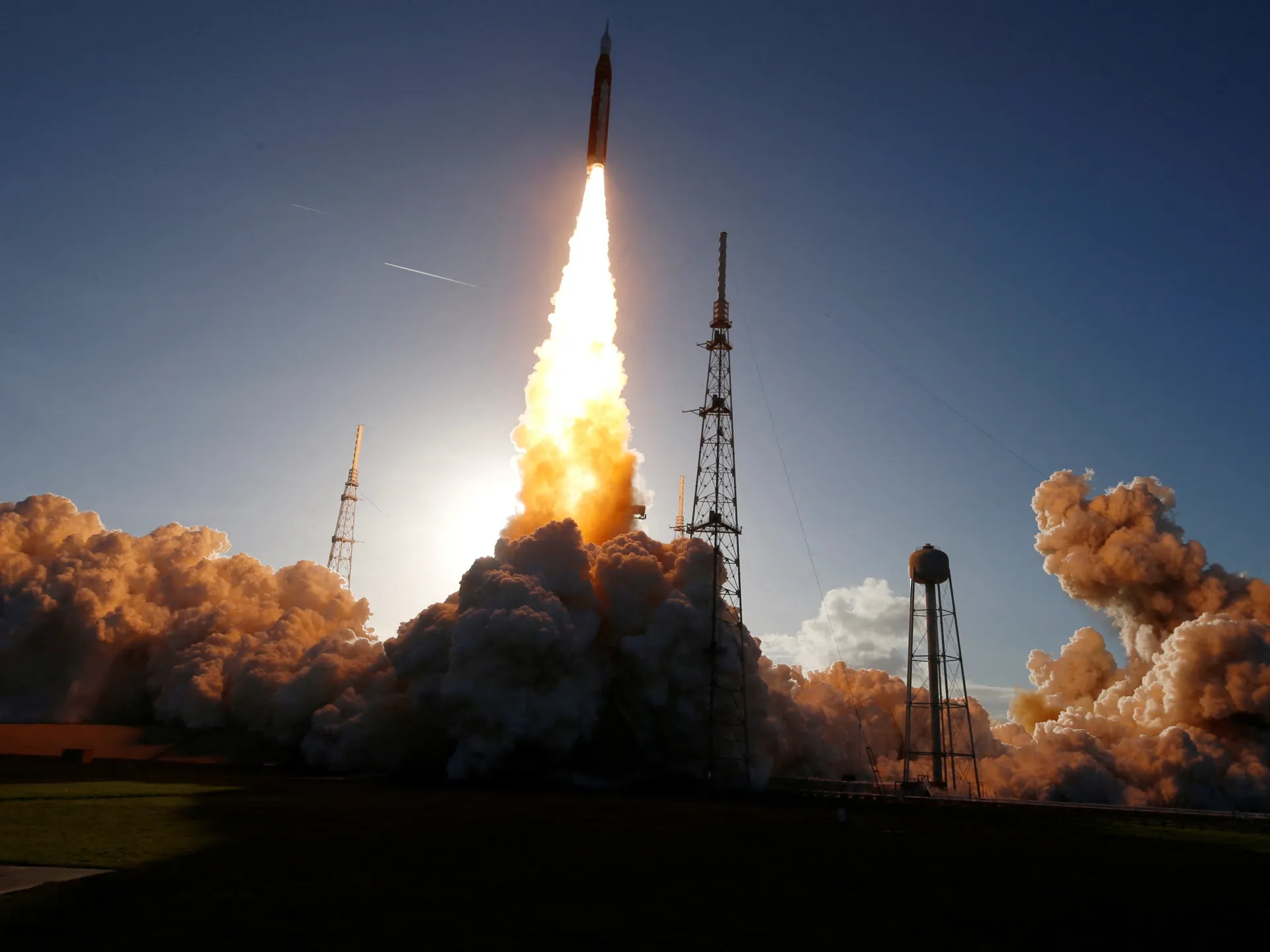

NASA’s Artemis II mission, which successfully launched on April 1, 2026, marks a pivotal moment in humanity’s return to the moon and a strategic inflection point for global space economics. While the historic journey around the moon underscores the U.S.’s renewed leadership in space exploration, the mission’s implications extend far beyond geopolitical prestige. For the Middle East and North Africa (MENA) region, the Artemis program signals an urgent opportunity to reposition itself within the global space economy, leveraging sovereign capital, venture capital innovation, and infrastructure development to transition from peripheral participant to strategic stakeholder. The MENA region’s economic reliance on traditional hydrocarbon revenues and its nascent digital infrastructure make this celestial endeavor not merely symbolic but a catalyst for systemic transformation.
The Artemis II launch amplifies the MENA region’s imperative to accelerate sovereign capital deployment into space-related assets, a shift that aligns with Gulf states’ broader economic diversification agendas. Countries like Saudi Arabia and the United Arab Emirates (UAE) have already signaled intent to deepen their involvement in global space ventures, with sovereign wealth funds increasingly eyeing equity stakes in satellite manufacturing, propulsion technologies, and lunar logistics firms. These investments are poised to diversify portfolios beyond conventional infrastructure and financial services, while fostering cross-border alliances with Western tech giants and defense contractors. However, the region must navigate risks tied to overreliance on foreign partnerships, ensuring local governance frameworks guard against brain drain and technology dependency.
Venture capital dynamics in MENA are also undergoing a seismic recalibration. The Artemis program’s escalating demand for advanced robotics, propulsion systems, and AI-driven mission analytics is creating fertile ground for regional startups. Dubai’s burgeoning “space cluster” and Abu Dhabi’s investment in satellite-based Earth observation exemplify how local ecosystems are attracting global VC interest. Middle Eastern investors are now competing with Silicon Valley and European funds to back regional innovators in areas like reusable launch vehicles and interplanetary communication networks. Yet, to capitalize fully, MENA must address gaps in regulatory agility and risk-taking—traditional VC hesitancy toward space startups could stifle nascent ventures without institutional reforms and public-private collaboration.
Infrastructure development remains the linchpin for MENA’s integration into the Artemis-era space economy. The mission’s reliance on global ground networks for real-time telemetry and teleoperations highlights critical weaknesses in the region’s existing satellite and data transmission capabilities. Gulf states are prioritizing investments in spaceports, high-throughput satellite ground stations, and quantum encryption networks to meet these demands. Countries like Qatar and Bahrain are positioning themselves as hubs for mission control operations, capitalizing on strategic geographic location and underutilized fiber-optic backbone networks. However, the region must align infrastructure priorities with long-term climate resilience goals, as rising temperatures threaten operational continuity in desert-based facilities—a challenge absent from the original article’s narrative but critical for institutional analysts assessing sustainability.