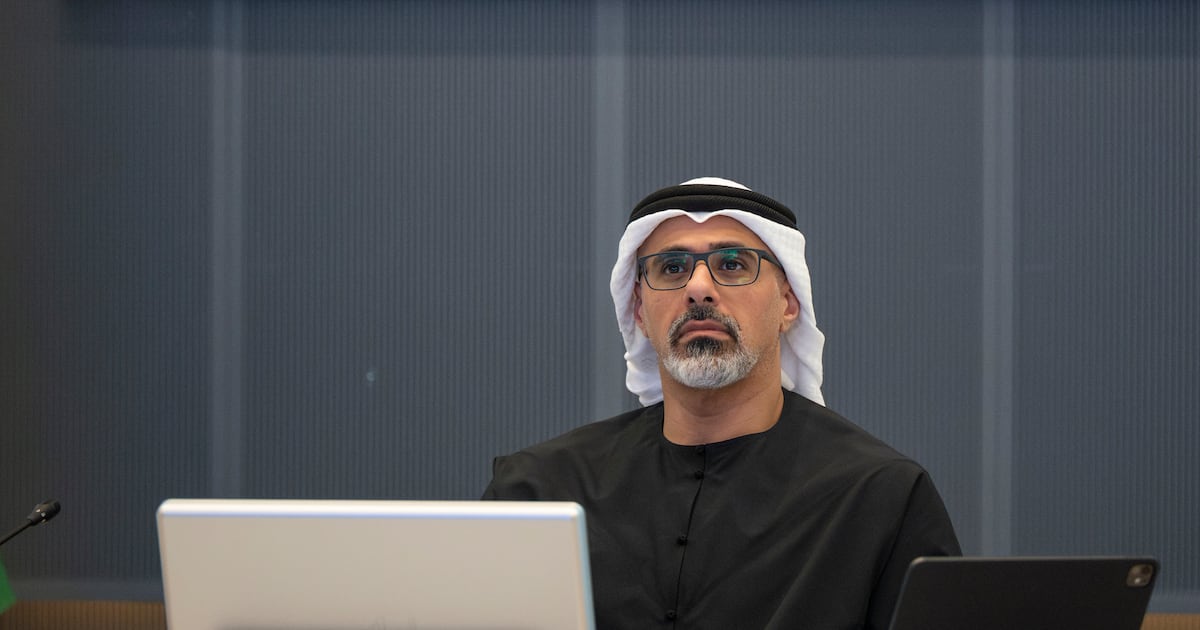

The United Arab Emirates’ strategic reinforcement of operational resilience at Abu Dhabi National Oil Company (Adnoc) represents a calculated deployment of sovereign capital to insulate critical energy infrastructure from regional instability. This executive committee meeting, chaired by Crown Prince Sheikh Khaled bin Mohamed, transcends routine governance; it signals a deliberate effort to transform Adnoc’s business continuity framework into a tangible competitive asset. By aligning preparedness protocols with global best practices, the UAE is effectively monetising its sovereign wealth to mitigate geopolitical risk premiums, thereby safeguarding export flows and maintaining the nation’s status as a reliable supplier in volatile global markets. The immediate business impact is a fortified balance sheet continuity plan that protects against production disruptions, which in turn stabilises long-term revenue streams fundamental to the UAE’s economic diversification strategy.
The leadership’s focus on sustaining output during external shocks directly correlates with the UAE’s broader mandate to attract and deploy venture capital and foreign direct investment into the energy and technology sectors. Adnoc’s demonstrated adaptability under pressure enhances its credibility as a partner for international oilfield services, downstream ventures, and the nascent hydrogen economy. This operational credibility is a prerequisite for securing the next tranche of sovereign and institutional capital for megaprojects like the Al Yasat and Al Ghasha gas developments, and for positioning the UAE as a hub for energy transition finance. The meeting, with key figures such as Dr. Sultan Al Jaber in attendance, underscores that resilience is not a defensive posture but an offensive strategy to capture market share and investment flows during periods of regional supply uncertainty.
Regionally, this prioritisation of infrastructure hardening sets a precedent for North Africa and the broader Gulf Cooperation Council (GCC) on how state-backed entities can utilise sovereign capital to de-risk essential services. For nations from Saudi Arabia to Egypt, the template is clear: direct state support for operational redundancies in energy, logistics, and digital infrastructure is now a non-negotiable component of national economic security. This creates a pipeline of projects ripe for co-investment from regional sovereign wealth funds (SWFs) and global infrastructure funds, particularly in areas such as pipeline security, maritime logistics, and digital twin technologies for predictive maintenance. Consequently, venture capital activity is likely to intensify around startups offering AI-driven risk analytics and IoT-based monitoring solutions tailored for harsh, geopolitically sensitive environments.
The ultimate business implication is the crystallisation of a new regional paradigm: energy and infrastructure resilience is being securitised as an investable class. By proactively addressing vulnerabilities exposed by events such as disruptions in the Strait of Hormuz, the UAE is not merely protecting assets but is actively enhancing its investable narrative. This bolsters the credit profiles of its key state-owned enterprises, lowers the cost of capital for future bonds and project finance, and strengthens the argument for allocating a higher percentage of MENA SWF portfolios domestically. The meeting’s concluding emphasis on forward planning confirms that for the UAE, operational continuity is the foundational layer upon which all future commercial expansion, from LNG exports to carbon capture, must be built.