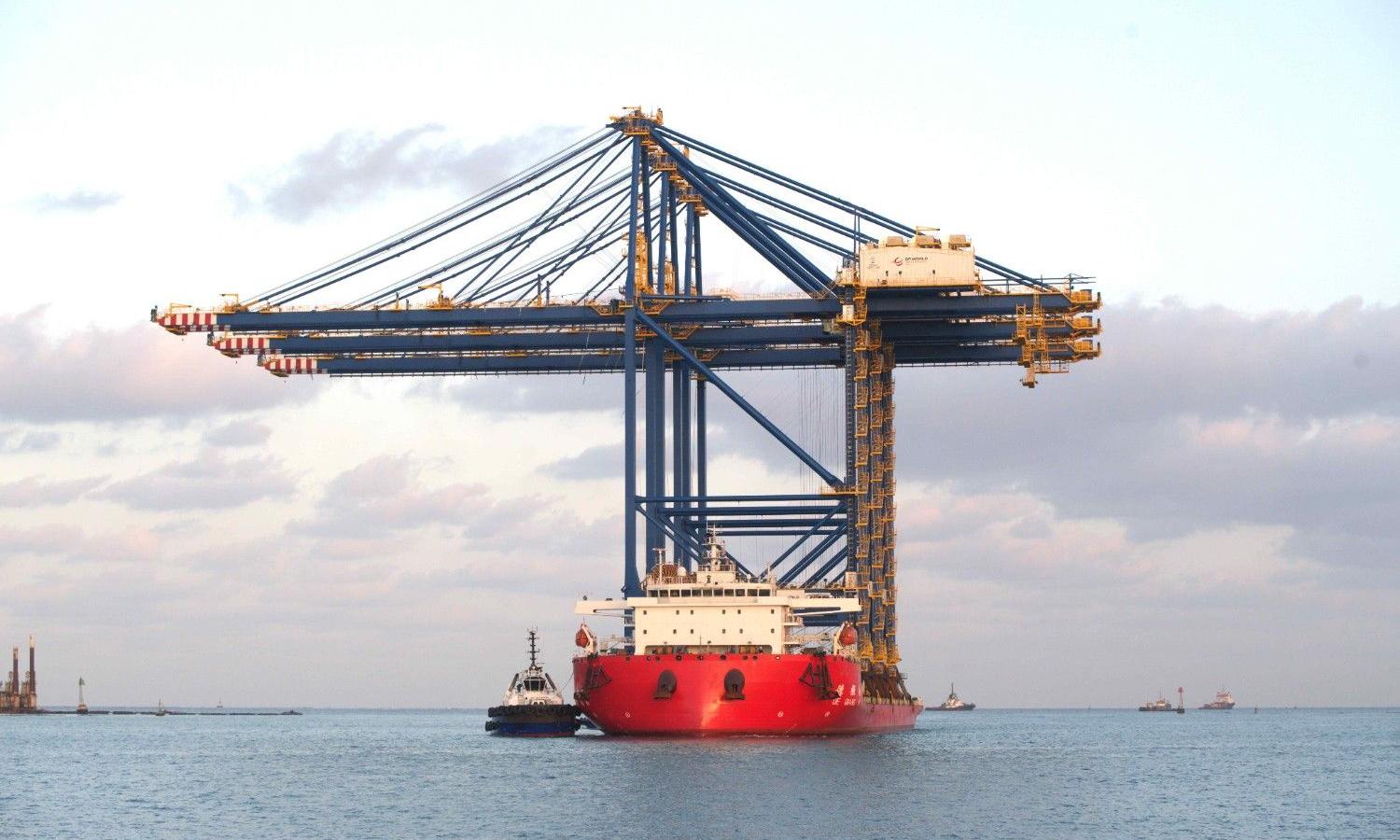

DP World’s recent deployment of three semi‑automated quay cranes at the Jeddah Islamic Port marks a decisive step in the Kingdom’s port modernization agenda, expanding berth productivity from 14 to 17 units with a target of 22 by the end of the decade. The cranes, each rated at 65 tonnes and supplied by ZPMC, are integrated into an $800 million revamp that has already lifted terminal capacity from 1.8 million to 4 million TEUs and is slated to reach 5 million TEUs as part of Vision 2030‑aligned growth plans. This infrastructure upgrade not only accelerates container handling for ultra‑large container vessels but also reinforces Saudi Arabia’s ambition to become a logistics hub for the broader Middle East and North Africa (MENA) region.
The expansion directly amplifies trade flows through the Red Sea corridor, where weekly vessel calls have risen to 38 and handled over 1.3 million TEUs in 2025—double the previous year’s volume. By enabling simultaneous handling of multiple mainline ships, the facility supports faster turnaround times and safeguards supply‑chain continuity amid heightened regional security considerations. For multinational shippers and regional distributors, the enhanced capacity translates into reduced lead‑times, lower freight costs, and greater resilience against disruptions.
From a capital perspective, the crane rollout underscores the pivotal role of sovereign wealth and state‑driven financing in catalyzing private and venture investments across MENA’s logistics ecosystem. Saudi sovereign funds have earmarked substantial allocations for port infrastructure, creating a de‑riskified environment that attracts venture capital into complementary technologies such as AI‑driven terminal analytics, automated gate systems, and digital freight‑matching platforms. This blended financing model encourages further private participation while aligning with national economic diversification objectives.
Regionally, the upgrades at Jeddah Islamic Port serve as a blueprint for other emerging maritime terminals seeking to modernize their operations. The ripple effect is already evident in heightened interest from neighboring Gulf states in scaling automation and expanding deep‑water berth capabilities, fostering a coordinated push toward a more integrated, high‑throughput maritime network across MENA. Such coordinated infrastructure investments are poised to cement the region’s role as a critical node in global trade routes, driving sustained economic growth and strategic positioning in the supply chain of the future.