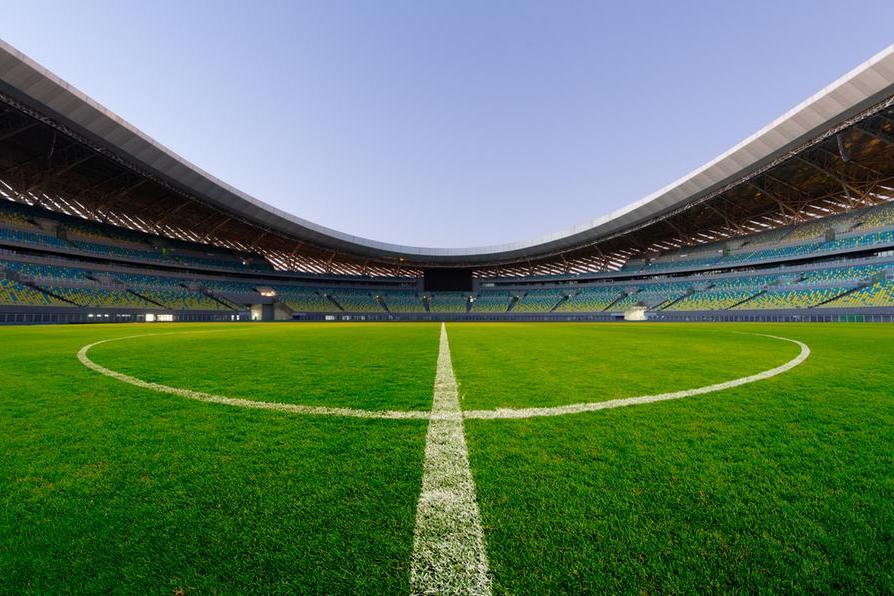

The Al-Ittihad Sports Village Project in Jeddah exemplifies Saudi Arabia’s strategic pivot toward economic diversification and global connectivity under Vision 2030, marking a significant shift in the kingdom’s long-term investment priorities. At $5.8 billion, the integrated sports and mixed-use development—anchored by Parson Corporation as project management consultant—serves as a catalyst for sovereign capital deployment, leveraging public funds to de-risk private-sector participation in high-impact infrastructure. By aligning with FIFA standards and global best practices, the project not only elevates Saudi Arabia’s sports infrastructure but also creates a scalable blueprint for private capital to flock into adjacent sectors, including tourism, hospitality, and tech-enabled entertainment. The development’s emphasis on mixed-use commercial assets further amplifies its economic multiplier effect, positioning sports as a cornerstone of revenue generation beyond traditional hydrocarbon dependencies.
Parsons’ involvement underscores the specialized expertise required to execute mega-projects that balance operational complexity with Vision 2030’s Quality of Life objectives. The firm’s track record of integrating lifecycle planning, environmental performance metrics, and digital engineering into large-scale developments aligns with Saudi Arabia’s push to modernize its infrastructure ecosystem. As the project management consultant, Parsons is tasked with harmonizing architectural, engineering, and stakeholder coordination—critical for mitigating risks in a market where regulatory frameworks and investment flows are rapidly evolving. Meanwhile, the $5.8 billion investment reflects sovereign confidence in sports-led infrastructure as a tool to attract regional and global events, thereby unlocking ancillary demand for ancillary services, trade, and cross-border tourism.
The project’s strategic alignment with venture capital trends is particularly noteworthy, as it signals growing appetite for ESG-compliant, tech-integrated sports assets. Mixed-use components, such as performance development centers and administrative complexes, create fertile ground for private-sector partnerships in sports science, digital ticketing, and fan engagement technologies. Additionally, the proximity to the $1.8 billion National Athletics Stadium in Qiddiya Sports Park highlights Saudi Arabia’s commitment to building a cohesive sports infrastructure network, which could catalyze regional venture capital inflows into connected logistics, hospitality, and digital platforms tailored to sports ecosystems. This convergence of public ambition and private innovation is poised to redefine the Middle East’s competitive advantage in global entertainment commerce.
Regionally, the Al-Ittihad Sports Village Project underscores Saudi Arabia’s role as a strategic hub for infrastructure-led economic integration across the MENA region. By prioritizing cutting-edge facilities adjacent to existing landmarks like King Abdullah Sports City, the kingdom is not only enhancing domestic connectivity but also setting a benchmark for neighboring states to emulate. The development of world-class athletic and commercial hubs aligns with broader regional trends, such as expanded air travel corridors and logistics networks, which will be essential to accommodate the increased footfall from international events. As Saudi Arabia accelerates its infrastructure spending, the implications for cross-border investment, regional stability, and the redefinition of the GCC’s economic geography cannot be overstated.