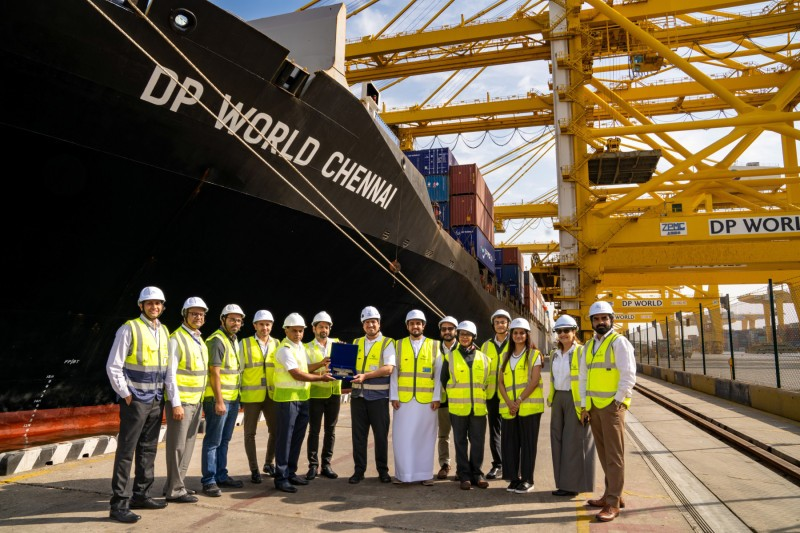

DP World’s strategic acquisition of the container vessel *DP World Chennai* underscores a growing trend in the Middle East and North Africa (MENA) region: a concerted effort to solidify and diversify critical trade corridors. This move, focused on bolstering the Red Sea-Gulf-India service, carries significant implications for regional economic development, sovereign capital deployment, and the future of infrastructure investment. By integrating this vessel into its fleet, DP World enhances its capacity to facilitate predictable and reliable cargo flow between two of the world’s fastest-growing economies. This enhanced connectivity directly impacts supply chain efficiency and supports the region’s ambition to position itself as a pivotal global trade hub.
The business impact extends beyond mere logistical optimization. This strategic vessel acquisition reflects the increasing sophistication of MENA’s port and logistics sector, attracting both domestic and international investment. Sovereign wealth funds (SWFs) across the region have been increasingly allocating capital towards infrastructure projects, recognizing their long-term value and potential for export diversification. DP World’s commitment to a $5 billion investment in India’s trade infrastructure further highlights this trend, indicating a forward-looking approach to regional economic integration. Moreover, the memorandum of understanding with India’s Sagarmala Finance Corporation signals a deepening collaboration between port operators and national governments to foster sustainable coastal shipping solutions, a crucial element for reducing reliance on overland routes and enhancing supply chain resilience – a priority for many MENA nations.
From a venture capital perspective, this development fuels opportunities for technology providers specializing in port management systems, supply chain visibility platforms, and digital logistics solutions. The need for seamless data exchange and real-time tracking across the Red Sea-Gulf-India corridor will drive investment in these areas, creating a fertile ground for innovation. Furthermore, the expansion of marine services necessitates advanced vessel monitoring and optimization technologies, presenting further investment avenues. The synergy between port operations and marine services, a key pillar of DP World’s strategy, will likely foster the development of integrated digital platforms, further boosting efficiency and attracting private sector capital.
The implications for regional infrastructure are substantial. While the acquisition itself is a direct operational enhancement, it reinforces the broader need for continued investment in port capacity, hinterland connectivity (roads, railways), and specialized terminals to accommodate growing trade volumes. The focus on sustainable coastal shipping, as evidenced by the Sagarmala collaboration, also points towards a more holistic approach to infrastructure development, prioritizing environmental considerations alongside economic growth. This strategic investment in trade facilitation is not merely about moving goods; it is a fundamental building block for enhancing the competitiveness and long-term prosperity of the MENA region, positioning it to capitalize on evolving global trade dynamics and maintain its relevance in a rapidly changing economic landscape.