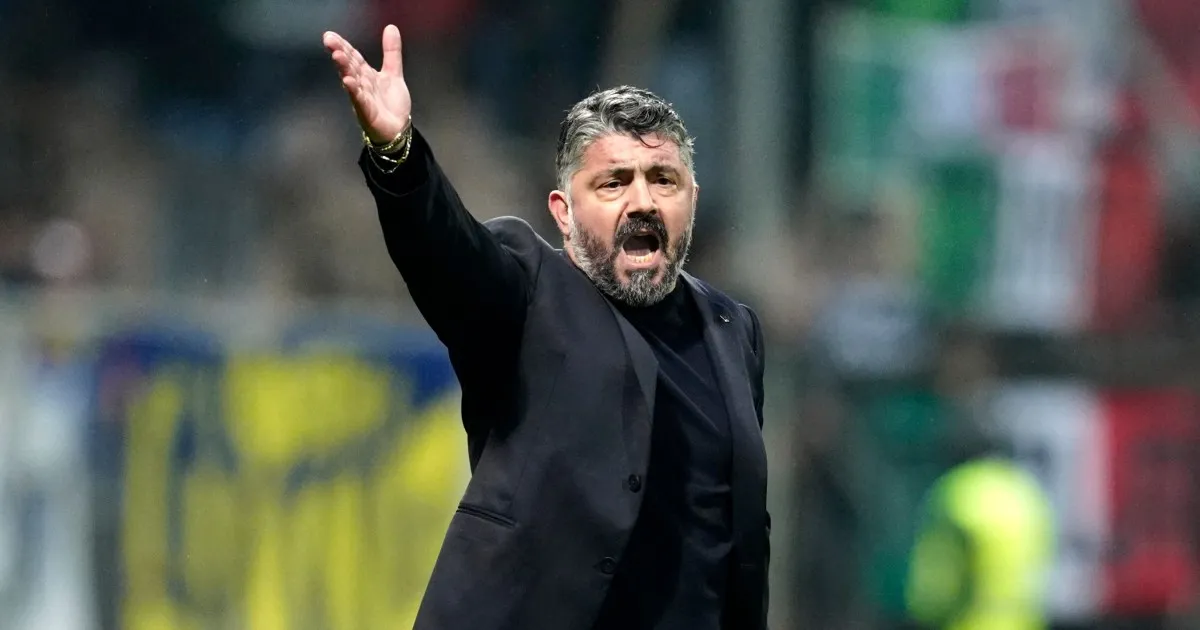

The departure of Gennaro Gattuso as Italy’s national team coach, following a third consecutive World Cup qualification failure, underscores systemic challenges in the country’s sporting governance and commercialization—a cautionary tale for economies in the Middle East and North Africa (MENA) grappling with ambiguous strategies to elevate sporting prestige. The Azzurri’s collapse, compounded by leadership resignations, highlights vulnerabilities in fostering cohesive long-term growth narratives, particularly for nations in the MENA region where football serves as a proxy for national identity and soft power. Italy’s stumble risks diminishing its cultural leverage in the region, where historic ties to Italian football investments—ranging from Serie A asset acquisitions to youth academy sponsorships—have historically bolstered economic and diplomatic ties. A miss in health, or analytics, can ripple into diminished tourism demand, reduced media rights valuations, and waning regional investment confidence, as observers reassess the ROI of large-scale sports infrastructure projects beyond immediate fanfare.
Sovereign capital allocation in the MENA region—often directed toward international sporting partnerships to enhance global stature—faces renewed scrutiny amid Italy’s leadership vacuum. Governments in Saudi Arabia, Qatar, and the UAE have sought to mirror Italy’s model of leveraging football for economic modernization; however, Italy’s bureaucratic turbulence, including simultaneous resignations of federation president Gabriele Gravina and Buffon’s exit from leadership roles, signals fragility in institutional continuity. This dissonance mirrors risks in MENA sovereign wealth funds (SWFs) that overcommit to high-profile sports ventures without parallel structural reforms. For instance, Saudi Arabia’s $400 million Serie A stake, while tactical, may yield diminishing returns if Italian stability falters, complicating efforts to position football as a “soft power” tool in the MENA competitive landscape.
Venture capital dynamics in sports technology and fan engagement platforms are also impacted. Italian football’s struggles amplify uncertainties around digital revenue streams, such as virtual ticketing and AI-driven fan analytics, underpinning MENA startups targeting global football fandom. Italian firms like Eleven Sports—caught in a delisting controversy—demonstrate how operational turbulence can disrupt cross-border media deals, a sector critical to MENA-based broadcasters seeking European partnerships. Furthermore, sovereign-backed MENA ventures aiming to build analog-to-digital stadiums or smart training facilities must now weigh Italy’s declining on-field performance against public expectations, as subpar results fuel skepticism about large-scale tech-driven infrastructure projects’ viability.
Regional infrastructure implications extend beyond stadium construction. Italy’s stadiation in football excellence—relative to its financial transparency challenges—echoes MENA ventures that prioritize physical megaprojects over institutional coherence, risking stranded asset scenarios. The Azzurri’s bogged playoff campaigns parallel concerns over overhyped airports, metro systems, and hotels that have strained MENA developing economies. Italy’s case reinforces the imperative for integrated planning, where sporting investments align with workforce education, data analytics adoption, and sustainable commercial models. For the MENA, Italy’s limping World Cup narrative serves as a stark reminder: infrastructure-by-results, not infrastructure-by-gift, will define regional economic resilience in the post-oil era.