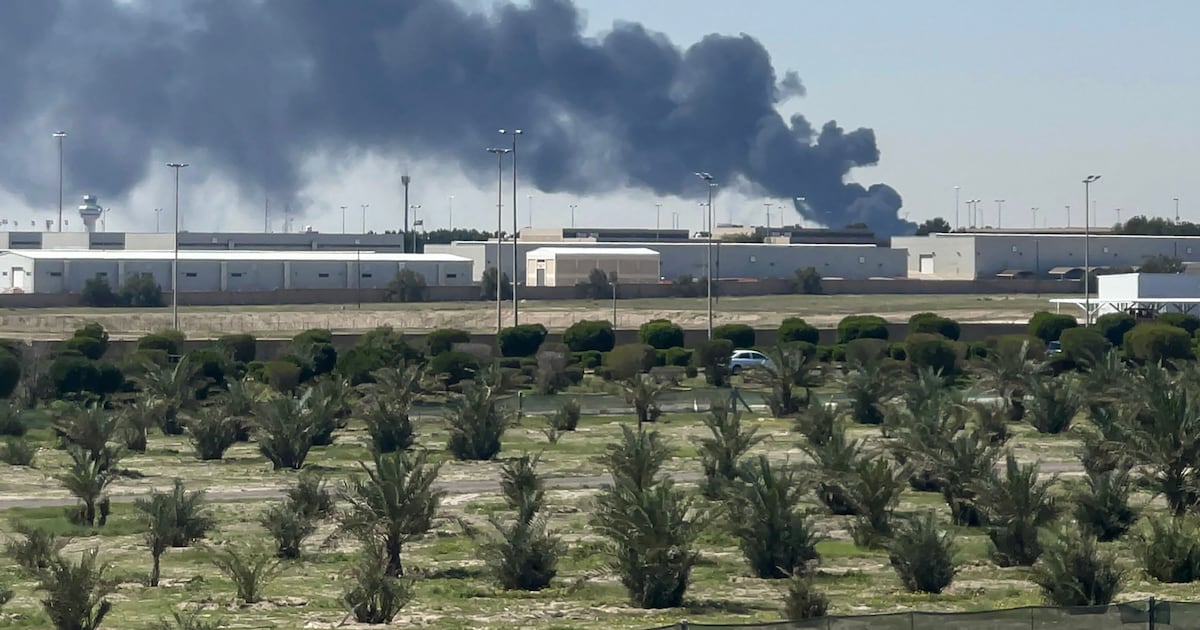

The drone strike on Kuwait’s Mina Al Ahmadi refinery marks a significant escalation in regional energy security risks, coming at a time when Gulf Cooperation Council states are aggressively positioning themselves as global investment gateways. The 450,000 barrel-per-day facility’s disruption, though quickly contained, exposes critical vulnerabilities in infrastructure that underpins not just Kuwait’s economy but regional energy stability. With sovereign wealth funds across the Gulf committing unprecedented capital to technology and industrial diversification—Saudi Arabia’s Public Investment Fund approaching $1 trillion in assets under management and Abu Dhabi’s ADQ launching massive infrastructure funds—the attack raises urgent questions about the risk-adjusted returns on mega-projects in an increasingly volatile geopolitical environment.
Venture capital flows into the region, which hit record levels in 2023-2024 with Saudi Arabia alone capturing over $1 billion in tech investments, face new headwinds as investors reassess exposure to physical assets in conflict-prone areas. The concentration of 6,293 attacks across the Gulf since February—with the UAE bearing 40 percent of incidents—highlights the asymmetric threat landscape that could redirect capital toward digital infrastructure and AI-driven security solutions rather than traditional industrial expansion. Kuwait’s situation is particularly precarious as it balances between maintaining its role as OPEC’s fifth-largest producer while accelerating Vision 2035 initiatives that depend on uninterrupted operations at facilities like Mina Al Ahmadi.
The incident reinforces the strategic arithmetic facing Gulf states: massive infrastructure investments require commensurate security expenditures, potentially crowding out other developmental priorities. Kuwait’s quick containment demonstrates operational resilience but also underscores the growing cost of maintaining business continuity under persistent threat conditions. As Iran’s campaign intensifies ahead of potential US-Iran negotiations, the economic calculus for regional sovereigns becomes increasingly complex—balancing the imperative of maintaining production capacity against the reality that each attack incrementally raises the cost of doing business in what remains the world’s most critical energy corridor. The damage sustained by power, desalination, and gas facilities across multiple GCC states suggests a coordinated strategy that could force a recalibration of capital allocation models favoring defensive infrastructure over pure economic expansion.