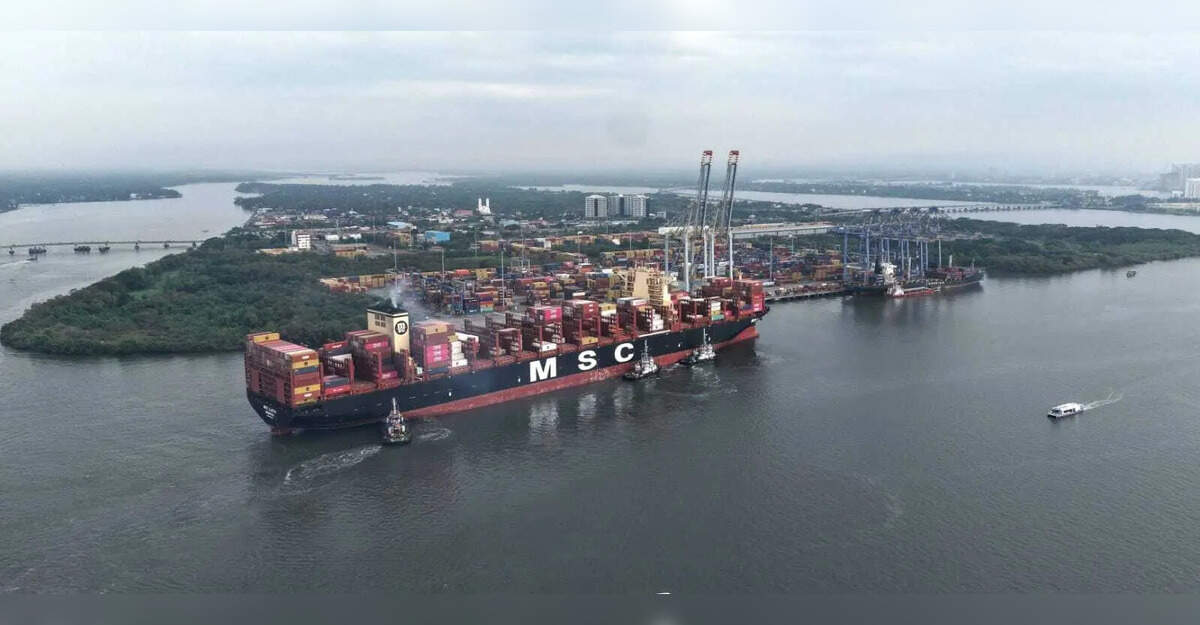

The evolving dynamics of the Middle East and North Africa (MENA) region are increasingly defined by a confluence of infrastructure development and a surge in financial and technological investment, particularly in the logistics and port sectors. As global supply chains face intensifying scrutiny, the sovereign capital commitments and venture capital flows targeting regional hubs are accelerating. In this context, DP World’s recent achievement at Cochin Port stands as a testament to the exponential growth in capacity and operational sophistication enabled by targeted infrastructure upgrades. The terminal’s ability to process over 8,000 TEUs in a single vessel underscores not only technical advancement but a strategic repositioning within the broader ecosystem of intra-Asian trade.
The implications of such milestones extend far beyond mere unit throughput; they reflect a deeper transformation in regional trade mechanisms. Sovereign governments are leveraging enhanced port infrastructures to bolster their export economies, attract foreign direct investment, and secure competitive leverage against larger maritime powers. For investors, the sovereign capital flowing into such ventures represents a powerful catalyst for value creation, particularly as venture capital becomes more willing to support integrated logistics ecosystems. These developments also catalyze the broader digital transformation of port operations, from automation and electrification to data-driven efficiency gains.
Strategically, the expansion of infrastructure supports the strategic objectives of MENA nations to become pivotal nodes within the global supply chain architecture. With regional ports equipped to handle next-generation ultra-large container vessels and sustainable operations, the ripple effects are felt across investor sentiment, capital allocation patterns, and the overall resilience of trade corridors. This environment underscores a decisive shift—where technology, finance, and regional policy converge to define the next phase of the MENA economic landscape. Such momentum is not just about handling more cargo; it is about reshaping value propositions and reinforcing the region’s standing in the global marketplace.