
The rapid integration of artificial intelligence is fundamentally reshaping operational paradigms within the Middle East and North Africa (MENA) region, with profound implications for sovereign wealth management, venture capital deployment, and regional infrastructure development. While anecdotal evidence from companies like SaaStr highlights significant efficiency gains, the broader economic ramifications are escalating. The shift towards AI-driven automation is not merely a technological upgrade; it represents a strategic imperative for competitiveness and long-term value creation across diverse sectors.
From a financial perspective, the adoption of AI is directly impacting capital allocation. Sovereign wealth funds (SWFs) in the region are increasingly directing significant investment into AI startups and infrastructure projects, recognizing the technology’s potential to optimize portfolio management, enhance risk assessment, and drive new investment opportunities. Venture capital (VC) activity in MENA is witnessing a surge in AI-focused funds, channeling substantial capital into the development of AI solutions tailored to regional needs – from fintech and smart cities to healthcare and renewable energy. This influx of capital is fostering a vibrant ecosystem of AI innovation, attracting talent and driving economic diversification beyond traditional hydrocarbon-based economies. The demonstrable ROI reported by companies like SaaStr, achieving a 1.5x return within two months of AI agent deployment, underscores the compelling financial case for this technological transition.
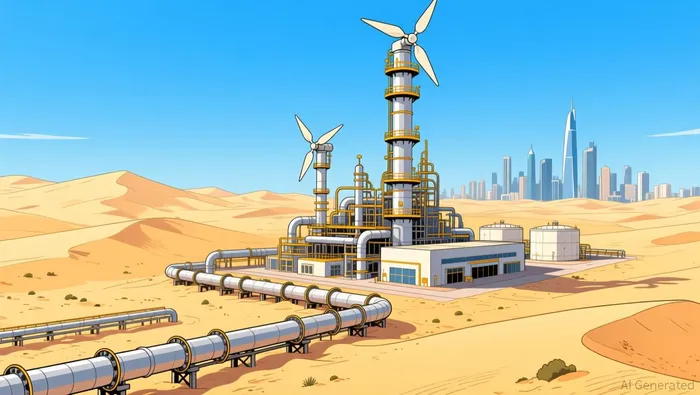
Furthermore, the implications for regional infrastructure are substantial. AI is being deployed to optimize existing infrastructure networks, enhance energy efficiency, and facilitate the development of smart urban environments. For instance, AI-powered predictive maintenance is improving the reliability of critical infrastructure, while intelligent traffic management systems are addressing urban congestion. The integration of AI into logistics and supply chain management is enhancing efficiency and reducing costs, a critical factor for the region’s trade competitiveness. This technological imperative is further augmented by the increasing focus on digital transformation initiatives spearheaded by governments across the MENA region, many of which are strategically incorporating AI as a core component of their national development plans.
The transition to AI-driven operations is not without its inherent cultural shifts, as evidenced by the evolving human capital requirements discussed by SaaStr. However, the long-term benefits – increased productivity, enhanced decision-making, and the freeing up of human capital for higher-value strategic activities – are undeniable. The strategic reluctance to revert to pre-AI workflows reflects a recognition that the competitive landscape is shifting irrevocably. Just as the adoption of enterprise resource planning (ERP) systems became indispensable for mature businesses, the integration of robust AI agent stacks is rapidly becoming a non-negotiable requirement for organizations seeking sustainable growth and regional leadership. The focus now shifts to effectively managing and leveraging these AI capabilities to unlock further value and navigate the evolving technological frontier.