
The Islamic Republic’s ability to sustain fiscal equilibrium amid escalating U.S. pressure underscores a broader pattern of resilience that is reshaping sovereign capital allocations across the Middle East and North Africa. State‑backed wealth vehicles have increasingly insulated domestic markets from external volatility, channeling liquidity into strategic sectors while curbing exposure to sanctions‑linked assets. This fiscal fortitude not only stabilizes Tehran’s macro‑economic trajectory but also recalibrates regional investment portfolios toward assets that exhibit lower sensitivity to geopolitical shock.
Concurrently, venture capital activity in Iran’s technology ecosystem has accelerated despite restrictive regulatory environments, driven by a youthful demographic eager to monetize digital innovation. Regional sovereign funds and sovereign‑wealth partners from the Gulf Cooperation Council have begun allocating capital to nascent Iranian start‑ups, viewing them as high‑margin opportunities that complement broader diversification agendas. Such cross‑border VC flows signal a paradigm shift: investors are prioritizing scalable, tech‑enabled business models that can generate exportable value even under constrained geopolitical conditions.
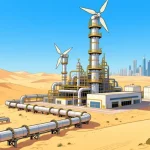
Infrastructure financing across the MENA region is being recalibrated to reflect this new risk‑adjusted calculus. Large‑scale projects—ranging from renewable‑energy corridors to trans‑regional logistics hubs—are increasingly funded through blended finance structures that leverage sovereign capital to de‑risk private participation. The emphasis on modular, scalable assets enables countries to advance critical connectivity initiatives without overreliance on traditional Western financing channels, thereby enhancing resilience against external policy shifts.
Looking ahead, the convergence of sovereign wealth discipline, venture‑capital dynamism, and infrastructure modernization will dictate the strategic trajectory of the Middle East and North Africa. Investors who can adeptly navigate the intersection of political risk and technological opportunity are poised to capture disproportionate upside, positioning the region as a crucible for next‑generation economic growth that is both sovereign‑driven and globally integrated.