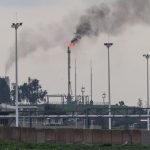

ADNOC Gas is executing a state-directed capital allocation mandate designed to transform the UAE’s hydrocarbon output into a structural anchor for Middle Eastern industrial self-sufficiency. While current supply-demand equilibrium supports a $5.2 billion annual net income and double-digit EBITDA expansion, the strategic pivot toward sustained capacity growth requires aggressive sovereign capital deployment. With $3.6 billion committed to upstream processing and midstream infrastructure in 2025 alone, and final investment decisions for the Rich Gas Development pipeline expected in early 2026, the enterprise is front-loading engineering expenditure to outpace a structurally embedded 4% annual increase in domestic utility and industrial consumption. This capital intensity functions as a macroeconomic stabilizer, insulating Gulf Cooperation Council supply chains from global LNG volatility while signaling a permanent shift from commodity arbitrage to integrated energy infrastructure development.
The physical scaling of pipeline networks and processing facilities is simultaneously catalyzing a fundamental reallocation of regional venture capital toward industrial technology and carbon management ecosystems. Regulatory and ESG frameworks now mandate carbon capture utilization and storage integration across more than 35% of new gas projects, creating a high-barrier entry point that traditional EPC contractors cannot monopolize. Sovereign wealth funds and strategic limited partners are therefore directing growth-stage and venture capital into indigenous industrial automation, predictive maintenance platforms, and modular decarbonization technologies capable of compressing project timelines and de-risking multi-decade capital cycles. This convergence of heavy infrastructure and embedded technological requirements is reshaping MENA’s startup landscape, prioritizing hard-tech commercialization over consumer-facing models and tethering venture returns directly to national energy security objectives.
The overarching business impact hinges on execution precision and the calibrated arbitrage between subsidized domestic supply and global export monetization. Any material delay in early 2026 capital approvals or sustained acceleration in regional demand beyond projected baselines will compress industrial margins across the broader MENA corridor and force sovereign balance sheets to absorb cost overruns or ration allocation to downstream manufacturing. Conversely, successful deployment will anchor a self-reinforcing cycle of foreign direct investment, localized supply chain development, and fiscal optimization through predictable dividend streams. Institutional capital markets have already discounted short-term commodity volatility in favor of long-duration infrastructure yields, with recent quantitative positioning reflecting a structural preference for execution certainty over cyclical trading multiples. The trajectory of this expansion will ultimately serve as the definitive benchmark for sovereign capital efficiency in the energy sector, determining whether regional majors can scale physical and digital infrastructure without compromising fiscal resilience.