
The humanitarian crisis unfolding in Qlayaa, southern Lebanon, represents a crystallisation of systemic risk that has rendered large portions of the MENA region uninvestable for major sovereign wealth funds and institutional capital. The deliberate interdiction of road networks—a basic infrastructure requirement for any functional economy—transcends a local military tactic to become a definitive sovereign risk signal. For Gulf-based sovereign investors, whose mandates increasingly prioritise geopolitical stability alongside financial return, the scenes of a populated village reliant on a single, non-guaranteed access road for medicine and fuel confirm a recalibration of capital allocation away from states where territorial integrity cannot be assured. This event adds empirical weight to existing sovereign risk models that price the Levant as a high-beta zone, accelerating the strategic migration of patient capital towards the GCC’s more stable, state-backed infrastructure and technology initiatives.
The humanitarian narrative is, in essence, a human capital collapse case study with direct implications for the region’s venture capital ecosystem. The testimony of a former physics teacher reduced to “odd jobs” exemplifies the evaporation of skilled labour pools, a prerequisite for any knowledge-based economy. Venture capital, which thrives on dense networks of educated entrepreneurs and stable operating environments, faces a stark calculus: the probability of portfolio company failure due to supply chain disruption, staff displacement, or physical destruction in conflict zones now outweighs potential arbitrage in depressed valuations. The dislocation of communities, as seen with the Shiite populations from surrounding areas, Shatters the demographic continuity needed for sustainable market growth. Consequently, MENA-focused VCs are accelerating a bifurcation, directing risk capital almost exclusively towards the Gulf’s sovereign-backed innovation hubs while treating the remainder of the region as a write-off for a generation.
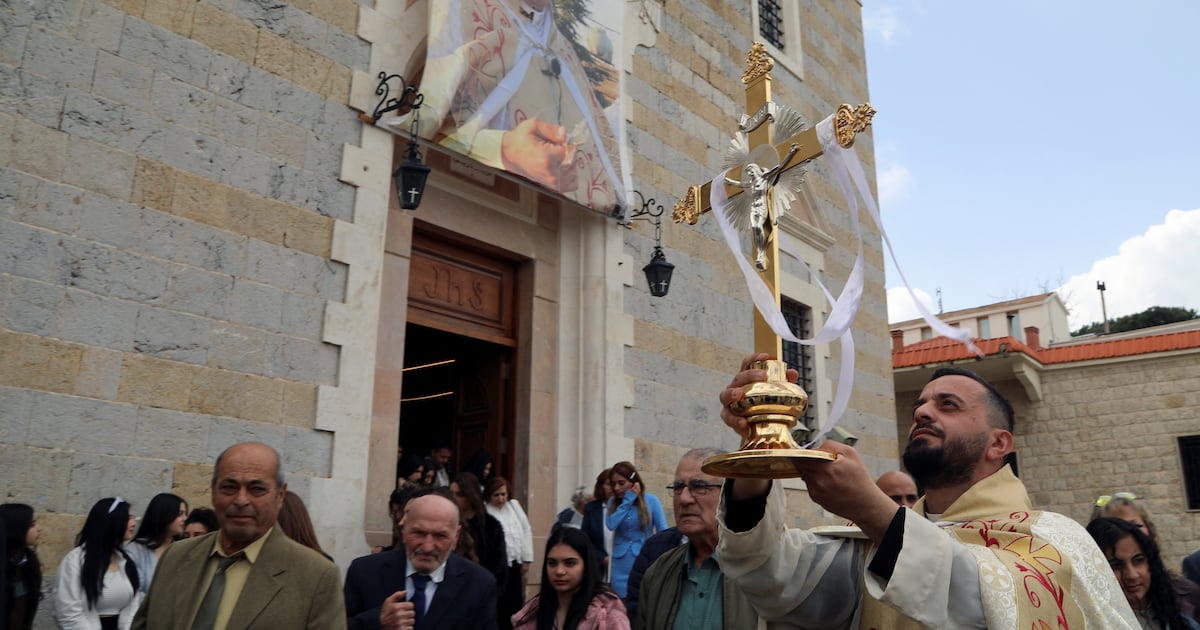
The cancellation of the Vatican humanitarian convoy underscores a critical failure of the regional diplomatic and security architecture to facilitate even basic commercial and aid flows, a non-negotiable precondition for infrastructure investment. The inability of UNIFIL or the Lebanese army to secure a single road establishes a de facto “no-go” zone for reconstruction finance. For the multilateral development banks and export credit agencies typically tasked with post-conflict infrastructure rebuilding, this sets a prohibitive precedent: without a credible, enforceable security guarantee—a sovereign function—no project finance structure can achieve closure. Consequently, the vast infrastructure deficit across the Levant is being permanently capital-starved. The capital that would have been earmarked for roads, ports, and power grids is being re-routed to projects within jurisdictions that can provide ironclad security covenants, primarily the Gulf monarchies, thereby entrenching a decade-long divergence in regional development trajectories.