
The escalation of tensions between the United States and Iran has profound implications for business ecosystems across the Middle East and North Africa (MENA), particularly concerning sovereign capital flows, venture capital (VC) dynamics, and regional infrastructure resilience. Trump’s rhetoric about dismantling Iran’s oil sector and infrastructure underscores a strategic shift in geopolitical risk, which directly threatens the stability of MENA’s energy-dependent economies. The Strait of Hormuz, a critical chokepoint for global oil trade, remains a focal point of strategic vulnerability. Any disruption to its operations could trigger cascading effects on sovereign wealth funds in Gulf Cooperation Council (GCC) states, which rely heavily on hydrocarbon exports for fiscal stability. Moreover, the threat of retaliatory attacks on civilian infrastructure—power grids, transport networks—exposes vulnerabilities in regional infrastructure, necessitating urgent investment in redundancy and diversification. This instability creates a precarious environment for business operations, forcing corporations to reassess exposure to MENA markets amid heightened geopolitical volatility. The potential for prolonged conflict also diverts sovereign capital toward defense and reconstruction, potentially stifling private sector growth and innovation in the region.
The strategic implications for sovereign capital in MENA are particularly acute, as the region’s financial systems are deeply intertwined with energy revenues. Trump’s assertion of control over Iran’s oil sector raises questions about the future of hydrocarbon revenues and their allocation. For GCC states, which have historically prioritized sovereign wealth fund investments in energy infrastructure and regional projects, the current conflict could accelerate a reallocation of capital toward defense and alternative energy sources. This shift may also strain relations between energy-exporting MENA nations and oil-importing countries, further complicating capital flow dynamics. Additionally, the uncertainty surrounding a potential ceasefire or escalation could deter foreign direct investment (FDI) in energy-related ventures, undermining long-term financial planning. Venture capital within the region, which has historically flowed into technology and fintech sectors, may face reduced capacity as risk appetite diminishes. The war’s economic fallout could also divert attention from MENA’s nascent VC ecosystems, redirecting focus toward short-term survival rather than long-term innovation, thereby delaying the region’s technological maturation.
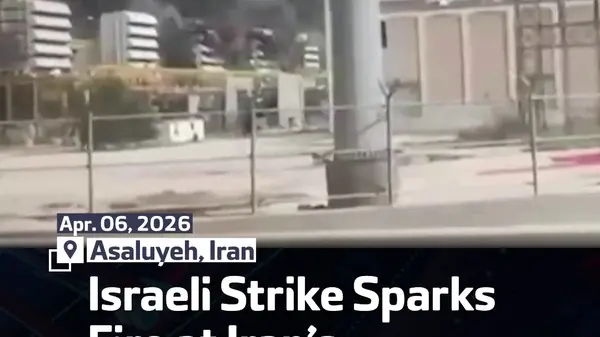
Regional infrastructure resilience emerges as a critical concern, given the direct targeting of energy and transportation networks in Iran. The destruction of power plants and bridges, as highlighted in Trump’s threats, not only exacerbates immediate humanitarian and economic suffering but also underscores the fragility of MENA’s physical infrastructure. For countries reliant on cross-border energy trade or transit corridors, such damage could lead to prolonged outages and heightened operational costs. The need for rapid infrastructure recovery or replacement will likely drive increased public and private spending, potentially diverting resources from developmental projects. Furthermore, the conflict’s impact on global energy markets could incentivize regional nations to accelerate investments in energy diversification and storage solutions, fostering a competitive landscape for infrastructure technology and services. However, in the short term, the economic disruption may hinder such initiatives, as MENA governments prioritize crisis management over long-term planning. The intersection of business, sovereign capital, and infrastructure in this context reveals a precarious balance, where geopolitical choices have tangible, far-reaching economic consequences for the region.