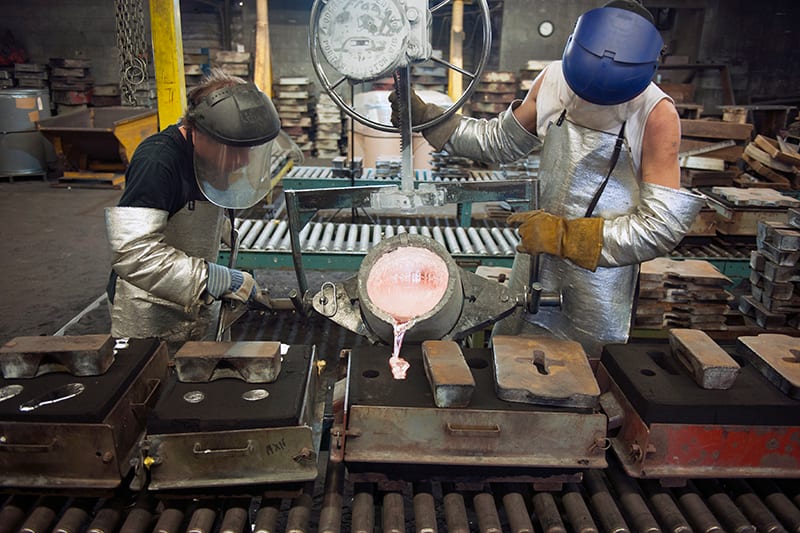

Saudi Arabia’s foundry equipment market is poised for steady growth, reflecting the Kingdom’s broader Vision 2030 agenda to modernise industry and diversify away from hydrocarbons. In 2025 the market was valued at roughly US$132 million and is projected to reach US$176 million by 2034, a 3.2 % compound annual growth rate. The uptick is driven by sovereign investment of more than US$6 billion in steel and metal production, the aggressive push to upgrade 4,000 factories under the National Industrial Strategy, and the demand‑driven scale‑up of high‑volume facilities for the NEOM, Qiddiya, and Riyadh Metro projects.
For private capital, the corridor between the Public Investment Fund (PIF) and high‑technology equipment suppliers offers an attractive vehicle for venture‑capital‑grade returns. The PIF’s backing of Alat in partnership with Lenovo to launch AI‑enabled foundries has yielded demonstration sites that validate robotics, CNC‑fired furnaces and digital twins. These models not only reduce labour cost and defect rates but also create a pipeline for stake‑holding in downstream logistics, maintenance and data‑analytics services—sectors that have traditionally lagged in Saudi manufacturing but are now gaining traction as part of the Industrial Transition Program.
Infrastructure implications are profound. The country’s rapid expansion of aluminium, steel and super‑alloy production—enabled by the world’s largest continuous casting plant in Yanbu and new high‑capacity sheet cast facilities—requires an integrated supply chain of advanced moulding systems, energy‑efficient induction furnaces and waste‑recovery technology. The Ministry’s 5G‑enabled “Factories of the Future” program intends to embed IoT sensors and predictive‑maintenance algorithms across 70 % of the country’s industrial sites by 2030, aligning operational efficiency with net‑zero commitments under the Saudi Green Initiative. This shift is already influencing capital allocation, as foundry operators purchase recyclable‑feedstock systems and closed‑loop water cooling to meet both regulatory and cost‑efficiency targets.
From a venture standpoint, the convergence of automation, sustainability and digital‑first production creates a fertile environment for start‑ups developing specialized tools, AI‑based quality‑control platforms and energy‑management solutions. Investors in the region should therefore watch for fintech‑backed financing models that bridge sovereign backing with commercial scalability, as the foundry sector evolves into a high‑tech nucleus within the Kingdom’s future industrial ecosystem.