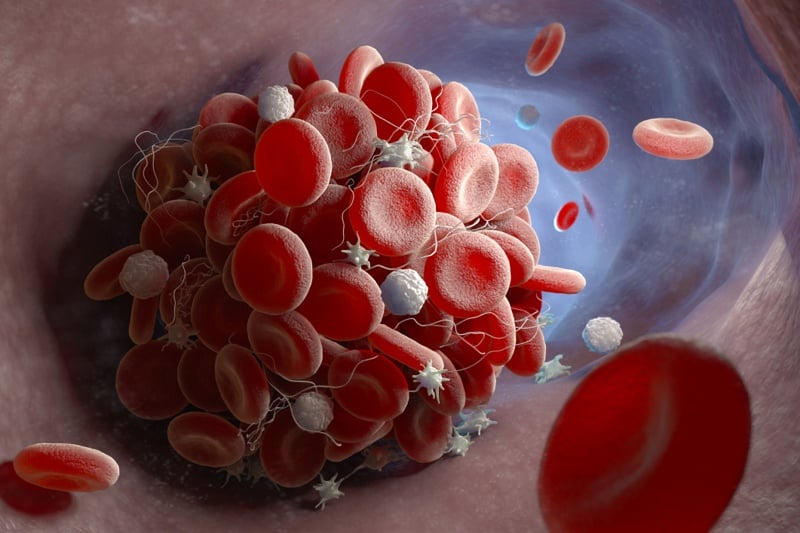

California‑based Endovascular Engineering (E2) has secured an $80 million Series C round, reinforcing its commercial momentum in the pulmonary embolism (PE) treatment market. The new capital follows the firm’s FDA clearance of the Hēlo Thrombectomy Platform, a dual‑action device that couples mechanical clot disruption with aspiration via a minimally invasive catheter. The financing, led by Gilde Healthcare and Norwest with participation from strategic investors and existing backers such as Santé Ventures and 415 Capital, underscores the sector’s high valuation expectations.
For the Middle East and North Africa, the transaction signals a deepening link between sovereign capital flows and frontier medical technology. Arab‑led sovereign wealth funds, increasingly active in life‑science investments, are poised to tap into E2’s dominant position after the FY2‑cleared platform. The capital infusion will allow E2 to build a robust global supply chain, accelerate marketing and regulatory approvals in key emerging markets, and potentially align with regional initiatives such as the UAE’s Vision 2021, which seeks to position the Gulf as a hub for advanced medical care.
The round also amplifies the competitive landscape dominated by legacy players: Stryker’s $4.9 billion acquisition of Inari Medical and Boston Scientific’s $14.5 billion Penumbra takeover have consolidated governance over first‑generation systems. E2’s breakthrough technology offers a differentiated, less invasive alternative that could capture significant market share, compelling Gulf‑based venture funds to reassess portfolio allocations toward next‑generation thrombectomy solutions.
Beyond market share, the deal hints at broader regional infrastructure implications. The ability to manufacture and distribute complex catheter‑based devices demands sophisticated logistics and certified manufacturing hubs—conditions that many MENA countries are actively cultivating. Strategic investors can leverage existing regional manufacturing consortia to position Gulf states as critical nodes in global med‑tech supply chains, enhancing both economic resilience and health service capabilities for rapidly ageing populations.