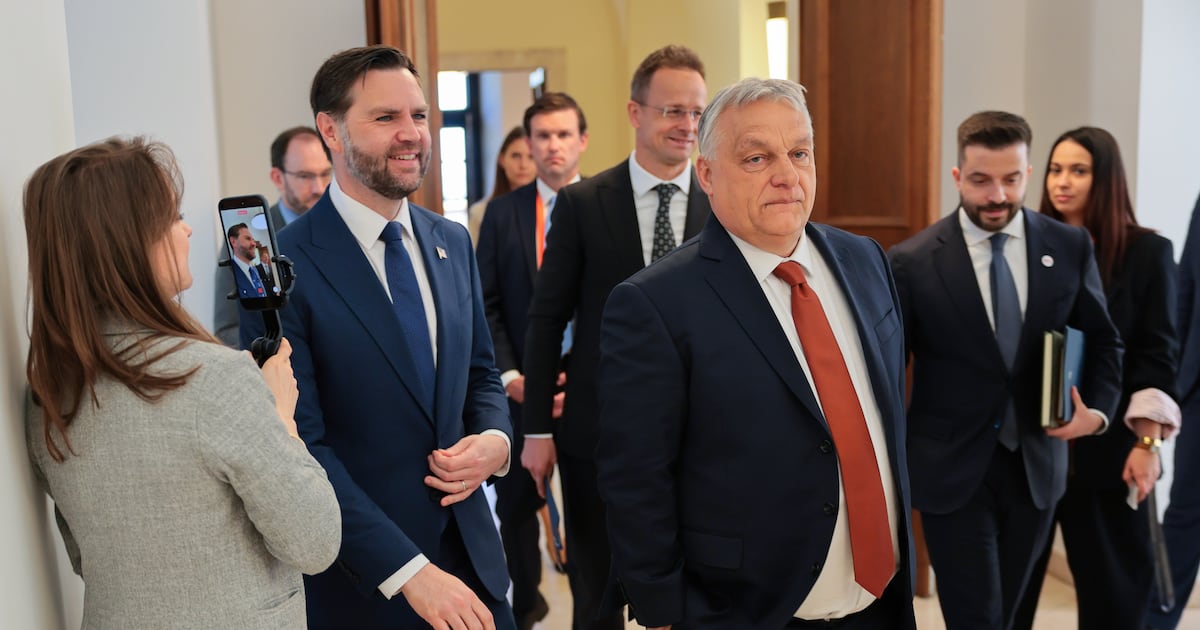

Washington’s high‑level outreach to Budapest this week underscores a broader strategy by the United States to cement economic footholds in Europe that could ripple through the Middle East and North Africa. Vice‑President JD Vance’s meeting with Hungarian Prime Minister Viktor Orban was accompanied by a statement from Hungarian Foreign Minister Peter Szijjártó heralding a “new golden age” in bilateral ties, and was quickly followed by reports that state‑linked oil company MOL will sign a $500 million contract to purchase 500,000 tonnes of crude from U.S. producers. The deal not only injects sovereign capital into Hungary’s energy sector but also creates a predictable downstream market for American shale output, a development that could reshape regional oil pricing dynamics and provide a template for similar agreements with MENA exporters seeking stable financing amid volatile geopolitical conditions.
For the MENA venture‑capital ecosystem, the U.S. endorsement of right‑leaning, state‑aligned partners signals a renewed appetite for financing projects that align with Washington’s “America First” agenda, particularly in security‑related technologies and energy diversification. Investors in the Gulf and North Africa are likely to reassess risk‑adjusted returns on domestic start‑ups that can tap into U.S. supply chains for critical components, from hydrogen electrolyzers to cyber‑defence platforms. The implicit message is that sovereign wealth funds and private‑equity houses in Saudi Arabia, the United Arab Emirates and Qatar may find a more receptive U.S. capital market for co‑investment vehicles, provided they adhere to the political litmus tests evident in the Budapest engagement.
Infrastructure planners across the region should note the strategic implications of the MOL‑U.S. oil agreement. By locking in a long‑term crude supply, Hungary is effectively diversifying away from Russian pipelines, a move mirrored by several MENA states that are accelerating the construction of LNG terminals and storage facilities to reduce reliance on a single source. The precedent set in Central Europe could accelerate cross‑border financing consortia led by sovereign lenders eager to fund pipelines, rail links, and digital corridors that enhance energy security and trade connectivity between Europe and the Gulf.
Nevertheless, the political calculus remains delicate. While Washington’s overt support for Orban may bolster short‑term commercial deals, the underlying tension over the U.S. war in Iran—now in its sixth week—has already elevated energy prices and strained European economies. MENA investors must weigh the benefits of closer U.S. ties against the risk of secondary sanctions or market volatility triggered by prolonged conflict. As senior analysts observe, the true measure of impact will be whether the Budapest overture translates into durable, capital‑intensive projects that reinforce regional supply chains or simply serves as a transient political gesture with limited fiscal upside.