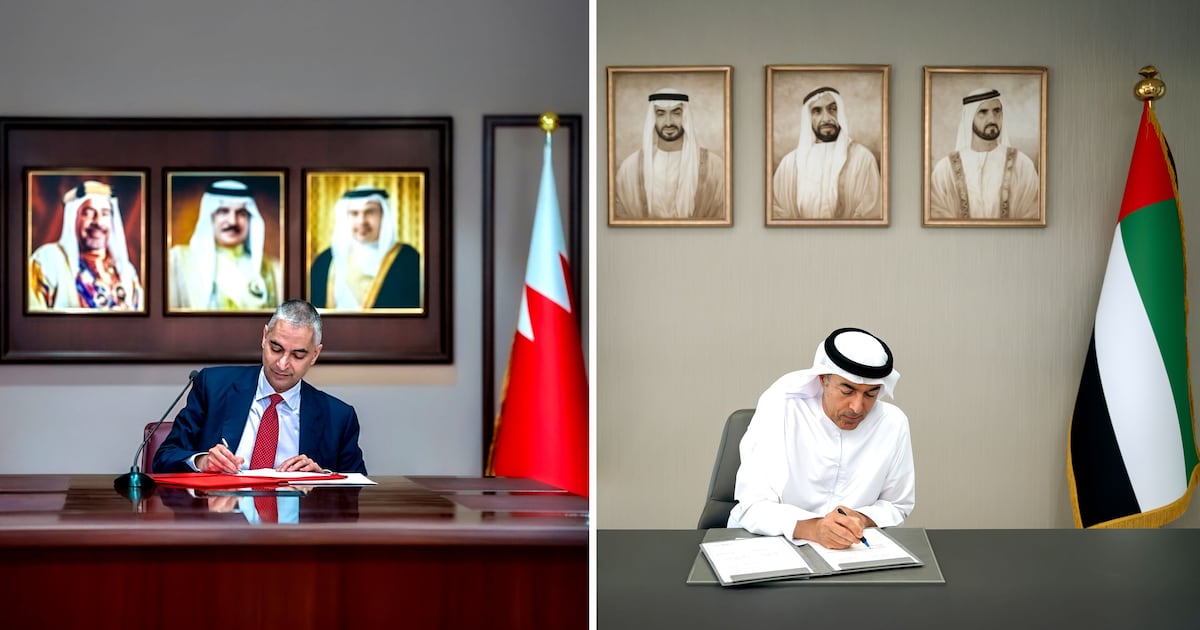

The United Arab Emirates and Bahrain have formalized a significant monetary accord – a five-year, Dh20 billion (approximately $5.4 billion) currency swap agreement – signaling a deepening commitment to regional financial stability and trade integration. This arrangement, facilitated by the Central Banks of the UAE and Bahrain, transcends a simple liquidity provision mechanism; it represents a strategic move designed to mitigate the impact of ongoing geopolitical volatility, particularly in light of recent tensions surrounding Iran and escalating regional security concerns, as evidenced by the drone attacks targeting Kuwait’s energy infrastructure.
The immediate business impact of this swap is likely to be felt across the MENA region. Increased confidence in local currency liquidity will undoubtedly encourage greater intra-regional trade and investment, reducing reliance on the US dollar and bolstering domestic economic activity. Furthermore, the agreement’s potential to facilitate cross-border transactions will benefit businesses operating across the UAE and Bahrain, streamlining supply chains and fostering greater economic interconnectedness. Sovereign wealth funds and institutional investors, traditionally cautious in the face of uncertainty, may view this collaboration as a positive signal, potentially leading to increased capital flows into the region’s financial markets – a crucial element for supporting the ambitious economic diversification plans currently underway.
However, the long-term implications extend beyond immediate transactional benefits. This initiative underscores a broader trend of sovereign capital engagement within the MENA bloc. The UAE’s proactive response, including the recently implemented financial resilience package in response to the Iranian situation, demonstrates a calculated approach to safeguarding its financial system. The currency swap agreement complements this strategy, signaling a willingness to actively participate in regional financial architecture and to leverage partnerships to bolster resilience. Venture capital firms, too, will observe this development closely, as increased stability and confidence could unlock further investment opportunities in sectors ranging from fintech to renewable energy – areas vital for long-term growth.
Finally, the agreement necessitates a concurrent assessment of regional infrastructure readiness. While the immediate impact is financial, sustained benefits hinge on the capacity of the UAE and Bahrain to support increased trade and investment flows. Investments in logistics, digital infrastructure, and regulatory harmonization will be critical to fully realize the potential of this accord. The Central Banks’ stated goals of promoting local currency use and advancing co-operation frameworks highlight a commitment to deeper integration, a process that will require more than just monetary arrangements – it demands a coordinated effort across multiple sectors to build a truly resilient and interconnected regional economy.