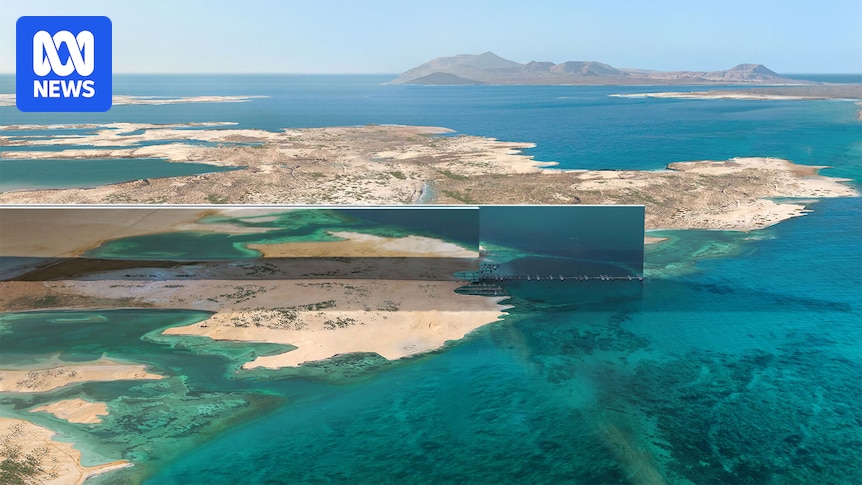

The soft facility management (FM) sector in Saudi Arabia is undergoing a seismic shift, driven by the Kingdom’s strategic push to redefine its economic landscape under Vision 2030. The scale of infrastructure ambitions—nearly $1.1 trillion in giga-projects involving NEOM, the Red Sea Project, and the eventual launch of King Salman International Airport—diamonds the region’s capacity to absorb integrated, high-volume FM services. These projects are not merely physical assets but economic engines demanding sophisticated, real-time service ecosystems, from 24/7 security and cleaning to smart building management systems. The market’s projected 9.1% CAGR to $821 million by 2033 reflects not just retail or B2B activity but a systemic transformation where soft FM now intersects with sovereign capital allocation. Governments and institutional investors are prioritizing FM as a bridge between capital expenditures and operational efficiency, creating a competitive environment where technological adoption—such as drone-based maintenance and AI-driven predictive maintenance—has become non-negotiable for market access. This shift is accelerating consolidation among operators, as legacy players struggle to align legacy models with the capital-intensive, tech-dependent demands of mega-developments, thereby reshaping business dynamics across the Middle East and North Africa (MENA).
The role of sovereign capital in this transformation is both a catalyst and a qualifier for venture capital interest in the region. Saudi Arabia’s $148 billion in construction contracts and $54 billion allocated to education infrastructure in 2025 underscores the state’s dual mandate to generate jobs and upskill labor through FM-specific training programs. While the government’s $26.7 billion injection to address payment arrears stabilizes cash flow, it also signals a broader trend of institutionalizing FM contracts through outcome-based and public-private partnership (PPP) frameworks. This makes FM a fertile ground for venture capital, particularly in tech-enabled niches like automation and sustainability. Startups such as KTV Working Drone, which secured the first drone-cleaning license, exemplify how niche innovation can attract cross-border investment, while larger firms like Alesayi Holding are leveraging sovereign-backed M&A to dominate. The MENA region is witnessing a quiet VC surge in FM-adjacent tech, as global investors align with regional machinery to capitalize on infrastructure-driven demand. However, sovereign capital’s emphasis on ESG compliance—particularly in green FM practices—raises entry barriers, concentrating capital in firms with both scale and technical agility.
The implications for regional infrastructure extend beyond Saudi Arabia, positioning the FM sector as a barometer for MENA’s digital and economic evolution. The Kingdom’s success in harmonizing large-scale infrastructure with advanced service delivery—such as IoT-enabled asset monitoring or multi-lingual workforce development—sets a template for neighboring economies seeking to diversify. As regional players and cross-border investment vehicles eye opportunities, the demand for standardized, scalable FM solutions will likely accelerate, particularly in Gulf Cooperation Council (GCC) nations emulating Vision 2030’s model. Moreover, the sector’s pivot toward outcome-based metrics and sustainability reporting is redefining how infrastructure value is measured, pushing providers to move beyond transactional services toward strategic partners in resilience and risk mitigation. For MENA, this means FM is no longer a utility but a strategic lever in building sovereign capitalized, technologically integrated urban ecosystems—a trend that could recalibrate regional investment flows toward infrastructure-as-a-platform models for decades to come.
The Saudi Arabia soft facility management (FM) sector exemplifies a high-stakes convergence of sovereign ambition and institutional transformation, with profound implications for business dynamics and regional infrastructure. Vision 2030’s $1.1 trillion giga-project pipeline—centered on NEOM, Red Sea Global, and megaprojects like King Salman International Airport—demands a quantum leap in integrated FM services, ranging from 24/7 security and hospitality to AI-driven predictive maintenance. This scale is not merely consuming existing capacity but fundamentally altering market economics: IMARC Group’s projection of 9.1% CAGR to $821 million by 2033 masks a shift where soft FM has evolved into a strategic expenditure for infrastructure as a platform. Sovereign capital is the lodestar here, with the government allocating $148 billion in 2024 construction contracts and $54 billion to FM talent development, forcing operators to align with technology-enabled, outcome-based models. This capital injection is catalyzing consolidation; mergers like Alesayi Holding’s acquisition of Initial Saudi Group and UEM Edgenta’s stake in MEEM are not incidental but pragmatic responses to win integrated contracts for mega-sites, thereby concentrating market power among firms capable of merging technical innovation—drones, IoT—with operational scale. For the MENA region, this signals a blueprint: states leveraging sovereign funds to metamorphose FM from a cost-center into a performant, data-driven asset class. Business players must now navigate a bifurcated landscape—either partner with or be acquired by enterprises capable of managing this capital-intensity, while venture capital eyes FM-adjacent tech as a gateway to regional infrastructure plays.
The strategic allocation of sovereign capital is recalibrating venture capital interest in the MENA FM ecosystem, with a pronounced tilt toward technology-enabled solutions and behavioral infrastructure shifts. The $26.7 billion cash flow stabilization in 2024—derived from clearing payment arrears—has improved liquidity but also raised expectations for transparent, KPI-driven contracts, favoring operators with digital infrastructure (cloud-native CMMS platforms, real-time analytics). This environment is magnetizing VC funding for innovations like KTV Working Drone’s licensed facade-cleaning technology, which reduces labor costs and safety risks—a model replicable across the region’s high-rise urbanization. Concurrently, the Saudi FM workforce modernization program, targeting force doubling by 2030 via multilingual, skill-based training, is raising operational standards but also creating barriers for non-compliant providers. Regionally, this talent intensification could bootstrap FM professionalization across GCC nations competing for similar investments. Sustainability mandates further stratify capital flows: NEOM’s zero-carbon requirements, for instance, exclude providers lacking verifiable green practices, funneling VC and sovereign dollars toward entities demonstrating ESG competencies. Thus, the FM sector is becoming a proxy for broader regional trends in digital resilience, green compliance, and institutional capacity-building—sectors where sovereign backing and venture agility intersect to redefine infrastructure value chains beyond Saudi borders.
The infrastructural ripple effects of Saudi Arabia’s FM boom are poised to redefine regional competitiveness, positioning FM as a critical determinant of MENA’s status as a global investment hub. The Kingdom’s prioritization of technology-integrated, scalable service delivery in its giga-projects establishes a template for neighboring economies pursuing economic diversification. For instance, the adoption of drone operations, AI maintenance, and outcome-based contracting in Saudi acts as a magnet for cross-border technology partnerships and foreign direct investment in FM-adjacent sectors. Moreover, the region’s infrastructure psyche is shifting from project execution to ecosystem management—where FM providers are no longer service vendors but strategic enablers of asset longevity and compliance. This paradigm could accelerate MENA-wide investment in smart city frameworks, with FM at the nexus of data, sustainability, and labor optimization. From an investor perspective, the sector’s consolidation and tech adoption lower operational risks in large-scale developments, making FM a less volatile anchor than construction alone. Crucially, the emphasis on local talent development through programs like the IWFM-SFMA partnership ensures a replicable, skilled workforce model for GCC states, mitigating historical labour challenges. Ultimately, Saudi’s FM transformation is not an isolated phenomenon but a catalyst—reshaping how sovereign capital, venture strategies, and infrastructure investments converge across the MENA region to build next-generation economic infrastructure.