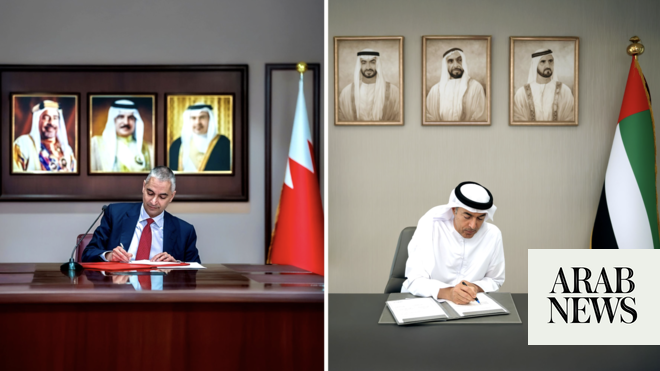

The United ArabEmirates and Bahrain have formalized a 20 billion dirham (approximately $5.44 billion) currency‑swap framework, marking a strategic deepening of monetary coordination between two of the Gulf’s most dynamic economies. Ratified by the respective central banks, the five‑year facility enables the direct exchange of dirhams and dinars, thereby bolstering liquidity for cross‑border trade, investment, and sovereign financing activities within the MENA corridor.
From a sovereign capital perspective, the arrangement augments the fiscal resilience of both states by providing a pre‑positioned foreign‑exchange buffer that can be mobilized in times of market stress, reducing reliance on external funding channels. The swap also creates an ancillary incentive for sovereign wealth funds and regional investors to allocate capital toward joint ventures and infrastructure projects, knowing that currency conversion risk is mitigated through the bilateral mechanism.
On the venture‑capital and development front, the enhanced monetary linkage lowers financing friction for high‑growth sectors such as fintech, renewable energy, and digital transport, facilitating the emergence of trans‑national funds that can marshal both Emirati and Bahraini investor capital. This synergy is expected to accelerate the deployment of liquidity into strategic infrastructure pipelines—particularly those aligned with Vision 2030 agendas—thereby reinforcing regional economic integration and fostering a more diversified, capital‑intensive growth model.
In sum, the currency‑swap agreement transcends a mere liquidity tool; it serves as a catalyst for broader financial interoperability, amplifying sovereign capacity to support sovereign and private‑sector financing across the Middle East and North Africa, and reinforcing the structural foundations of a more cohesive, investment‑driven regional economy.