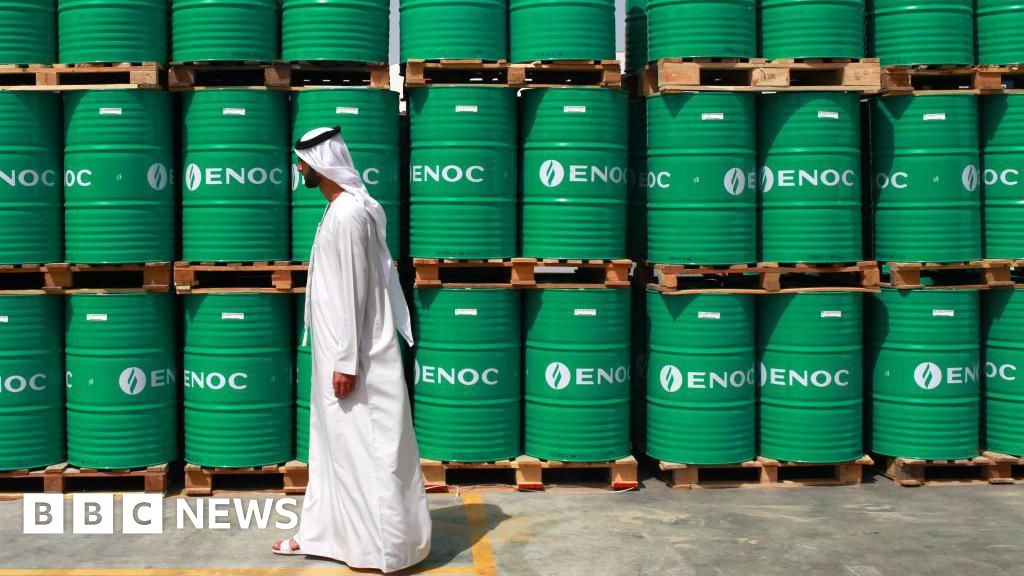

The announcement of a two-week US-Iran ceasefire has failed to stabilize global energy markets, as continued attacks on Saudi Arabian energy infrastructure have reduced the kingdom’s production capacity by approximately 600,000 barrels per day and disrupted flows through the critical East-West Pipeline by roughly 700,000 barrels per day. Brent crude traded 1.86 percent higher at $97.70 per barrel on Friday, while West Texas Intermediate climbed 2.02 percent to $99.85, reflecting persistent supply-side fears despite diplomatic progress. However, oil remains on track for an 11 percent weekly loss—the most significant decline since June 2025—indicating that market participants are increasingly pricing in a de-escalation scenario rather than sustained supply disruption.
From a sovereign capital perspective, the attacks represent a material stress test for Saudi Arabia’s energy security architecture and its implications for the Public Investment Fund’s strategic asset base. The targeting of the East-West Pipeline connecting Abqaiq to Yanbu underscores the vulnerability of Saudi Aramco’s core infrastructure, potentially influencing future capital allocation decisions within the kingdom’s sovereign wealth framework. The UAE’s alternative pipeline route from Habshan to Fujairah has emerged as a critical redundancy, reinforcing the strategic rationale behind the emirates’ sustained infrastructure investments in alternative export pathways. These developments will likely accelerate regional dialogue on hardening energy assets against kinetic threats, with sovereign wealth funds across the Gulf expected to increase allocations toward domestic security infrastructure and international energy diversification ventures.
The business implications extend beyond immediate production losses. Shipping insurers and tanker operators face sustained uncertainty as Strait of Hormuz traffic remains near standstill despite ceasefire provisions, with President Trump warning that oil would flow “with or without” Iranian cooperation. The 20 percent of global oil and gas supplies transiting through the waterway represents a chokepoint whose partial closure has driven average daily price swings exceeding $9—the most volatile trading conditions in years. For regional venture capital ecosystems, particularly in the UAE and Saudi Arabia, the energy sector volatility creates a bifurcated landscape: traditional hydrocarbon-focused investments face elevated risk premiums, while opportunities in energy transition technologies, alternative logistics infrastructure, and domestic refining capacity expansion stand to benefit from the current disruption narrative.
Christian Gattiker, head of research at Julius Baer, suggested that peak disruption to global energy supply has likely passed, noting that flows through Hormuz never fully halted and alternative routes provided cushioning. The East-West Pipeline and UAE’s Habshan-Fujairah route “prevented the Gulf supply chain from drying up completely,” reinforcing expectations of “a short-lived but intense spike rather than a sustained energy crisis.” However, Israel’s continued operations in Lebanon and uncertainty surrounding planned talks in Islamabad this Saturday suggest the ceasefire remains fragile. For MENA sovereign capital managers and regional infrastructure planners, the episode reinforces the strategic imperative of pipeline redundancy, export route diversification, and accelerated investment in downstream refining capacity—themes that will shape capital deployment strategies across the Gulf through the remainder of 2026.