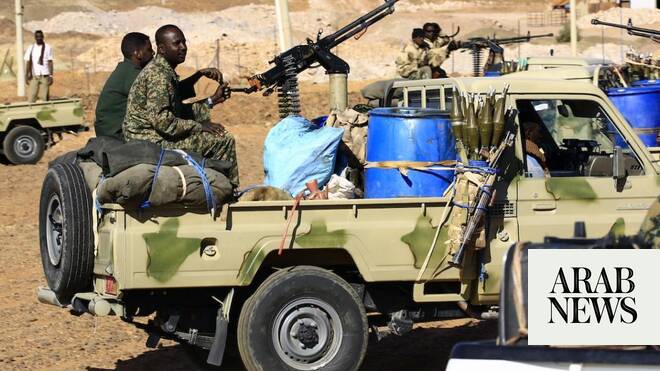

The Yale School of Public Health’s Humanitarian Research Lab has released satellite‑derived evidence that an Ethiopian military installation in Asosa, Benishangul‑Gumuz, has facilitated logistics for Sudan’s Rapid Support Forces (RSF) between late 2025 and early 2026. The analysis documents recurring movements of commercial vehicle carriers, the arrival of containerised supplies, fuel infrastructure and temporary housing capable of accommodating up to 150 personnel, all of which are atypical of standard Ethiopian armed‑services transport. These findings substantiate earlier claims that RSF operations in Blue Nile State, particularly around the strategically critical town of Al‑Kurmuk, have been conducted directly from Ethiopian territory.
For the MENA region, the implications are profound. The border‑proximal assistance underscores the porous nature of regional security networks, compelling Egypt, Saudi Arabia and the Gulf Cooperation Council to reassess sovereign capital allocations to border states that may become theatres of proxy conflict. The potential erosion of Ethiopia’s neutrality threatens to redirect foreign direct investment flows, particularly those earmarked for infrastructure projects such as the Addis Ababa–Addis Hamus road corridor and the Greater Addis Ababa urban rail expansion, which are currently financed by a mix of sovereign wealth funds and institutional investors. A destabilised border environment increases risk premiums and may curtail capital inflows, prompting investors to seek more insulated markets within the region.
Venturing capital and regional infrastructure initiatives face a recalibrated risk matrix. Funding for cross‑border rail links, such as the Ethiopia‑Sudan rail corridor, will require tighter security guarantees and potentially higher sovereign guarantees to offset the perceived spill‑over risk of armed conflicts spilling across the border. Moreover, the exposure of Ethiopian staging facilities to RSF activities may erode confidence among international donors and public‑private partnership (PPP) sponsors, who view such facilities as critical nodes in the maintenance of regional trade and logistics. The expansion of the Asosa airfield, featuring new hangars and hard‑standing pads, further signals a shift towards militarised infrastructure, raising questions about the dual‑use nature of assets in economic planning and the feasibility of repurposing them for civilian freight or aviation corridors.
In sum, the discovered operations within Asosa highlight an emergent security‑economic nexus that will challenge regional investors, sovereign capital stewardship and infrastructure planning across MENA. Stakeholders must integrate comprehensive security assessments into investment theses, while sovereign actors should consider enhanced border monitoring mechanisms to preserve the integrity of economic corridors and maintain investor confidence in a landscape increasingly defined by hybrid conflict zones.