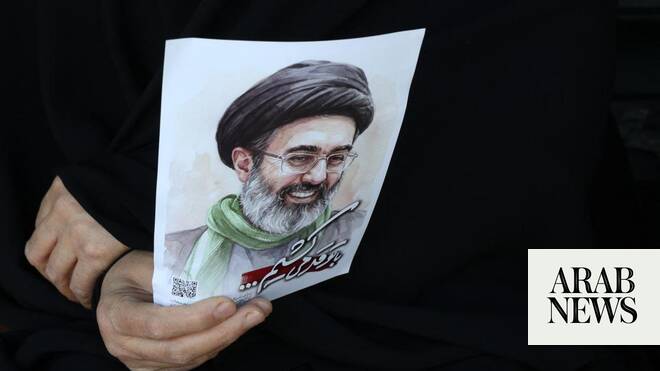

The incapacitation of Iran’s newly installed Supreme Leader, Mojtaba Khamenei, is rapidly reshaping the risk calculus for sovereign lenders, venture capital inflows and regional infrastructure projects across the Middle East and North Africa. With the leader still convalescing from severe facial and lower‑limb injuries sustained in the February 28 airstrike that also claimed the life of his father, the continuity of Iran’s hard‑line policy appears intact, but the opacity surrounding his capacity to command state apparatuses injects unprecedented uncertainty into Tehran’s fiscal outlook. International bond markets, already jittery over Iran’s exposure to renewed U.S. and Israeli sanctions, are likely to price a higher sovereign spread as investors factor in potential delays to debt service and the risk of ad‑hoc policy shifts emanating from the Revolutionary Guard’s de‑facto decision‑making body.
For venture capital firms eyeing Iran’s burgeoning tech ecosystem—particularly fintech, health‑tech and renewable‑energy startups—the leadership vacuum translates into a dual‑edged scenario. On one hand, the Revolutionary Guard’s tight grip may accelerate state‑driven digital initiatives, presenting partnership opportunities for firms capable of navigating the heightened security vetting process. On the other, the lack of a decisive, publicly visible supreme leader complicates the issuance of clear regulatory signals, prompting investors to demand higher equity premiums or to defer capital deployment until a more transparent governance framework emerges. Regional funds based in the UAE, Qatar and Saudi Arabia are recalibrating exposure limits, with several already reallocating capital toward more stable jurisdictions such as Bahrain and Oman.
Infrastructure projects that rely on Iranian cooperation—ranging from the Hormuz Strait shipping corridor to cross‑border pipeline extensions—face heightened execution risk. The supreme leader’s recent written exhortation to keep the Strait of Hormuz closed reflects a continued willingness to leverage strategic chokepoints, jeopardizing global oil logistics and inflating freight costs. Multinational construction consortia and sovereign wealth funds slated to participate in Iran’s post‑war reconstruction must now renegotiate risk‑share clauses, incorporate force‑majeure triggers, and potentially secure political risk insurance from institutions like the Multilateral Investment Guarantee Agency. Delays in the rollout of Iran’s domestic renewable‑energy grid, a sector where European venture capital had begun to make inroads, could stall progress toward the country’s announced “year of resistance” energy targets.
Overall, the uncertainty surrounding Mojtaba Khamenei’s health and his ability to exert unambiguous authority is amplifying geopolitical risk premiums across the MENA region. Credit rating agencies are expected to downgrade Iran’s sovereign outlook, while private equity and venture capital firms are tightening due diligence protocols and demanding more robust governance guarantees. The broader implication for regional infrastructure investors is a shift toward assets and corridors that are less dependent on Tehran’s strategic whims, accelerating a re‑orientation of capital toward more politically stable markets within the Gulf and North Africa.