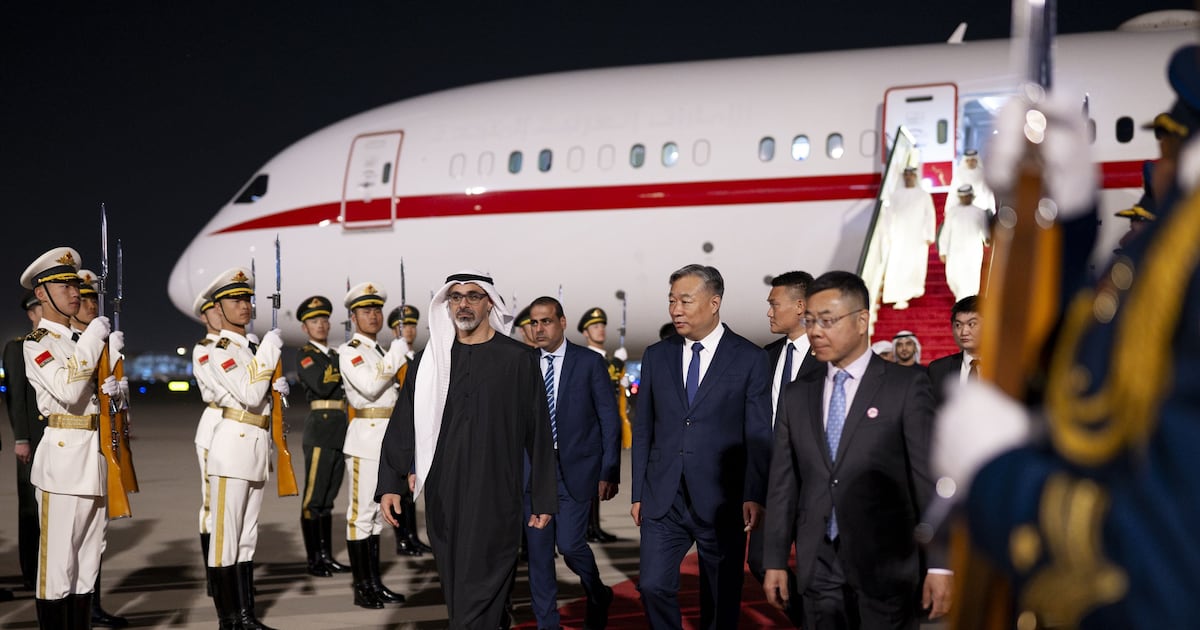

The arrival of Abu Dhabi Crown Prince Sheikh Khaled bin Mohamed in Beijing underscores the UAE’s continued strategic deepening of its comprehensive partnership with China, marking the latest in a series of high-level engagements between the two long-standing allies. The visit, accompanied by a senior delegation including Adnoc’s Dr Sultan Al Jaber, Minister of Investment Mohamed Alsuwaidi, and other key economic ministers, signals a clear prioritization of bilateral economic cooperation and development initiatives. Beyond ceremonial diplomacy, such visits serve as accelerators for substantial sovereign capital flows, particularly in sectors where China’s Belt and Road investments align with Abu Dhabi’s ambitions in advanced technology, infrastructure, and energy transition projects.
From a regional finance and venture capital perspective, the UAE–China relationship is evolving into a critical artery for capital deployment and cross-border innovation. The presence of both sovereign wealth-linked figures and private-sector infrastructure architects in Sheikh Khaled’s delegation indicates a confluence of state-driven infrastructure expansion and targeted high-growth tech investment. This dual approach not only deepens bilateral trade links but also places the UAE as a potential regional launchpad for Chinese technology ventures into the broader Mena market, while simultaneously channeling Gulf capital into China’s innovation ecosystem. Such reciprocal flows enhance liquidity in both markets and could well accelerate Abu Dhabi’s emergence as a key nexus for Indo-Pacific venture capital traffic into the West.
Infrastructure development is a central pillar of this strategic alignment, with Chinese construction and engineering firms likely to be the de facto partners on large UAE giga-projects and urban expansion initiatives. The institutional arrangements established during this visit are poised to facilitate not only Chinese machinery and financing inputs but also technology transfer in renewables and digital infrastructure, areas where Abu Dhabi’s 2030 strategic objectives seek global partnerships. For sovereign fund managers and regional infrastructure investors, stronger UAE-China ties present a model of how sovereign capital can operate both as a geoeconomic tool and as a catalyst for scalable, cross-border industry networks that reshape the economic contours of the Mena region in a multipolar world.