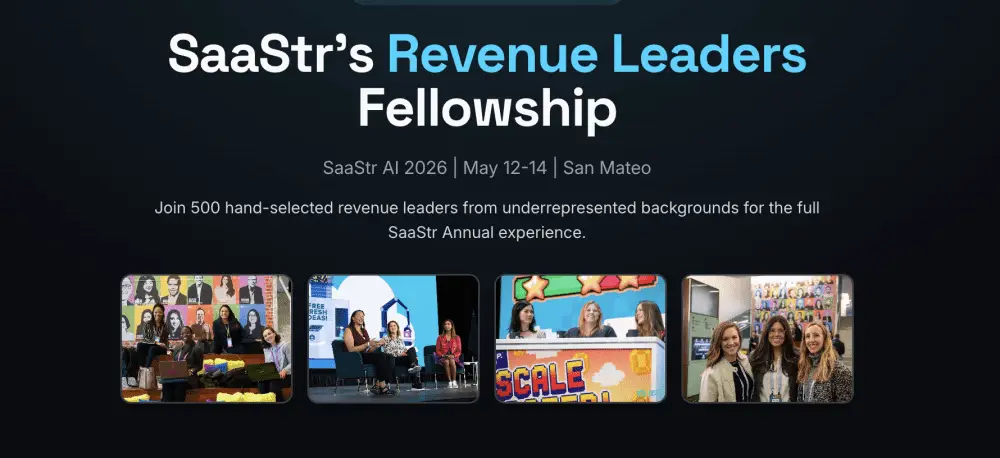

The SaaStr AI Annual fellowship, while originating in the US, presents a strategic blueprint for MENA’s broader economic diversification beyond hydrocarbons. Regional sovereign capital entities, such as Saudi Arabia’s PIF and Mubadala, are increasingly prioritizing human capital development as a core pillar of their investment strategies. Programs fostering diversity in B2B revenue leadership could directly translate into enhanced innovation pipelines within MENA’s burgeoning tech hubs, particularly in Dubai, Riyadh, and Abu Dhabi, where sovereign funds are actively seeding local venture capital ecosystems targeting AI and SaaS sectors. The fellowship’s model of complimentary access for underrepresented operators offers a replicable framework for regional governments to cultivate a more inclusive talent pool critical for scaling indigenous tech ventures and reducing dependence on expatriate expertise.
For venture capital across the GCC, the fellowship underscores a critical undercurrent: market entry into MENA demands local revenue leadership capable of navigating complex cultural landscapes and regulatory environments. Initiatives like this, scaled by regional VCs and accelerators, could bridge the gap between global Silicon Valley playbooks and localized market execution. Sovereign capital, partnered with institutional VC firms, might co-invest in similar fellowship programs targeting Arabic-speaking revenue leaders in fintech, logistics tech, and deep tech—sectors where regional market understanding is paramount. Such targeted investments could yield higher ROI for VC funds by generating founder cohorts with both operational rigor and regional relevance, while sovereign funds advance their mandates of economic diversification and knowledge transfer.
Infrastructure implications are profound yet challenging. Implementing such fellowship models at scale within MENA would necessitate robust digital ecosystems—including high-bandwidth connectivity across emerging markets like Egypt and Morocco, streamlined regulatory frameworks for data localization, and specialized talent incubation facilities. Regional governments must move beyond superficial diversity initiatives to institutionalize pathways that integrate skilled operators into core corporate and startup decision-making. Failure to address systemic barriers in infrastructure and access could perpetuate talent drain, undermining sovereign capital deployments and VC returns. Ultimately, embedding inclusive leadership development into regional infrastructure—spanning transport, logistics, and digital public goods—will determine whether MENA transitions from capital importer to an innovation ecosystem exporting scalable, globally competitive B2B solutions.