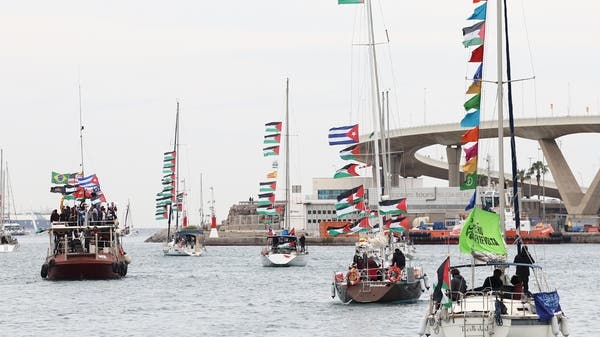

The delayed departure of a 39‑vessel humanitarian flotilla from Barcelona underscores a growing trend in the MENA region: the intersection of aid logistics with sovereign financing and private‑sector mobilisation. While the immediate aim is to breach the Israeli blockade of Gaza, the broader implication for regional capital markets is the emergence of a quasi‑public funding pool, sourced from European NGOs, Gulf sovereign wealth funds and a nascent cohort of impact‑oriented venture capital firms. These investors are calibrating risk‑adjusted returns against geopolitical exposure, signalling a willingness to allocate capital toward high‑visibility humanitarian corridors that also bolster the reputational capital of Middle‑Eastern states eager to project soft power abroad.
For Gulf sovereign investors, backing such initiatives offers a dual dividend: reinforcing diplomatic standing within the Arab league while unlocking new investment pipelines for logistics and maritime infrastructure. The flotilla’s operational shift to an alternative Mediterranean port due to rough seas illustrates the need for resilient, multi‑modal transport hubs—assets that can be securitised or bundled into regional infrastructure funds. Nations such as Saudi Arabia and the United Arab Emirates are already courting consortiums to develop deep‑water terminals and rapid‑deployment storage facilities, projects that could be financed through blended finance vehicles combining sovereign debt, green bonds and private equity commitments.
Venture capitalists focused on the ‘aidtech’ ecosystem are also taking note. The logistical complexities of delivering medical supplies across contested waters have accelerated interest in satellite‑based tracking, autonomous cargo vessels and blockchain‑enabled supply‑chain verification platforms. Regional accelerators in Doha and Beirut have begun curating pipelines for startups that can de‑risk humanitarian shipments, positioning the MENA region as a testbed for next‑generation logistics solutions. Successful pilots could attract follow‑on funding from global development banks, further integrating the region’s innovation ecosystem with international capital streams.
Ultimately, the flotilla’s saga is less a singular humanitarian episode than a barometer of how sovereign wealth, venture capital and infrastructure financing are converging to reshape the MENA’s strategic economic landscape. As states and private actors recalibrate their exposure to conflict‑adjacent markets, the ability to marshal swift, well‑funded logistical responses will become a benchmark for both geopolitical influence and the next wave of infrastructure investment across the region.