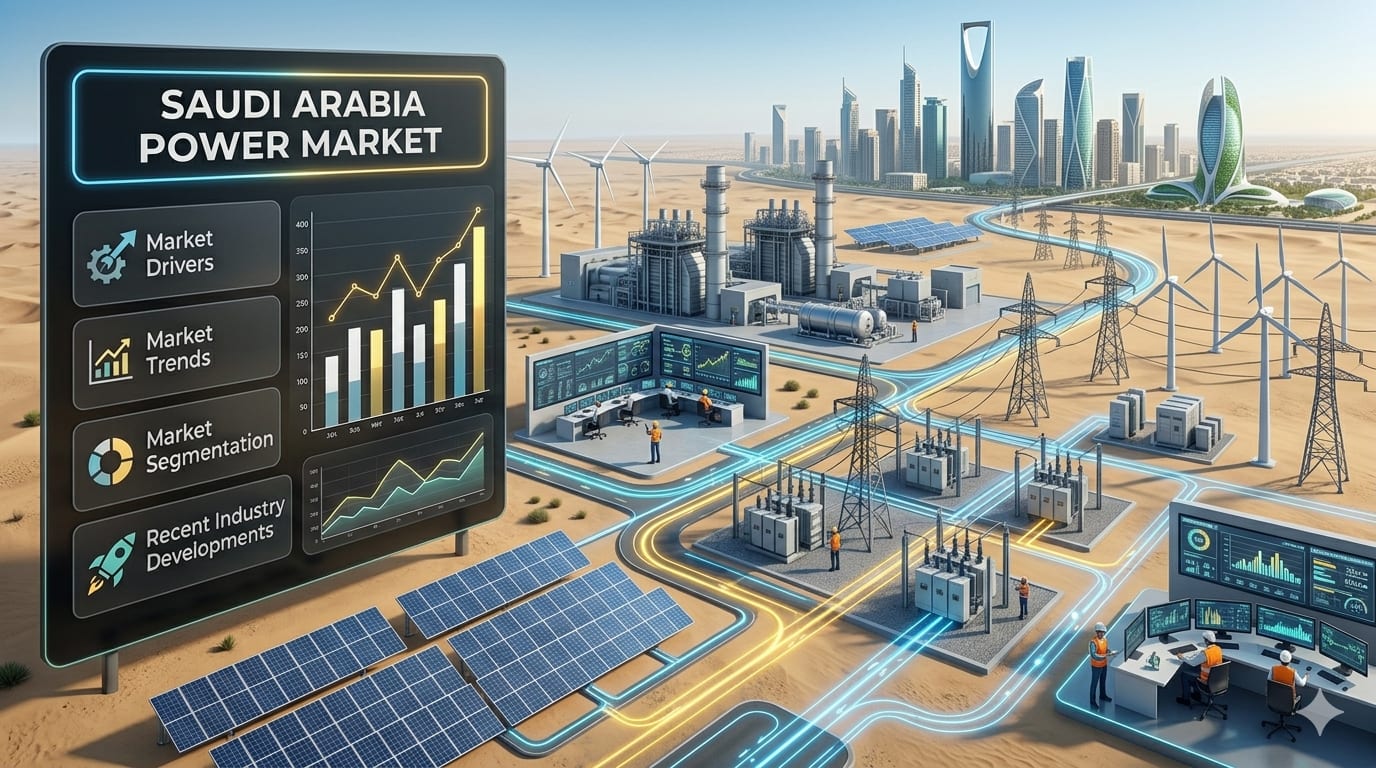

Saudi Arabia’s power sector is experiencing a definitive structural shift driven by the dual imperatives of Vision 2030 renewable targets and a surge in urban and industrial electricity demand. By 2025 the market is projected to reach 84 GW, with a CAGR of 2.62 % to 106 GW in 2034, reflecting substantial sovereign capital flows into solar, wind, and battery storage. The government’s recent power purchase agreements totaling 5,500 MW of solar and 10.9 GW of mixed gas‑solar capacity demonstrate a commitment to bankable, long‑term contracts that are attracting both domestic and foreign private‑equity investment.
Grid modernization is the linchpin of this transition. Massive outlays—reported at SAR 102.2 bn in 2026—are being directed toward digital monitoring, automated controls, and the expansion of high‑voltage corridors necessary to accommodate intermittent generation and high‑capacity industrial loads. These upgrades not only enhance reliability but create a platform for further sovereign and foreign venture capital to deploy storage and flexible demand solutions across the Kingdom’s metropolitan and petrochemical hubs.
Regional spill‑over effects are sizeable. Saudi’s ranking among the top ten global renewable investors, coupled with cross‑border deals such as the 5‑GW renewable project pipeline in Turkey, signals a strategic export of expertise and technology. NEOM’s green‑hydrogen complex, already 90 % complete and supported by 4 GW of renewable feedstock, exemplifies how integrated infrastructure projects can catalyze domestic market development while anchoring the Kingdom’s position as a renewable hub in MENA. For investors, the confluence of a supportive regulatory framework, sizeable sovereign funding, and an evolving demand curve presents a clear, high‑impact pathway to tangible returns in the region’s burgeoning energy infrastructure sector.