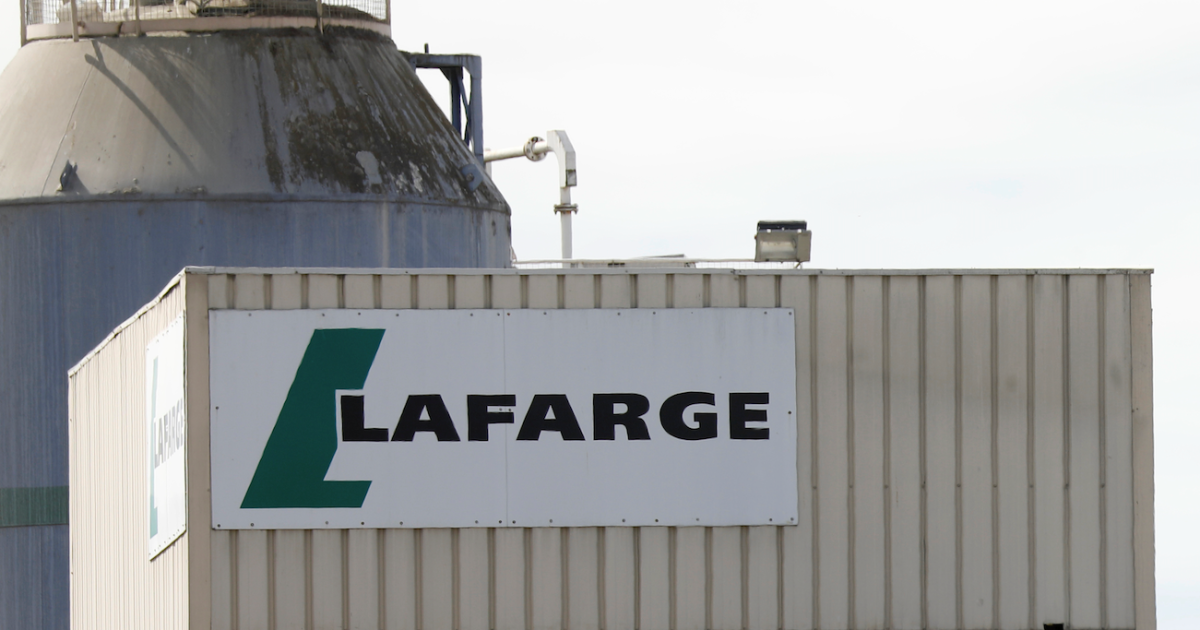

In a landmark judgment delivered by a Paris court, the multinational cement producer Lafarge was found guilty of sustaining armed factions in Syria. The court concluded that between 2013 and 2014 the company routed millions of dollars to ISIL and the al‑Qaeda‑aligned Nusra Front to keep its eastern‑Syria mines operational. The verdict signals a tightening of regulatory scrutiny over multinational corporations operating amid civil conflict and underscores the growing imperative for corporate entities in the MENA region to demonstrate rigorous due‑diligence frameworks in high‑risk environments.
For sovereign capital managers across the Gulf Cooperation Council, the case signals a recalibration of exposure metrics to companies with indirect links to conflict zones. State‑run investment vehicles—particularly those in industrial and infrastructure portfolios—must now factor in geopolitical risk valuations that account for the possibility of financing sanctions and reputational damage. The judgment may prompt sovereign wealth funds to diversify away from legacy industrial firms whose supply chains traverse volatile territories, pressing them to adopt ESG‑compliant investment mandates that explicitly penalise indirect war‑financing ties.
Venture capital funds focused on emerging Middle‑East startups will likely feel the ripple effects through stricter due‑diligence expectations and a heightened emphasis on governance. Early‑stage firms may encounter increased scrutiny on foreign ownership structures and the origin of seed capital. In practice, this could accelerate the adoption of vetted, transparent capital flows, pushing capital providers to rely more heavily on regional co‑funders with proven compliance records.
Infrastructure developers operating in the MENA corridor must also reassess their risk appetites. Large‑scale projects—particularly those spanning cross‑border supply chains—will need to embed robust, audit‑ready monitoring systems that trace the provenance of every funding stream. The Lafarge ruling reinforces that the cost of non‑compliance extends beyond fines: it threatens access to critical markets, erodes investor confidence, and jeopardises the long‑term viability of regional development initiatives. As a result, firms are expected to invest significantly in compliance technology and third‑party verification mechanisms to safeguard their reputational and financial standing in an increasingly litigious global landscape.