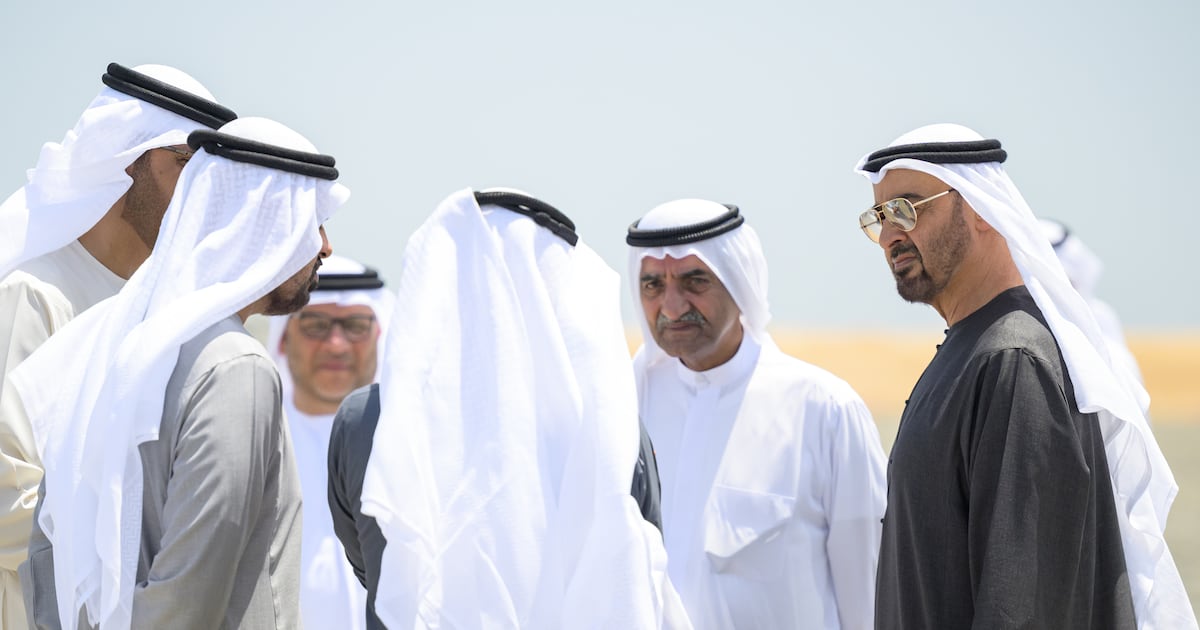

UAE President Sheikh Mohamed bin Zayed Al Nahyan’s recent tour of Fujairah Port underscores the country’s strategic pivot toward leveraging maritime logistics as a catalyst for economic diversification, particularly within the broader Middle East and North Africa (MENA) context. The visit, while symbolic, reflects deeper investments in infrastructure critical to securing sovereign capital flows and fostering resilience amid global supply chain realignments. For a region historically reliant on hydrocarbon exports, Fujairah’s focus on containerization and bulk terminal modernization exemplifies a deliberate push to position itself as a regional trade node, aligning with UAE’s Vision 2030 objectives to reduce fiscal dependence on oil. This move also signals proactive engagement with sovereign capital markets, as infrastructure upgrades likely attract foreign direct investment (FDI) tied to blue economy initiatives, including green hydrogen production and renewable energy partnerships.
The port’s development resonates with evolving sovereign capital dynamics across the MENA region, where Gulf states are increasingly channeling resources into strategic assets to stabilize yields and mitigate currency volatility. By prioritizing Fujairah’s role in East-West trade corridors, the UAE is not only enhancing its own energy security but also creating a magnet for transnational infrastructure financing. Sovereign wealth funds (SWFs) and multilateral development banks (MDBs) are likely monitoring this transition, as port-led growth offers higher risk-adjusted returns compared to traditional oil-linked projects. Furthermore, the integration of Fujairah’s logistics network with neighboring countries’ industrial zones—such as Ras Al Khaimah and northern Saudi Arabia—could catalyze intra-regional capital synergies, fostering a more interconnected infrastructure pipeline.
Beyond sovereign flows, Fujairah’s modernization may spur venture capital (VC) inflows into adjacent fintech and digital infrastructure startups, particularly those catering to cross-border trade automation and ESG-compliant shipping. The UAE’s push for AI-driven port operations and blockchain-enabled customs clearance aligns with nascent regional VC ecosystems focused on InsurTech and smart logistics. Notably, this aligns with Saudi Arabia’s parallel investments in NEOM’s Red Sea Logistics Hub, suggesting a coordinated GCC effort to bypass congested Suez-linked routes while tapping into next-generation financial technologies. Such developments could unlock export opportunities for UAE and GCC startups, positioning the UAE as a hub for GCC-scale deep tech ventures.
Regionally, the UAE’s emphasis on Fujairah’s infrastructure underscores a broader imperative to address historical gaps in MENA connectivity. While sovereign capital and VC inflows are critical, their long-term sustainability hinges on regional cooperation to address shared bottlenecks—such as inconsistent digital infrastructure standards and cross-border labor mobility constraints. By anchoring its strategy in transport and energy corridors, the UAE sets a precedent for GCC peers to bridge the infrastructure deficit through public-private partnerships (PPPs) and multilateral frameworks, ensuring that both sovereign and private capital catalyze transformative growth rather than remain siloed.