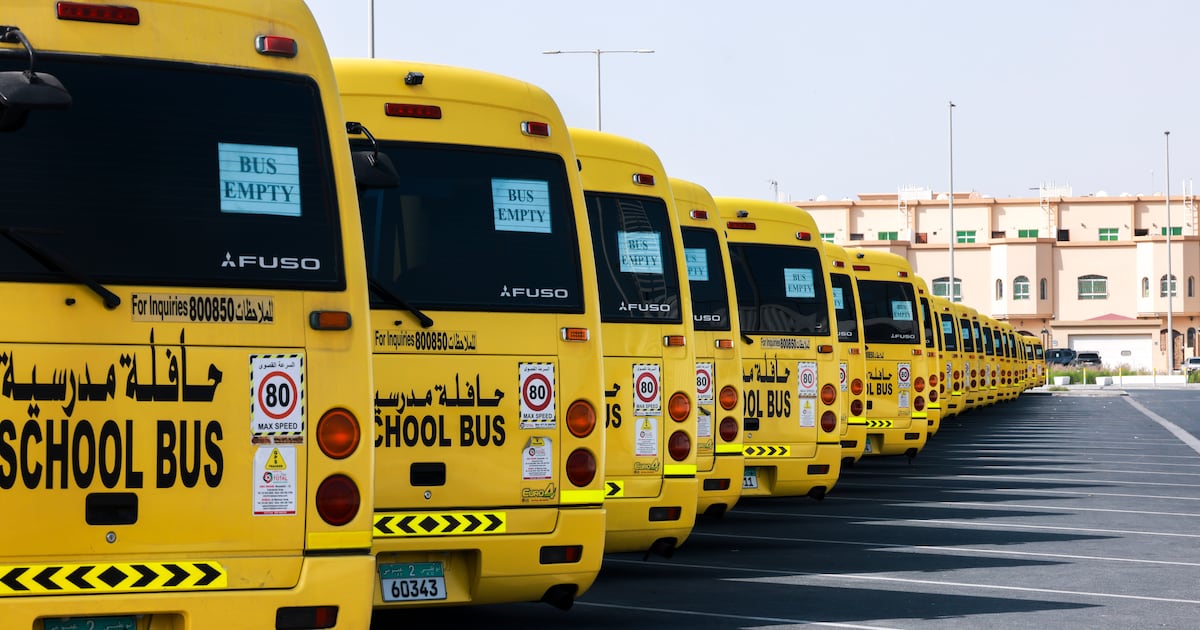

The Ministry of Education’s decision to reinstate public and private school bus services from Monday, 20 April 2026 reflects a calibrated risk‑mitigation strategy after seven weeks of remote learning triggered by the escalating Iran‑Israel conflict. The pause, initially triggered by heightened traffic and safety concerns, was lifted only after a comprehensive assessment by the National Emergency and Crisis Management Authority confirmed that operational protocols met stringent safety standards. For the UAE’s service‑driven economy, the reinstatement is a crucial enabler of labor‑force participation, particularly for working parents, and mitigates short‑term GDP erosion linked to commuter bottlenecks.
From a sovereign‑capital perspective, the swift regulatory clearance underscores the UAE’s ability to deploy centralized fiscal levers to protect critical supply‑chain nodes. Budget allocations for emergency logistics have been earmarked in the latest fiscal framework, providing budgetary backstops that reinforce confidence in sovereign debt issuance. This calibrated response aligns with broader sovereign wealth‑fund strategies that prioritize investments in transport‑related assets capable of absorbing geopolitical shocks while maintaining macro‑economic stability.
Venture capitalists are increasingly eyeing the post‑crisis logistics ecosystem, viewing edge‑compute platforms, AI‑optimized routing, and modular fleet‑management solutions as high‑growth opportunities. The recent pause‑and‑restart cycle has amplified demand for resilient, data‑driven transport services, spurring capital inflows into start‑ups that can integrate real‑time safety analytics with public‑sector procurement pipelines. This convergence of private‑equity patience and sovereign fiscal capacity creates a fertile ground for scalable, region‑wide infrastructure upgrades.
Regionally, the episode illustrates how geopolitical volatility can cascade into infrastructure bottlenecks that amplify transport costs and delay talent mobility. The UAE’s measured reinstatement of bus services sets a precedent that neighboring markets are likely to emulate, accelerating the deployment of resilient, modular public‑transport assets backed by sovereign guarantees. Such infrastructure upgrades will be pivotal for sustaining trade corridors, diversifying export routes, and attracting long‑term capital into the MENA logistics sector.