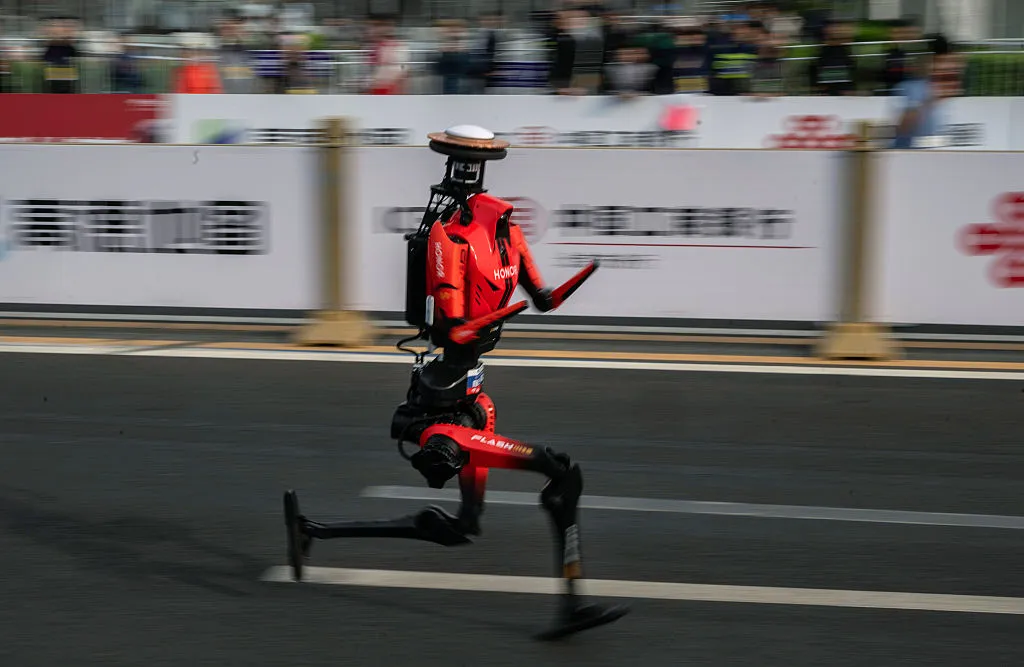

The recent performance of humanoid robots at the Beijing half-marathon underscores a pivotal shift in the competitive landscape of sports technology within the MENA region. As the top competitor achieved a time of 50 minutes and 26 seconds, marking a decisive departure from the human record of 57 minutes set just weeks prior, this advancement signals a new era in technological supremacy. This development is not merely an isolated athletic triumph but a consequential indicator of rising sovereign and venture capital investment in advanced robotics infrastructure across the Middle East and North Africa.
From a strategic investment perspective, the surge in autonomous robot participation reveals a growing ecosystem fueled by a combination of private equity influx and sovereign wealth interests targeting sectors with clear scalability. Beijing’s E-Town tech hub, with its autonomous robot deployments, emerges as a critical node in this network, attracting both public funding and private ambition. Venture capitalists are increasingly aligning portfolios with breakthroughs in mobility and automation, signaling a clear market trajectory that enhances the region’s competitive positioning.
This acceleration also reverberates through regional infrastructure developments, reinforcing the imperative for public-private partnerships in next-generation technology deployment. Sovereign capital is channeling resources into supporting localized robotics ecosystems, laying the groundwork for strategic advantages not only in sports but also in labor productivity, logistics, and autonomous systems. As this dynamic unfolds, it is evident that the MENA region stands at a turning point—a convergence of innovation, investment, and strategic ambition poised to redefine performance metrics across multiple industries.